

Sourdough pie crust is one of those simple upgrades that makes a big difference. It brings a gentle tang, deep flavor, and a tender, flaky texture you can feel with each bite. If you’ve got sourdough starter hanging out in the fridge, this is a great way to use it—no need to bake another loaf.
Whether you’re making a savory quiche or a sweet apple pie, this crust holds its shape and tastes rich without being heavy. It’s straightforward, flexible, and perfect for both beginner and seasoned bakers.
What Makes This Recipe So Good

- Rich flavor: Sourdough starter adds a subtle tang that makes pies taste more complex, without overpowering the filling.
- Flaky and tender: A blend of cold butter and a touch of starter creates layers that bake up beautifully.
- Great for discard: You can use unfed sourdough discard, cutting down food waste and adding character to the dough.
- Versatile: Works for sweet or savory pies—just adjust sugar and salt slightly to match your filling.
- Make-ahead friendly: The dough chills well and freezes nicely, so you can prep it in advance.
Shopping List
- All-purpose flour (or a mix of all-purpose and pastry flour)
- Unsalted butter, very cold
- Salt
- Granulated sugar (optional, for sweet pies)
- Sourdough starter or discard (100% hydration works best)
- Ice water
- Vinegar or lemon juice (optional, helps tenderness)
How to Make It
- Chill everything: Cut the butter into small cubes and chill it for at least 15 minutes. Keep your starter cold too.
Cold ingredients help create flaky layers.
- Mix the dry ingredients: In a large bowl, whisk 1 1/4 cups all-purpose flour with 1/2 teaspoon salt. For sweet pies, add 1 to 2 teaspoons sugar. For a double crust, double the entire recipe.
- Cut in the butter: Add the chilled butter to the flour.
Use a pastry cutter or your fingertips to work it in until the mixture has pea-sized pieces with some larger bits. Don’t overwork it.
- Add starter: Stir in 1/2 cup cold sourdough starter or discard. The dough will start to clump but may still look dry in places—that’s okay.
- Bring it together: Sprinkle in 1 to 3 tablespoons ice water, 1 tablespoon at a time, just until the dough holds when pressed.
Add 1 teaspoon vinegar or lemon juice if you like. The dough should be shaggy, not sticky.
- Form and chill: Turn the dough onto a lightly floured surface. Press it together and shape into a flat disk (two disks if doubling).
Wrap tightly and chill for at least 1 hour, or up to 48 hours. Resting relaxes gluten and hydrates the flour.
- Roll it out: Let the dough sit at room temperature for 5 to 10 minutes if it’s very firm. Roll into a 12-inch circle for a 9-inch pie pan, rotating and lightly flouring as you go to prevent sticking.
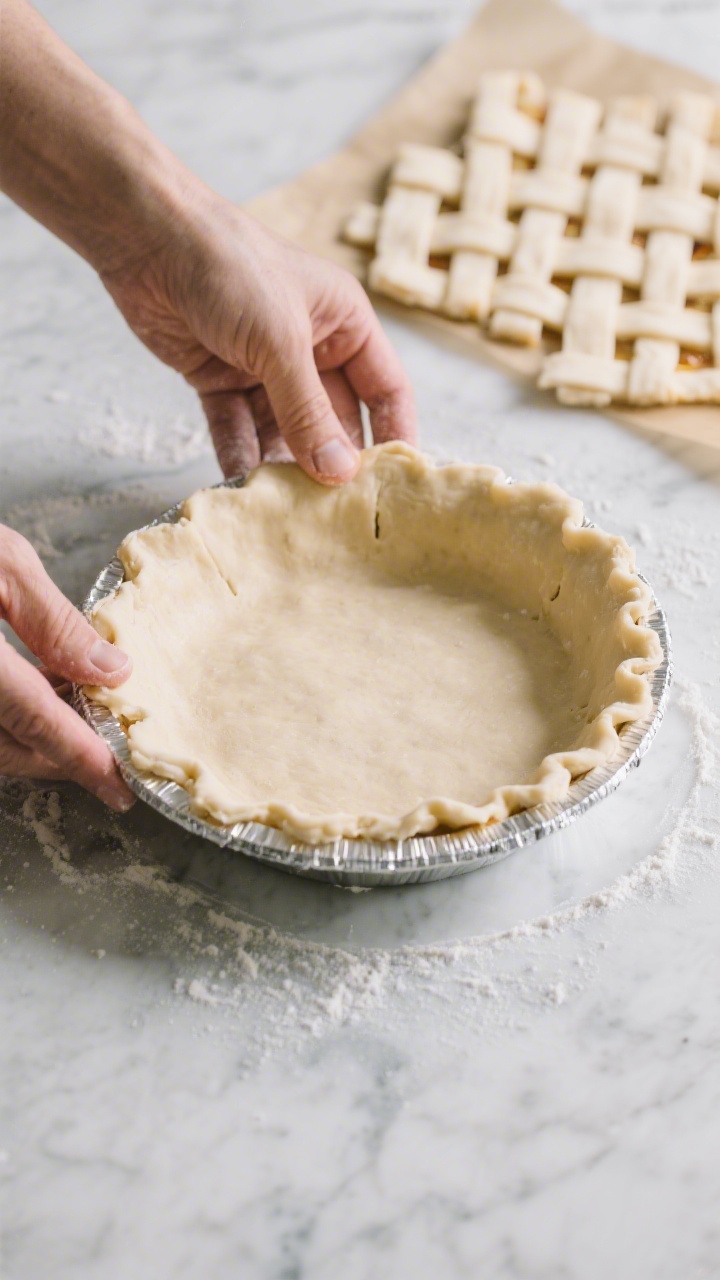
- Fit the pan: Gently drape the dough into the pie plate without stretching.
Trim overhang to about 1 inch, fold it under, and crimp. For a double crust, fill the pie, add the top crust, trim, crimp, and vent.
- Chill again: Pop the prepared crust in the fridge for 20 to 30 minutes before baking. Cold dough holds shape and stays flaky.
- Bake: For prebaking (blind baking), line with parchment, fill with pie weights, and bake at 400°F (200°C) for 15 minutes.
Remove weights and bake 8 to 12 minutes more until lightly golden. For filled pies, follow your pie recipe’s baking instructions.
Storage Instructions
- Refrigerator: Wrapped dough disks keep for up to 2 days. Rolled, unbaked crusts in the pan can be covered and chilled overnight.
- Freezer: Freeze dough disks or a formed crust (unbaked) for up to 2 months.
Wrap well in plastic, then foil. Thaw in the fridge overnight.
- Baked crust: A fully baked shell stays crisp for 1 to 2 days at room temperature, covered. For longer storage, freeze after cooling.

Benefits of This Recipe
- Resourceful: Uses sourdough discard in a meaningful way.
- Flavor boost: Introduces mild tang and depth you can’t get from water alone.
- Better texture: The acidity helps keep gluten in check, leading to a tender bite.
- Flexible: Works across seasons and fillings, from pumpkin to chicken pot pie.
Common Mistakes to Avoid
- Over-hydrating the dough: Starter adds moisture.
Add ice water slowly and stop as soon as the dough holds together.
- Warming the butter: If your butter melts into the flour, you’ll lose flakiness. Keep everything cold and work quickly.
- Overworking the dough: Too much kneading toughens the crust. Press it together gently and let the fridge do the rest.
- Skipping the chill: Chilling before rolling and baking helps prevent shrinkage and improves texture.
- Not venting a double crust: Steam needs a way out.
Cut slits or add a lattice top.
Alternatives
- Butter + shortening: Replace 1/3 of the butter with cold shortening for extra tenderness and easy crimping.
- Whole wheat blend: Swap up to 1/3 of the flour with white whole wheat for a nutty note. Add 1 extra teaspoon water if needed.
- Dairy-free: Use a high-quality plant-based butter that stays firm when cold.
- Gluten-free: Use a 1:1 gluten-free flour blend with xanthan gum. Handle gently and chill well.
- Sweet vs. savory: Add 1 to 2 tablespoons sugar for fruit pies, or a pinch more salt and a grind of pepper for quiches and pot pies.
FAQ
Can I use unfed sourdough starter?
Yes.
Unfed discard works great and adds a pleasant tang. Just make sure it’s not overly acidic or boozy-smelling; if it is, refresh it once before using.
How much starter should I use?
About 1/2 cup for a single crust is ideal. If your starter is very thick or thin, adjust ice water slightly to reach a cohesive, not sticky, dough.
Do I still need ice water if I’m using starter?
Usually a little.
Starter provides moisture, but you’ll often need 1 to 3 tablespoons of ice water to bring the dough together without overmixing.
What if my dough cracks when rolling?
Let it warm up for 3 to 5 minutes, then try again. You can also patch small cracks with a scrap of dough and a dab of water.
How do I prevent soggy bottoms?
Use a hot oven, chill the assembled pie before baking, and bake on a lower rack. For very juicy fillings, prebake the crust and consider brushing the shell with egg white during the last few minutes of blind baking.
Can I make this ahead?
Absolutely.
The dough benefits from a long chill. Make it up to 48 hours in advance, or freeze for up to 2 months.
Is this crust suitable for a lattice top?
Yes. Chill the rolled strips briefly before weaving to keep edges clean and prevent stretching.
Final Thoughts
Sourdough pie crust is a smart, flavor-forward twist on a classic.
It’s easy to handle, reliably flaky, and a clever way to use your starter beyond bread. Keep your ingredients cold, don’t overwork the dough, and give it time to rest. With that, you’ll have a crust that tastes special—and makes every pie feel a little more homemade in the best way.

Sourdough Pie Crust – Buttery, Flaky, and Full of Flavor
Ingredients
- All-purpose flour (or a mix of all-purpose and pastry flour)
- Unsalted butter, very cold
- Salt
- Granulated sugar (optional, for sweet pies)
- Sourdough starter or discard (100% hydration works best)
- Ice water
- Vinegar or lemon juice (optional, helps tenderness)
Instructions
- Chill everything: Cut the butter into small cubes and chill it for at least 15 minutes. Keep your starter cold too. Cold ingredients help create flaky layers.
- Mix the dry ingredients: In a large bowl, whisk 1 1/4 cups all-purpose flour with 1/2 teaspoon salt. For sweet pies, add 1 to 2 teaspoons sugar. For a double crust, double the entire recipe.
- Cut in the butter: Add the chilled butter to the flour. Use a pastry cutter or your fingertips to work it in until the mixture has pea-sized pieces with some larger bits. Don’t overwork it.
- Add starter: Stir in 1/2 cup cold sourdough starter or discard. The dough will start to clump but may still look dry in places—that’s okay.
- Bring it together: Sprinkle in 1 to 3 tablespoons ice water, 1 tablespoon at a time, just until the dough holds when pressed. Add 1 teaspoon vinegar or lemon juice if you like. The dough should be shaggy, not sticky.
- Form and chill: Turn the dough onto a lightly floured surface. Press it together and shape into a flat disk (two disks if doubling). Wrap tightly and chill for at least 1 hour, or up to 48 hours. Resting relaxes gluten and hydrates the flour.
- Roll it out: Let the dough sit at room temperature for 5 to 10 minutes if it’s very firm. Roll into a 12-inch circle for a 9-inch pie pan, rotating and lightly flouring as you go to prevent sticking.
- Fit the pan: Gently drape the dough into the pie plate without stretching. Trim overhang to about 1 inch, fold it under, and crimp. For a double crust, fill the pie, add the top crust, trim, crimp, and vent.
- Chill again: Pop the prepared crust in the fridge for 20 to 30 minutes before baking. Cold dough holds shape and stays flaky.
- Bake: For prebaking (blind baking), line with parchment, fill with pie weights, and bake at 400°F (200°C) for 15 minutes. Remove weights and bake 8 to 12 minutes more until lightly golden. For filled pies, follow your pie recipe’s baking instructions.