

Warm, chewy English muffins with a hint of tang are one of those small kitchen wins that feel huge. If you’ve got sourdough discard hanging around, this is a smart way to use it without baking a full loaf. These cook on the stovetop, so you don’t even need to turn on the oven.
The result? Soft, nooked-and-crannied muffins that toast up beautifully and make any breakfast feel special.
What Makes This Special

You’re not just making bread—you’re making something that fits into your week. These English muffins use sourdough discard, so you reduce waste while adding flavor.
The batter-style dough is easy to work with and forgiving. Cooking them on a skillet gives you that classic golden crust. Plus, the timing is flexible: you can mix the dough in the evening and cook them the next morning.
What You’ll Need
- 1 cup (240 g) sourdough discard (100% hydration, unfed is fine)
- 1 cup (240 ml) milk (whole or 2%; nondairy works too)
- 2 tablespoons (28 g) unsalted butter, melted and slightly cooled
- 2 tablespoons (25 g) sugar (or honey)
- 2 1/2 cups (300 g) all-purpose flour (plus a little for dusting)
- 1 teaspoon fine sea salt
- 1 1/2 teaspoons instant yeast (or active dry, bloomed in warm milk)
- 1 teaspoon baking soda
- Cornmeal or semolina, for dusting
- Neutral oil or butter, for the skillet
Step-by-Step Instructions
- Warm the milk. Heat the milk until just warm to the touch, not hot.
If using active dry yeast, sprinkle it over the warm milk and let it sit for 5–10 minutes until foamy.
- Mix the wet ingredients. In a large bowl, combine the sourdough discard, warm milk (with yeast if using active dry), melted butter, and sugar. Stir until smooth.
- Add the dry ingredients. Add flour and salt. Stir with a sturdy spoon until no dry spots remain.
The dough will be soft and sticky—this is what you want.
- First rest (bulk rise). Cover the bowl and let it rise at room temperature for 60–90 minutes, until puffy and expanded. For deeper flavor, refrigerate overnight and continue in the morning.
- Stir in baking soda. Sprinkle baking soda over the dough and fold it in with a spatula. The dough will loosen slightly and become bubbly.
Rest for 10 minutes.
- Prepare your surface. Lightly dust a baking sheet with cornmeal or semolina. Also dust your work surface with flour or cornmeal to help with shaping.
- Shape the muffins. Gently turn the dough onto the floured surface. Pat it into a 3/4-inch thick slab.
Use a 3-inch round cutter to cut circles. Transfer to the prepared sheet and lightly dust the tops with cornmeal. Gather scraps, gently press, and cut again.
You should get about 8–10 muffins.
- Final proof. Cover loosely and let the rounds rest 20–30 minutes, until slightly puffy. They won’t double, but they should look lighter and airy.
- Preheat the skillet. Heat a heavy skillet or griddle over medium-low. Lightly grease with a thin film of oil or butter.
Sprinkle a little cornmeal onto the hot surface if you like extra crunch.
- Cook low and slow. Place muffins in the skillet, leaving space between them. Cook for 6–8 minutes per side, adjusting heat to keep the bottoms from burning. They should turn a deep golden brown and feel springy.
If they brown too fast, lower the heat and extend the time so the centers cook through.
- Finish in the oven (optional). If they’re browned but still feel very soft in the center, place them on a baking sheet and bake at 350°F (175°C) for 5–8 minutes.
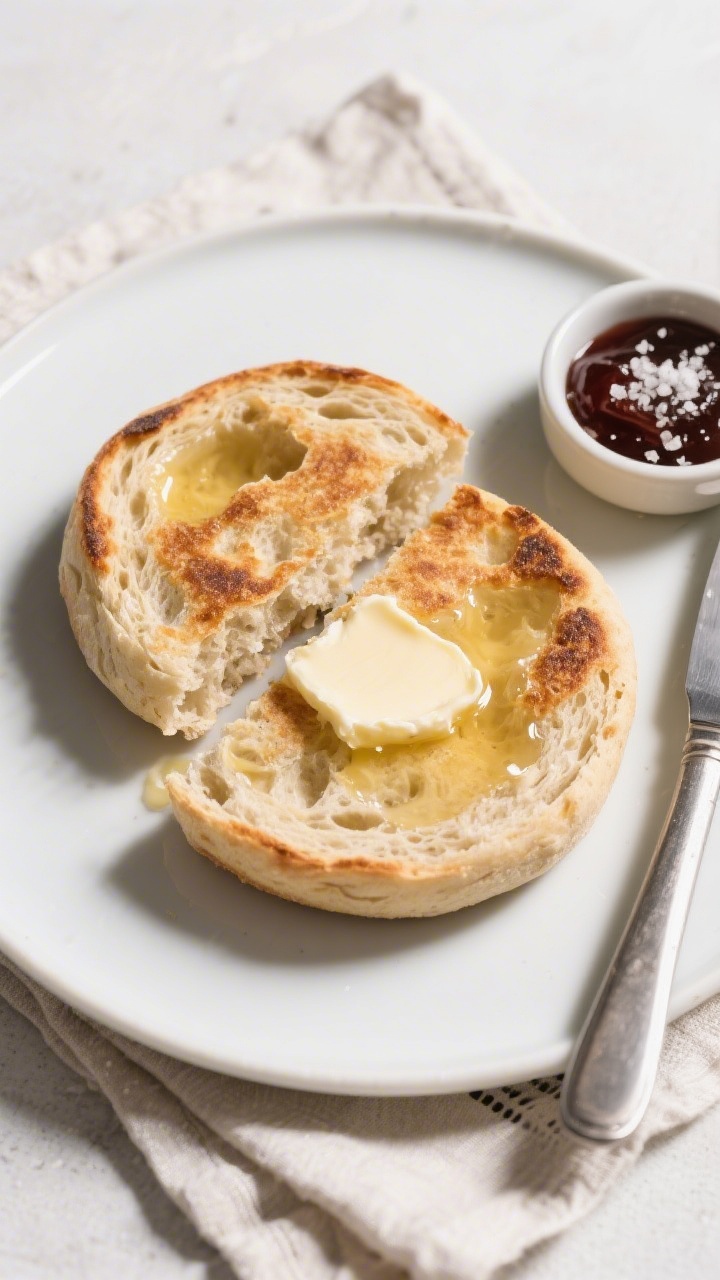
- Cool and split. Cool on a rack for at least 15 minutes. For classic nooks and crannies, split with a fork by poking all the way around the edge and pulling apart, then toast before serving.
Storage Instructions
- Room temperature: Keep cooled muffins in an airtight container for up to 2 days.
- Freezer:</-strong> Freeze in a zip-top bag for up to 2 months. Split before freezing for easier toasting.
- Reheating: Toast from fresh or frozen until the edges are crisp and the centers are warm.

Why This is Good for You
Sourdough discard brings more than flavor.
Its natural acidity can make gluten easier to digest for some people and may help with mineral absorption. You’re also using pantry basics to make a breakfast staple that’s free from additives and easy to customize. It’s a budget-friendly bake that makes mornings smoother.
Common Mistakes to Avoid
- Overheating the skillet: Too hot and the outsides burn while the centers stay doughy.
Aim for steady medium-low heat.
- Skipping the rest after adding baking soda: That short rest lets bubbles develop for a lighter crumb.
- Handling the dough too roughly: Press, don’t knead. You want to keep the air inside for better holes.
- Cutting with a dull edge: A sharp cutter helps the muffins rise tall instead of sealing the edges.
- Splitting with a knife: Use a fork to preserve the nooks and crannies.
Variations You Can Try
- Whole wheat: Swap up to 1 cup (120 g) of the all-purpose flour with whole wheat. Add a splash more milk if the dough feels stiff.
- Buttermilk: Use buttermilk instead of regular milk for extra tang and tenderness.
- Cornmeal crunch: Mix 2 tablespoons of fine cornmeal into the dough for texture.
- Cheddar and chive:</-strong> Fold in 1/2 cup shredded sharp cheddar and 2 tablespoons chopped chives after the first rise.
- Cinnamon raisin: Add 1 teaspoon cinnamon and 1/2 cup raisins before the first rest; increase sugar to 3 tablespoons.
- Dairy-free: Use plant milk and olive oil or vegan butter.
FAQ
Do I need strong sourdough discard, or will any discard work?
Any 100% hydration discard works, whether it’s a few days old or freshly unfed.
Older discard adds more tang. If your discard is very thick, you may need a tablespoon or two more milk.
Can I make these without commercial yeast?
Yes. Skip the instant yeast and extend the bulk rise until the dough is noticeably puffy—usually 3–4 hours at warm room temp.
An overnight rest in the fridge helps. Expect a slightly denser texture and longer stovetop time.
How do I know they’re cooked through?
They should feel light and springy, with an internal temperature around 200–205°F (93–96°C) if you check with a thermometer. If they brown too fast, finish them in the oven for a few minutes.
Why are my English muffins flat?
Common reasons include over-flouring, cutting with a dull edge that seals the sides, or not enough rise time.
Also, make sure your skillet isn’t pressing them down—avoid weighting them or flipping too early.
Can I make the dough ahead?
Yes. Mix the dough, let it start rising for 30–60 minutes, then refrigerate up to 24 hours. Bring it to room temp, mix in baking soda, rest 10 minutes, and continue.
What’s the best way to split them?
Use a fork.
Poke around the side seam, then gently pull apart. This keeps the uneven interior that traps butter and jam.
Can I bake them entirely in the oven?
You can, but you’ll miss a bit of the signature crust. If you prefer, bake at 400°F (200°C) for 12–15 minutes, flipping once halfway.
Dust with cornmeal first.
In Conclusion
These Sourdough Discard English Muffins are simple, flexible, and full of character. They turn a jar of leftovers into something warm and practical you’ll reach for all week. Keep the heat gentle, respect the rests, and use a fork to split.
Toast, butter, and enjoy that soft, tangy crumb—breakfast just got a lot better.

Sourdough Discard English Muffins – Soft, Tangy, and Perfect for Breakfast
Ingredients
- 1 cup (240 g) sourdough discard (100% hydration, unfed is fine)
- 1 cup (240 ml) milk (whole or 2%; nondairy works too)
- 2 tablespoons (28 g) unsalted butter, melted and slightly cooled
- 2 tablespoons (25 g) sugar (or honey)
- 2 1/2 cups (300 g) all-purpose flour (plus a little for dusting)
- 1 teaspoon fine sea salt
- 1 1/2 teaspoons instant yeast (or active dry, bloomed in warm milk)
- 1 teaspoon baking soda
- Cornmeal or semolina, for dusting
- Neutral oil or butter, for the skillet
Instructions
- Warm the milk. Heat the milk until just warm to the touch, not hot. If using active dry yeast, sprinkle it over the warm milk and let it sit for 5–10 minutes until foamy.
- Mix the wet ingredients. In a large bowl, combine the sourdough discard, warm milk (with yeast if using active dry), melted butter, and sugar. Stir until smooth.
- Add the dry ingredients. Add flour and salt. Stir with a sturdy spoon until no dry spots remain. The dough will be soft and sticky—this is what you want.
- First rest (bulk rise). Cover the bowl and let it rise at room temperature for 60–90 minutes, until puffy and expanded. For deeper flavor, refrigerate overnight and continue in the morning.
- Stir in baking soda. Sprinkle baking soda over the dough and fold it in with a spatula. The dough will loosen slightly and become bubbly. Rest for 10 minutes.
- Prepare your surface. Lightly dust a baking sheet with cornmeal or semolina. Also dust your work surface with flour or cornmeal to help with shaping.
- Shape the muffins. Gently turn the dough onto the floured surface. Pat it into a 3/4-inch thick slab. Use a 3-inch round cutter to cut circles. Transfer to the prepared sheet and lightly dust the tops with cornmeal. Gather scraps, gently press, and cut again. You should get about 8–10 muffins.
- Final proof. Cover loosely and let the rounds rest 20–30 minutes, until slightly puffy. They won’t double, but they should look lighter and airy.
- Preheat the skillet. Heat a heavy skillet or griddle over medium-low. Lightly grease with a thin film of oil or butter. Sprinkle a little cornmeal onto the hot surface if you like extra crunch.
- Cook low and slow. Place muffins in the skillet, leaving space between them. Cook for 6–8 minutes per side, adjusting heat to keep the bottoms from burning. They should turn a deep golden brown and feel springy. If they brown too fast, lower the heat and extend the time so the centers cook through.
- Finish in the oven (optional). If they’re browned but still feel very soft in the center, place them on a baking sheet and bake at 350°F (175°C) for 5–8 minutes.
- Cool and split. Cool on a rack for at least 15 minutes. For classic nooks and crannies, split with a fork by poking all the way around the edge and pulling apart, then toast before serving.