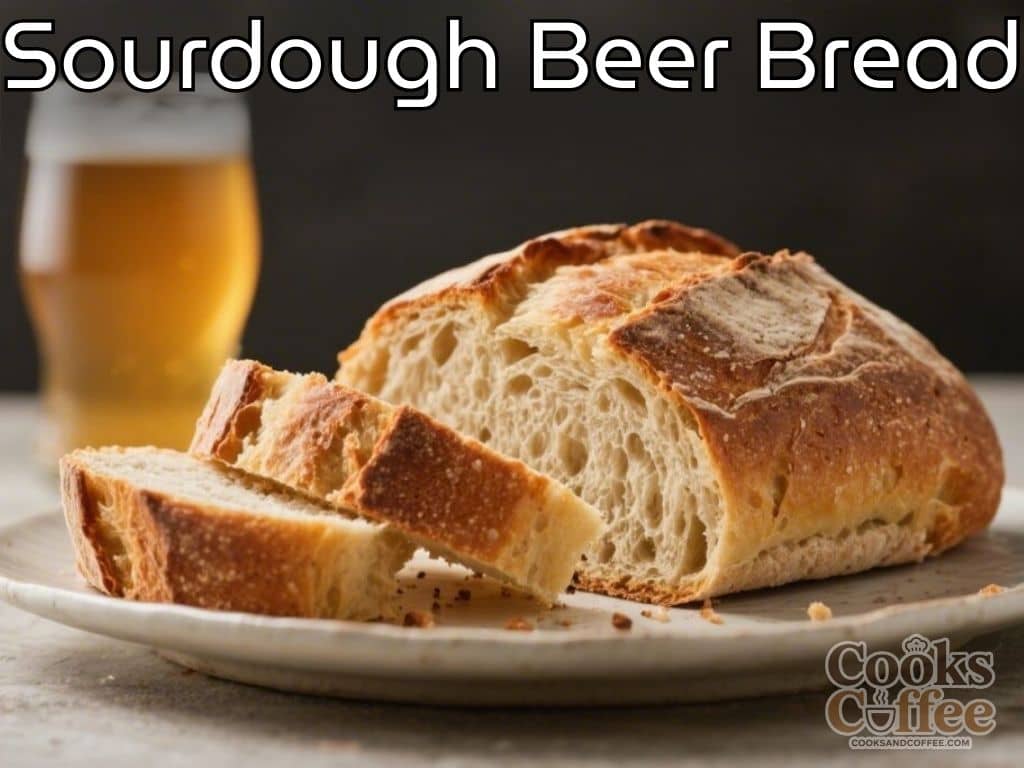
Sourdough beer bread brings together two comfort-kitchen favorites in one loaf: the tang of sourdough and the malty depth of beer. It’s hearty, fragrant, and surprisingly simple once you know the steps. You get an artisan-style crust, a soft, open crumb, and layers of flavor that taste like they took all day—without fussy techniques.
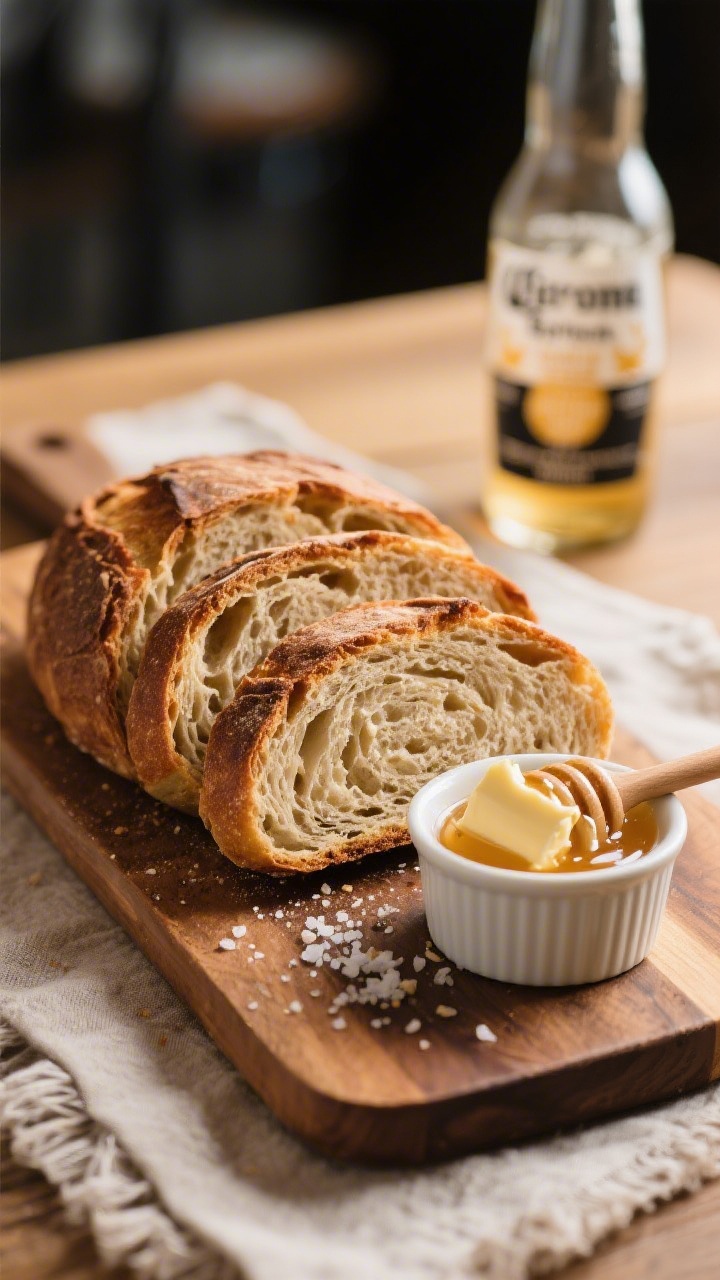
Whether you’re using a bubbly, active starter or looking to put your discard to work, this bread delivers. Slice it thick, toast it, and slather on butter—pure bliss.
Why This Recipe Works

- Beer adds flavor and lift: The carbonation and malt notes in beer boost rise and deepen flavor, making the loaf taste rich and toasty.
- Sourdough starter brings structure and tang: Starter strengthens the dough and gives a gentle, balanced sourness.
- Simple technique: No kneading marathon here. Gentle mixing, a few folds, and a calm bulk rise do the heavy lifting.
- Flexible timing: The dough can chill overnight for better flavor and easier scheduling.
- Reliable crust: Baking in a preheated Dutch oven traps steam for an impressive rise and crackly crust.
Ingredients
- 400 g (about 3 1/4 cups) bread flour (or a mix: 300 g bread flour + 100 g whole wheat for nuttier flavor)
- 100 g (about 3/4 cup) all-purpose flour
- 150 g active sourdough starter (100% hydration) or 175 g sourdough discard if using longer, colder fermentation
- 300 g beer (lager, pale ale, or brown ale; room temperature, lightly degassed)
- 100 g water (lukewarm), adjust as needed for dough feel
- 10 g fine sea salt (about 1 3/4 tsp)
- 10 g honey or sugar (optional, for a rounder flavor and slightly faster fermentation)
- 1–2 tbsp melted butter or olive oil (optional, for a softer crumb)
- Rice flour or all-purpose flour for dusting the basket
Step-by-Step Instructions

- Mix the liquids: In a large bowl, whisk the beer, water, and starter until mostly smooth.
Add honey or sugar and melted butter if using. The mixture should smell pleasantly yeasty and malty.
- Hydrate the flour (autolyse): Add the flours and stir until no dry bits remain. The dough will be shaggy and sticky.
Cover and rest 30–45 minutes. This rest helps gluten form and makes the dough easier to handle.
- Add salt and squeeze to incorporate: Sprinkle in the salt and pinch/squeeze the dough to combine. The dough will tighten slightly and feel more elastic.
- First hour of folds: Over the next 60–90 minutes, perform 3–4 sets of stretch-and-folds every 20–30 minutes.
To do this, wet your hand, lift one side of the dough up and fold it over itself; rotate the bowl and repeat 3–4 times. The dough should become smoother and more billowy.
- Bulk ferment: Cover and let the dough rise at warm room temperature (75–78°F/24–26°C) until it increases by about 60–80% and shows bubbles along the sides, 3–5 hours depending on your starter and beer. If your kitchen is cooler, extend the time.
- Cold option for more flavor: For deeper taste and convenience, place the dough in the fridge for 8–16 hours after partial rise (about 30–50%).
It will continue to ferment slowly and become easier to shape.
- Pre-shape: Lightly flour the counter. Turn out the dough, being gentle to keep gas inside. Use a bench scraper to form a loose round by tucking edges underneath.
Rest uncovered 15–20 minutes.
- Final shape: For a boule, flip the dough so the smooth side is down. Gently stretch the bottom up, sides in, then roll it toward you to create surface tension. For a batard, fold like a letter and roll into a tight log.
Aim for a taut surface without tearing.
- Proof: Place seam-side up in a well-floured banneton or a bowl lined with a floured towel. Cover and proof at room temperature 45–90 minutes, or refrigerate 1–12 hours for easier scoring and better oven spring. The dough is ready when it slowly springs back with a gentle poke, leaving a slight indent.
- Preheat the oven and Dutch oven: Place a Dutch oven with lid inside and preheat to 475°F (246°C) for at least 30 minutes.
Hot cookware equals strong oven spring.
- Score: Turn the dough onto parchment so the seam is down. Dust lightly with flour. Using a razor or sharp knife, score a 1/2-inch deep slash along the top to control expansion.
- Bake with steam: Carefully lower the dough into the preheated Dutch oven using the parchment as a sling.
Cover and bake 20 minutes at 475°F.
- Finish uncovered: Reduce heat to 450°F (232°C), remove the lid, and bake another 20–25 minutes until deep golden-brown with blistered crust. Internal temp should read about 206–210°F (97–99°C).
- Cool completely: Transfer to a rack and cool at least 1–
Sourdough Beer Bread – A Cozy, Flavor-Packed Loaf You Can Master
Ingredients
- 400 g (about 3 1/4 cups) bread flour (or a mix: 300 g bread flour + 100 g whole wheat for nuttier flavor)
- 100 g (about 3/4 cup) all-purpose flour
- 150 g active sourdough starter (100% hydration) or 175 g sourdough discard if using longer, colder fermentation
- 300 g beer (lager, pale ale, or brown ale; room temperature, lightly degassed)
- 100 g water (lukewarm), adjust as needed for dough feel
- 10 g fine sea salt (about 1 3/4 tsp)
- 10 g honey or sugar (optional, for a rounder flavor and slightly faster fermentation)
- 1–2 tbsp melted butter or olive oil (optional, for a softer crumb)
- Rice flour or all-purpose flour for dusting the basket
Instructions
- Mix the liquids: In a large bowl, whisk the beer, water, and starter until mostly smooth. Add honey or sugar and melted butter if using. The mixture should smell pleasantly yeasty and malty.
- Hydrate the flour (autolyse): Add the flours and stir until no dry bits remain. The dough will be shaggy and sticky. Cover and rest 30–45 minutes. This rest helps gluten form and makes the dough easier to handle.
- Add salt and squeeze to incorporate: Sprinkle in the salt and pinch/squeeze the dough to combine. The dough will tighten slightly and feel more elastic.
- First hour of folds: Over the next 60–90 minutes, perform 3–4 sets of stretch-and-folds every 20–30 minutes. To do this, wet your hand, lift one side of the dough up and fold it over itself; rotate the bowl and repeat 3–4 times. The dough should become smoother and more billowy.
- Bulk ferment: Cover and let the dough rise at warm room temperature (75–78°F/24–26°C) until it increases by about 60–80% and shows bubbles along the sides, 3–5 hours depending on your starter and beer. If your kitchen is cooler, extend the time.
- Cold option for more flavor: For deeper taste and convenience, place the dough in the fridge for 8–16 hours after partial rise (about 30–50%). It will continue to ferment slowly and become easier to shape.
- Pre-shape: Lightly flour the counter. Turn out the dough, being gentle to keep gas inside. Use a bench scraper to form a loose round by tucking edges underneath. Rest uncovered 15–20 minutes.
- Final shape: For a boule, flip the dough so the smooth side is down. Gently stretch the bottom up, sides in, then roll it toward you to create surface tension. For a batard, fold like a letter and roll into a tight log. Aim for a taut surface without tearing.
- Proof: Place seam-side up in a well-floured banneton or a bowl lined with a floured towel. Cover and proof at room temperature 45–90 minutes, or refrigerate 1–12 hours for easier scoring and better oven spring. The dough is ready when it slowly springs back with a gentle poke, leaving a slight indent.
- Preheat the oven and Dutch oven: Place a Dutch oven with lid inside and preheat to 475°F (246°C) for at least 30 minutes. Hot cookware equals strong oven spring.
- Score: Turn the dough onto parchment so the seam is down. Dust lightly with flour. Using a razor or sharp knife, score a 1/2-inch deep slash along the top to control expansion.
- Bake with steam: Carefully lower the dough into the preheated Dutch oven using the parchment as a sling. Cover and bake 20 minutes at 475°F.
- Finish uncovered: Reduce heat to 450°F (232°C), remove the lid, and bake another 20–25 minutes until deep golden-brown with blistered crust. Internal temp should read about 206–210°F (97–99°C).