

Roasted lamb has a way of making any meal feel special without a lot of fuss. This rosemary lemon version is bold, fragrant, and surprisingly simple to pull off. Fresh herbs and citrus wake up the richness of the meat, while garlic adds that deep, familiar warmth.
Whether it’s a Sunday dinner or a small celebration, this recipe brings big flavor with minimal stress. You’ll enjoy crisp edges, tender slices, and a pan sauce that begs for bread.
Why This Recipe Works
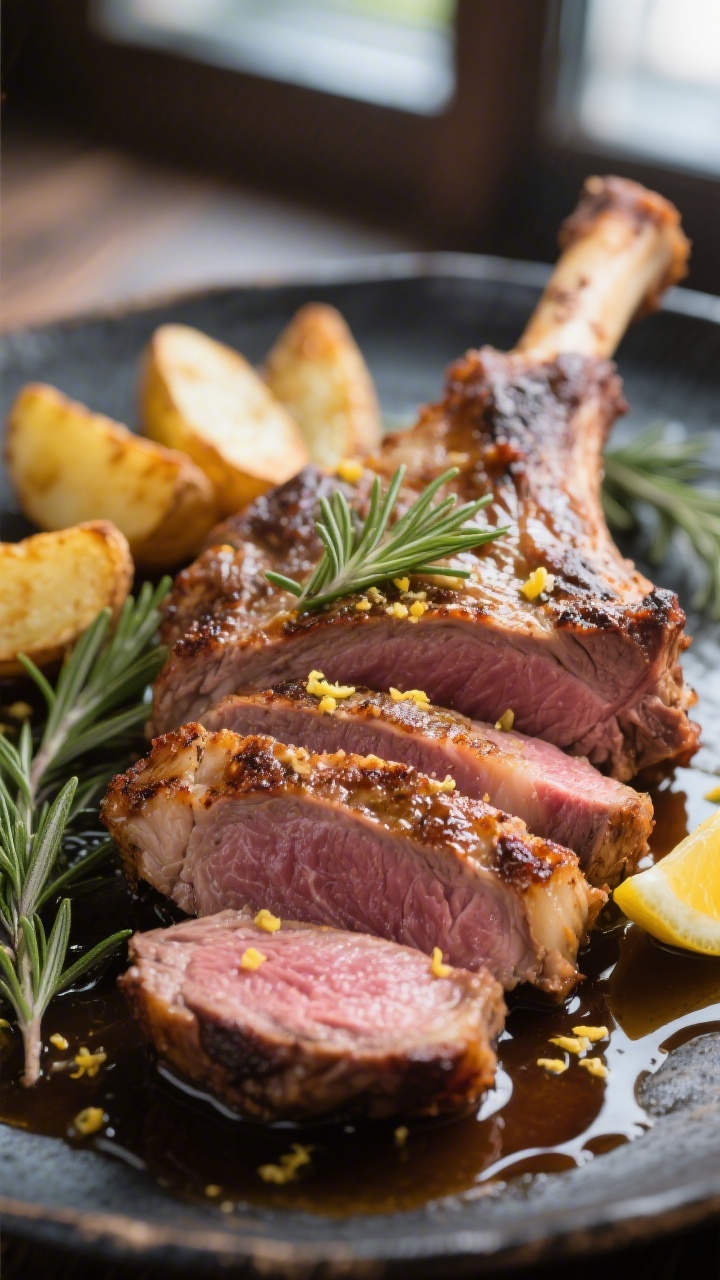
This recipe leans on a classic pairing: rosemary, lemon, and garlic balance lamb’s natural richness. Marinating the lamb with salt ahead of time helps it stay juicy and well-seasoned all the way through.
A hot start in the oven builds a golden crust, while a lower finish keeps the interior tender and pink. Finally, resting the meat lets the juices settle, and a quick pan sauce ties everything together with bright, savory notes.
Shopping List
- Bone-in leg of lamb (4–5 pounds) or boneless leg (3–4 pounds)
- Fresh rosemary (a small bunch)
- Lemons (2 large, for zest and juice)
- Garlic (6–8 cloves)
- Olive oil
- Kosher salt and freshly ground black pepper
- Dijon mustard (optional, for the rub)
- Dry white wine or low-sodium chicken broth (for the pan sauce)
- Unsalted butter (1–2 tablespoons, for finishing the sauce)
- Red pepper flakes (optional, a pinch for heat)
- Yukon gold potatoes or carrots (optional, for roasting underneath)
How to Make It
- Prep the lamb: Pat the lamb dry. If using a bone-in leg, trim any very thick exterior fat, leaving a thin layer for flavor.
For boneless, tie it with kitchen twine so it roasts evenly.
- Season early: Sprinkle the lamb generously with kosher salt and pepper on all sides. For best results, do this 12–24 hours ahead and refrigerate uncovered. If you’re short on time, 30 minutes is still helpful.
- Make the rosemary-lemon paste: In a small bowl, combine 3 tablespoons olive oil, 2 tablespoons chopped rosemary, the zest of 2 lemons, the juice of 1 lemon, 6 minced garlic cloves, 1 teaspoon Dijon mustard (optional), and a pinch of red pepper flakes.
Stir into a thick paste.
- Rub and rest: Bring the lamb to room temperature for 45–60 minutes before roasting. Rub the paste all over, massaging it into any crevices. Tuck a few whole rosemary sprigs under the roast for aroma.
- Preheat and pan setup: Heat the oven to 450°F (230°C).
Set the lamb on a rack in a roasting pan. If you’d like a built-in side, scatter chunked potatoes and carrots underneath, tossed with olive oil, salt, and pepper to catch the drippings.
- Roast hot, then low: Roast at 450°F for 15–20 minutes to brown. Reduce heat to 325°F (165°C) and continue roasting until the thickest part reaches your preferred doneness: 125–130°F for medium-rare, 135°F for medium.
Expect roughly 12–15 minutes per pound after the initial sear, but start checking early.
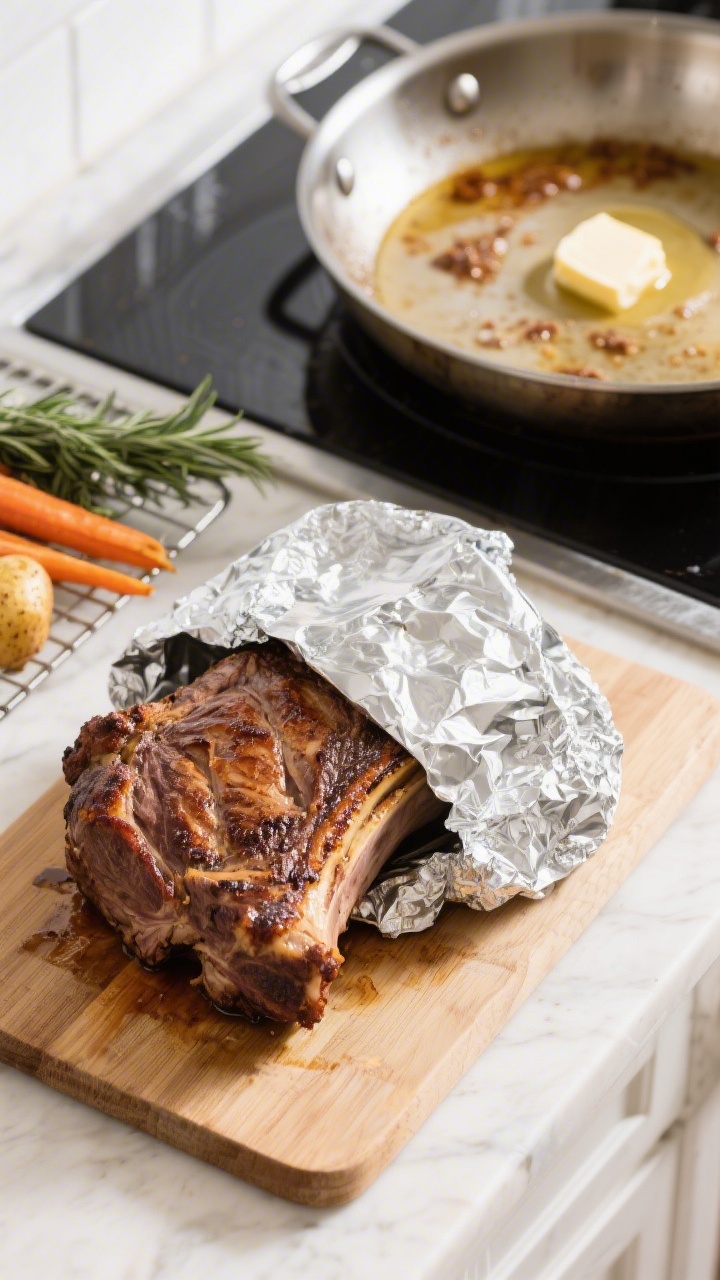
- Rest the roast: Transfer lamb to a cutting board and tent loosely with foil. Rest 20–25 minutes. The temperature will rise by a few degrees, and the juices will redistribute.
- Make a quick pan sauce: Place the roasting pan over medium heat.
Spoon off excess fat, leaving about 1 tablespoon. Add 1/2 cup white wine or broth and scrape up brown bits. Simmer 2–3 minutes, then swirl in 1–2 tablespoons butter and a squeeze of lemon.
Season to taste.
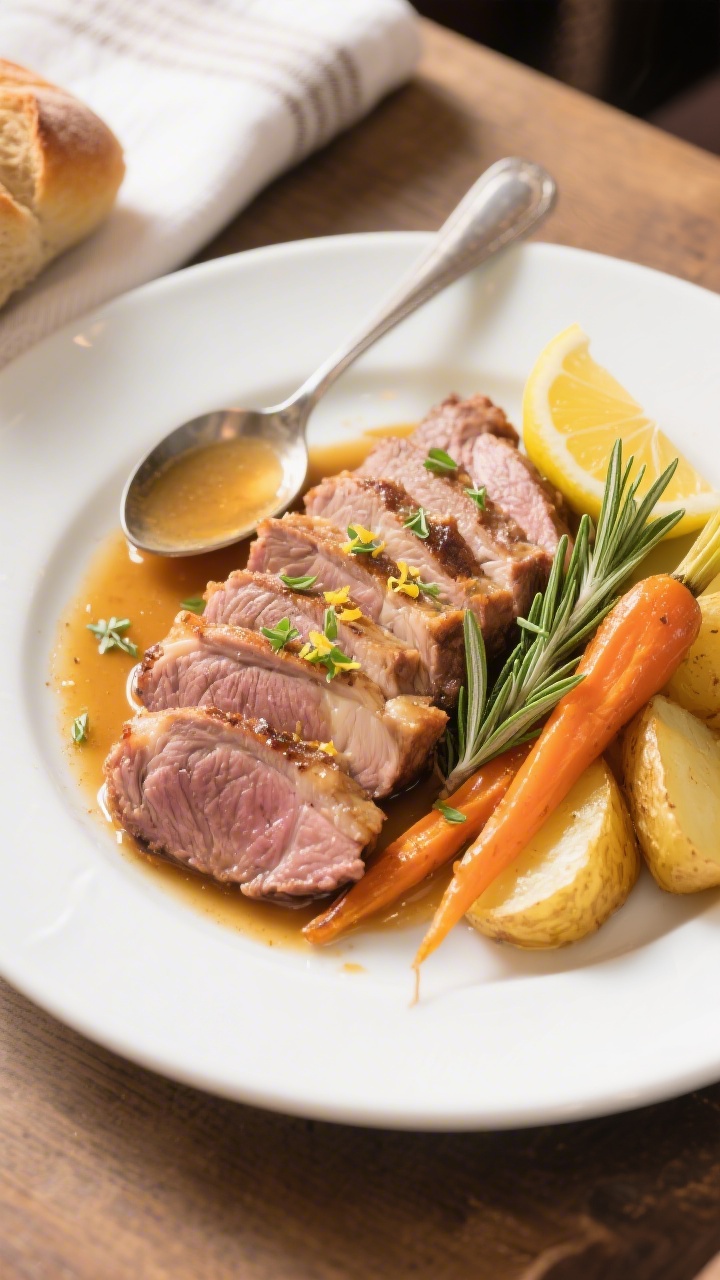
- Slice and serve: Slice against the grain into 1/2-inch pieces. Serve with roasted vegetables and spoon the pan sauce over the top. Garnish with a few fresh rosemary needles and lemon zest for brightness.
Keeping It Fresh
Store leftover lamb in an airtight container in the fridge for up to 4 days.
Reheat gently—cover slices and warm in a low oven or in a skillet with a splash of broth to keep them moist. The pan sauce can be stored separately and thinned with a bit of water or stock when reheating. For longer storage, freeze sliced lamb, tightly wrapped, for up to 2 months.
Thaw overnight in the fridge for best texture.
Benefits of This Recipe
- Big flavor, low stress: The ingredients are simple, and the oven does most of the work.
- Balanced taste: Lemon and rosemary keep the dish bright, never heavy.
- Flexible for crowds: A leg of lamb feeds a group and slices beautifully for serving.
- Meal-prep friendly: Leftovers make great sandwiches, grain bowls, or salads.
- Restaurant-level finish: A quick pan sauce elevates the entire plate.
Common Mistakes to Avoid
- Skipping the rest: Cutting too soon leads to dry slices. Resting preserves juiciness.
- Overcooking: Use an instant-read thermometer and start checking early. Lamb can go from perfect to dry quickly.
- Underseasoning: A large roast needs ample salt to taste great throughout.
- Cold start: Roasting straight from the fridge can lead to uneven doneness.
Let the meat warm up first.
- Ignoring the pan drippings: Those browned bits are flavor gold—turn them into a simple sauce.
Recipe Variations
- Herb medley: Add thyme and oregano to the rosemary for a fuller herbal profile.
- Mediterranean twist: Mix in crushed fennel seeds, a touch of smoked paprika, and orange zest with the lemon.
- Garlic-studded roast: Make small slits across the lamb and tuck in thin garlic slices and rosemary needles before rubbing with the paste.
- Mustard-forward: Increase Dijon to 1 tablespoon and whisk it with lemon juice for a tangier crust.
- Grill-roasted: Sear the lamb on a hot grill, then finish over indirect heat at 325–350°F with the lid closed. Adds a whisper of smoke.
- Boneless rolled: For easier slicing, use a boneless leg, spread with the paste inside and out, roll, and tie before roasting.
FAQ
What cut of lamb works best?
A leg of lamb is ideal for this recipe, either bone-in for maximum flavor or boneless for easier carving. A lamb shoulder can work too, but it needs a lower and slower cook for tenderness.
Can I use dried rosemary?
Yes, but use less.
Dried rosemary is potent. Use 1 to 1.5 teaspoons dried in place of 2 tablespoons fresh. Crush it between your fingers to release aroma.
How do I know when it’s done?
Use a thermometer.
Aim for 125–130°F for medium-rare or 135°F for medium, measured in the thickest part without touching bone. Remember it will rise a few degrees while resting.
Do I have to marinate overnight?
Not required, but salting ahead improves flavor and texture. Even 30–60 minutes helps.
If you have time, salt 12–24 hours in advance.
What sides go well with this?
Roasted potatoes, carrots, or parsnips are classic. A bright salad with arugula and shaved fennel, or couscous with herbs and lemon, also pairs nicely. Don’t forget crusty bread for the sauce.
Can I make the sauce without wine?
Absolutely.
Use chicken broth or even water with a squeeze of lemon. The drippings and butter still create a rich, glossy sauce.
How should I slice the lamb?
Slice against the grain into even pieces, about 1/2 inch thick. If using a bone-in leg, cut off large sections first to make slicing easier.
Is this recipe good for meal prep?
Yes.
Cook, cool, and slice the lamb. Store with some sauce to keep it moist. Reheat gently and use for sandwiches, pita wraps, or grain bowls through the week.
In Conclusion
Rosemary Lemon Roasted Lamb is a reliable, crowd-pleasing main with vivid, comforting flavor.
With a smart seasoning strategy, a hot-then-low roast, and a quick sauce, you get tender slices and a beautiful crust every time. Keep the steps simple, trust your thermometer, and let the ingredients shine. This is the kind of dish that turns an ordinary evening into something memorable without making you work for it.
Rosemary Lemon Roasted Lamb – Bright, Savory, and Comforting
Ingredients
- Bone-in leg of lamb (4–5 pounds) or boneless leg (3–4 pounds)
- Fresh rosemary (a small bunch)
- Lemons (2 large, for zest and juice)
- Garlic (6–8 cloves)
- Olive oil
- Kosher salt and freshly ground black pepper
- Dijon mustard (optional, for the rub)
- Dry white wine or low-sodium chicken broth (for the pan sauce)
- Unsalted butter (1–2 tablespoons, for finishing the sauce)
- Red pepper flakes (optional, a pinch for heat)
- Yukon gold potatoes or carrots (optional, for roasting underneath)
Instructions
- Prep the lamb: Pat the lamb dry. If using a bone-in leg, trim any very thick exterior fat, leaving a thin layer for flavor. For boneless, tie it with kitchen twine so it roasts evenly.
- Season early: Sprinkle the lamb generously with kosher salt and pepper on all sides. For best results, do this 12–24 hours ahead and refrigerate uncovered. If you’re short on time, 30 minutes is still helpful.
- Make the rosemary-lemon paste: In a small bowl, combine 3 tablespoons olive oil, 2 tablespoons chopped rosemary, the zest of 2 lemons, the juice of 1 lemon, 6 minced garlic cloves, 1 teaspoon Dijon mustard (optional), and a pinch of red pepper flakes. Stir into a thick paste.
- Rub and rest: Bring the lamb to room temperature for 45–60 minutes before roasting. Rub the paste all over, massaging it into any crevices. Tuck a few whole rosemary sprigs under the roast for aroma.
- Preheat and pan setup: Heat the oven to 450°F (230°C). Set the lamb on a rack in a roasting pan. If you’d like a built-in side, scatter chunked potatoes and carrots underneath, tossed with olive oil, salt, and pepper to catch the drippings.
- Roast hot, then low: Roast at 450°F for 15–20 minutes to brown. Reduce heat to 325°F (165°C) and continue roasting until the thickest part reaches your preferred doneness: 125–130°F for medium-rare, 135°F for medium. Expect roughly 12–15 minutes per pound after the initial sear, but start checking early.
- Rest the roast: Transfer lamb to a cutting board and tent loosely with foil. Rest 20–25 minutes. The temperature will rise by a few degrees, and the juices will redistribute.
- Make a quick pan sauce: Place the roasting pan over medium heat. Spoon off excess fat, leaving about 1 tablespoon. Add 1/2 cup white wine or broth and scrape up brown bits. Simmer 2–3 minutes, then swirl in 1–2 tablespoons butter and a squeeze of lemon. Season to taste.
- Slice and serve: Slice against the grain into 1/2-inch pieces. Serve with roasted vegetables and spoon the pan sauce over the top. Garnish with a few fresh rosemary needles and lemon zest for brightness.