

Sourdough bagels bring together the best of two worlds: the tangy depth of natural leavening and the classic chew you expect from a proper bagel. They take a little time, but most of it is hands-off, and the payoff is huge. You get a golden crust, a tender interior, and that unmistakable sourdough flavor.
If you’ve got an active starter and a free afternoon, you’re already halfway there. This is a simple, reliable method that delivers bakery-level results at home.
What Makes This Special

Sourdough adds a complex, slightly tangy flavor you won’t get from commercial yeast. Boiling the dough before baking gives bagels their signature chewy bite and shiny crust.
This recipe is designed for home ovens and doesn’t require special equipment beyond a pot and a baking sheet. It includes timing cues so you know what “ready” looks like, not just how long it’s supposed to take. You’ll also find flexible options for same-day baking or an overnight chill for better flavor and easier scheduling.
Ingredients
- 200 g active sourdough starter (100% hydration, bubbly and doubled)
- 300 g warm water (about 80–85°F / 27–29°C)
- 500 g bread flour (plus extra for dusting; high-protein flour is best)
- 50 g whole wheat flour (optional, for flavor and color)
- 15 g sugar or honey
- 10 g fine sea salt
- 1 tbsp barley malt syrup (for the boiling water; honey works in a pinch)
- 1 tsp baking soda (for the boiling water)
- Oil for greasing (neutral or olive oil)
- Toppings: sesame seeds, poppy seeds, everything seasoning, coarse salt
- Egg wash (optional, for extra shine): 1 egg beaten with 1 tsp water
How to Make It

- Feed Your Starter: Make sure your starter is active and at its peak.
It should be airy, doubled in volume, and pass the float test. If in doubt, give it one more feeding and wait until it’s lively.
- Mix the Dough: In a large bowl, whisk starter, warm water, and sugar or honey. Add bread flour, whole wheat flour (if using), and salt.
Stir until a shaggy dough forms.
- Knead to Strengthen: Knead on a lightly floured surface for 8–10 minutes until the dough is smooth, elastic, and slightly tacky. You’re aiming for a strong gluten network so the bagels hold their shape.
- First Rise (Bulk Fermentation): Place the dough in a lightly oiled bowl, cover, and let it rise at room temperature until puffed by about 50% (not fully doubled), 3–5 hours depending on temperature. The dough should feel lighter and springy.
- Divide and Pre-Shape: Turn the dough out and divide into 8 equal pieces (about 120–130 g each).
Shape each piece into a tight ball by tucking edges under and rolling against the counter.
- Shape the Bagels: Rest the balls for 10 minutes. To shape, poke a hole through the center with your thumb, then gently stretch and spin to a 2-inch hole. The hole will shrink as they rise.
- Second Rise: Place shaped bagels on a parchment-lined baking sheet lightly dusted with flour or semolina.
Cover and let them rise at room temperature until slightly puffy, 45–90 minutes. They should hold their shape and feel airy when pressed.
- Optional Cold Rest: For better flavor and easier handling, cover and refrigerate the shaped bagels for 8–16 hours. They’ll firm up and be simpler to boil and top.
You can bake straight from the fridge.
- Preheat and Prepare the Water: Heat the oven to 450°F (232°C). Bring a large pot of water to a gentle boil. Add barley malt syrup (or honey) and baking soda.
This helps color and shine.
- Boil the Bagels: Carefully lower 2–3 bagels into the simmering water. Boil 30–45 seconds per side for a lighter chew, or up to 60–75 seconds per side for extra chew and a thicker crust. Drain briefly on a wire rack.
- Add Toppings: If using egg wash, brush the tops now.
Dip or sprinkle with sesame, poppy, everything seasoning, or coarse salt while the surface is still tacky.
- Bake: Transfer to a parchment-lined baking sheet. Bake 16–22 minutes, rotating once, until deep golden brown. They should feel firm with a slight sheen.
- Cool: Let bagels cool on a rack for at least 20–30 minutes before slicing.
This sets the crumb and keeps them from becoming gummy.
Keeping It Fresh
- Same-Day: Once cooled, keep bagels in a paper bag at room temperature for the day. The crust stays crisper this way.
- Short-Term: For 2–3 days, store in a sealed bag at room temperature. Toast to revive the crust.
- Freeze: Slice bagels, place in a single layer to freeze, then store in a freezer bag for up to 2 months.
Toast straight from frozen.
- Revive: Sprinkle the cut side with a few drops of water and toast for a fresh-from-the-oven feel.

Benefits of This Recipe
- Better Flavor: Natural fermentation builds layers of tangy, wheaty depth.
- Great Texture: Boiling plus high-protein flour means classic chew and a shiny crust.
- Flexible Timing: The cold rest fits your schedule and boosts flavor.
- Simple Pantry Ingredients: Flour, water, salt, and starter do the heavy lifting.
- Customizable: Choose your toppings and mix-ins to match your taste.
What Not to Do
- Don’t skip the boil. Without it, you’ll get bread rings, not true bagels.
- Don’t use a weak starter. A sluggish starter leads to flat, dense results.
- Don’t overproof.
If the dough gets too airy, the bagels may deflate in the water.
- Don’t overcrowd the pot. Crowding drops the temperature and affects texture.
- Don’t slice too soon. Letting them cool prevents a gummy interior.
Variations You Can Try
- Cinnamon Raisin: Mix 1 tsp cinnamon and 100 g soaked raisins into the dough after the first few minutes of kneading.
- Onion or Garlic: Add dried onion flakes or garlic granules to the topping.
For extra onion flavor, fold in 1–2 tbsp dehydrated minced onion.
- Jalapeño Cheddar: Fold in chopped pickled jalapeños and top with shredded sharp cheddar before baking.
- Whole Grain Boost: Swap up to 30% of the flour for whole wheat or rye. Add 10–20 g more water if needed.
- Sweet Glaze: Brush warm bagels with a thin honey-butter glaze for a glossy, lightly sweet finish.
FAQ
How do I know my starter is ready?
It should double within 4–6 hours of feeding, look bubbly and airy, and a small spoonful should float in water. If it sinks, give it another feeding and wait until it peaks.
Can I make these same day without the fridge step?
Yes.
Let them rise at room temperature until slightly puffy, then boil and bake. The flavor will be milder, but still delicious.
Why add baking soda and malt to the water?
They raise the water’s alkalinity and add sugars, which help with browning, shine, and that characteristic bagel taste. Honey works if you don’t have malt syrup.
What flour works best?
High-protein bread flour gives better chew and structure.
You can blend in some whole wheat or rye for flavor, but keep most of it bread flour for good shape.
My bagels sank after boiling—what went wrong?
They were likely overproofed or your starter wasn’t strong. Next time, shorten the second rise and make sure your starter is at its peak. Also keep the boil to a gentle simmer.
Can I use instant yeast instead of starter?
You can, but they won’t have the same sourdough character.
This recipe is built for starter. If switching, use 1.5–2 tsp instant yeast, add 50–75 g more water, and reduce rise times.
How do I get more tangy flavor?
Use the overnight fridge rest and extend it up to 16 hours. A cooler, slower fermentation increases acidity and deepens flavor.
Do I need a baking stone?
No.
A sturdy baking sheet works. Preheating the sheet can help browning, but it’s optional. Parchment makes transfer easier.
Why is my crumb too tight?
Underproofing, aggressive handling after the rise, or not enough boiling time can tighten the crumb.
Aim for slight puffiness before boiling, handle gently, and boil at least 30–45 seconds per side.
Can I make mini bagels?
Yes. Divide into 12–14 pieces and shorten the boil and bake times slightly. Keep an eye on color and pull when golden.
Final Thoughts
Homemade sourdough bagels reward a little patience with big flavor and texture.
Once you’ve made a batch, the process feels natural, and your kitchen will smell like a neighborhood bakery. Keep an eye on your starter, lean on the cold rest when you can, and don’t skip the boil. After that, all that’s left is to toast, schmear, and enjoy the best breakfast you’ve had all week.
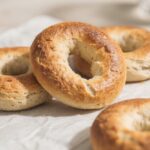
Homemade Sourdough Bagels – Chewy, Tangy, and Worth the Wait
Ingredients
- 200 g active sourdough starter (100% hydration, bubbly and doubled)
- 300 g warm water (about 80–85°F / 27–29°C)
- 500 g bread flour (plus extra for dusting; high-protein flour is best)
- 50 g whole wheat flour (optional, for flavor and color)
- 15 g sugar or honey
- 10 g fine sea salt
- 1 tbsp barley malt syrup (for the boiling water; honey works in a pinch)
- 1 tsp baking soda (for the boiling water)
- Oil for greasing (neutral or olive oil)
- Toppings: sesame seeds, poppy seeds, everything seasoning, coarse salt
- Egg wash (optional, for extra shine): 1 egg beaten with 1 tsp water
Instructions
- Feed Your Starter: Make sure your starter is active and at its peak. It should be airy, doubled in volume, and pass the float test. If in doubt, give it one more feeding and wait until it’s lively.
- Mix the Dough: In a large bowl, whisk starter, warm water, and sugar or honey. Add bread flour, whole wheat flour (if using), and salt. Stir until a shaggy dough forms.
- Knead to Strengthen: Knead on a lightly floured surface for 8–10 minutes until the dough is smooth, elastic, and slightly tacky. You’re aiming for a strong gluten network so the bagels hold their shape.
- First Rise (Bulk Fermentation): Place the dough in a lightly oiled bowl, cover, and let it rise at room temperature until puffed by about 50% (not fully doubled), 3–5 hours depending on temperature. The dough should feel lighter and springy.
- Divide and Pre-Shape: Turn the dough out and divide into 8 equal pieces (about 120–130 g each). Shape each piece into a tight ball by tucking edges under and rolling against the counter.
- Shape the Bagels: Rest the balls for 10 minutes. To shape, poke a hole through the center with your thumb, then gently stretch and spin to a 2-inch hole. The hole will shrink as they rise.
- Second Rise: Place shaped bagels on a parchment-lined baking sheet lightly dusted with flour or semolina. Cover and let them rise at room temperature until slightly puffy, 45–90 minutes. They should hold their shape and feel airy when pressed.
- Optional Cold Rest: For better flavor and easier handling, cover and refrigerate the shaped bagels for 8–16 hours. They’ll firm up and be simpler to boil and top. You can bake straight from the fridge.
- Preheat and Prepare the Water: Heat the oven to 450°F (232°C). Bring a large pot of water to a gentle boil. Add barley malt syrup (or honey) and baking soda. This helps color and shine.
- Boil the Bagels: Carefully lower 2–3 bagels into the simmering water. Boil 30–45 seconds per side for a lighter chew, or up to 60–75 seconds per side for extra chew and a thicker crust. Drain briefly on a wire rack.
- Add Toppings: If using egg wash, brush the tops now. Dip or sprinkle with sesame, poppy, everything seasoning, or coarse salt while the surface is still tacky.
- Bake: Transfer to a parchment-lined baking sheet. Bake 16–22 minutes, rotating once, until deep golden brown. They should feel firm with a slight sheen.
- Cool: Let bagels cool on a rack for at least 20–30 minutes before slicing. This sets the crumb and keeps them from becoming gummy.