

Easter is the perfect time to build a charcuterie board that feels fresh, colorful, and just a little whimsical. Think crisp vegetables, spring cheeses, cured meats, and a few sweet bites that nod to the holiday. It’s easy to assemble, looks impressive, and lets everyone graze at their own pace.
Best of all, you can prep most of it ahead so you’re not stuck in the kitchen. Whether you’re hosting brunch or bringing a dish to a family gathering, this board fits right in.
Why This Recipe Works
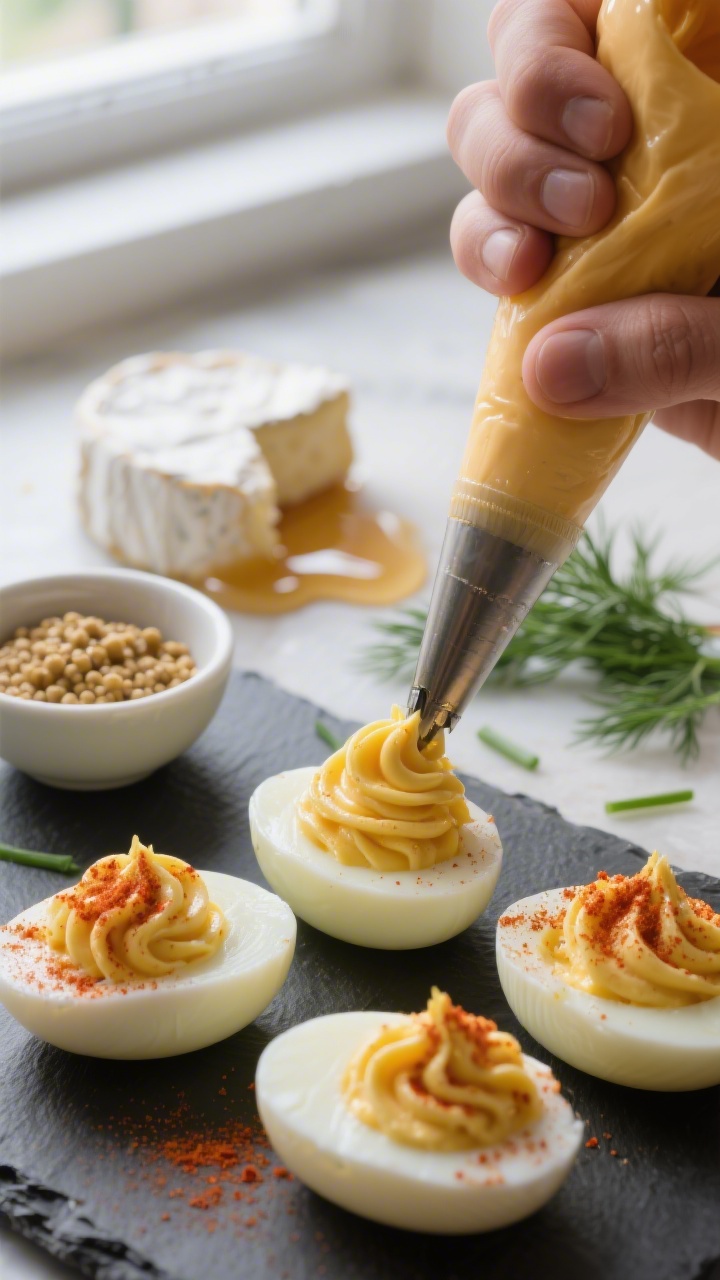
This Easter charcuterie board balances flavors and textures, so every bite feels different but still harmonious. It leans into spring produce and lighter cheeses, while still offering the satisfying richness of cured meats and dips.
The layout is designed for easy snacking, with bite-size pieces, spreads, and crackers that make building small “tastes” effortless. Plus, the pops of color—from radishes to berries to pastel candies—make it feel festive without any fussy techniques.
Ingredients
- Cured meats: Prosciutto, sliced salami, capocollo, and/or soppressata
- Cheeses: Soft goat cheese, brie or camembert, aged cheddar, and herbed cheese spread
- Crackers and bread: Assorted crackers, crostini, and thinly sliced baguette
- Fresh produce: Baby carrots, radishes (with tops if possible), cucumber rounds, snap peas, cherry tomatoes
- Fruit: Strawberries, blueberries, grapes, sliced pears or apples, dried apricots
- Dips and spreads: Honey, whole-grain mustard, hummus, and fig or apricot jam
- Pickled items: Cornichons, pickled onions, or pickled asparagus
- Nuts: Marcona almonds, pistachios, or candied pecans
- Olives: Castelvetrano or mixed olives (pitted if possible)
- Garnishes: Fresh herbs like mint, dill, or rosemary
- Festive sweets (optional): Dark chocolate squares, pastel candy-coated chocolates, or mini meringues
- Egg element (optional but fun): Deviled eggs or halved hard-boiled eggs with a sprinkle of paprika
- Lemon wedges: For drizzling over goat cheese or brightening veggies
Instructions
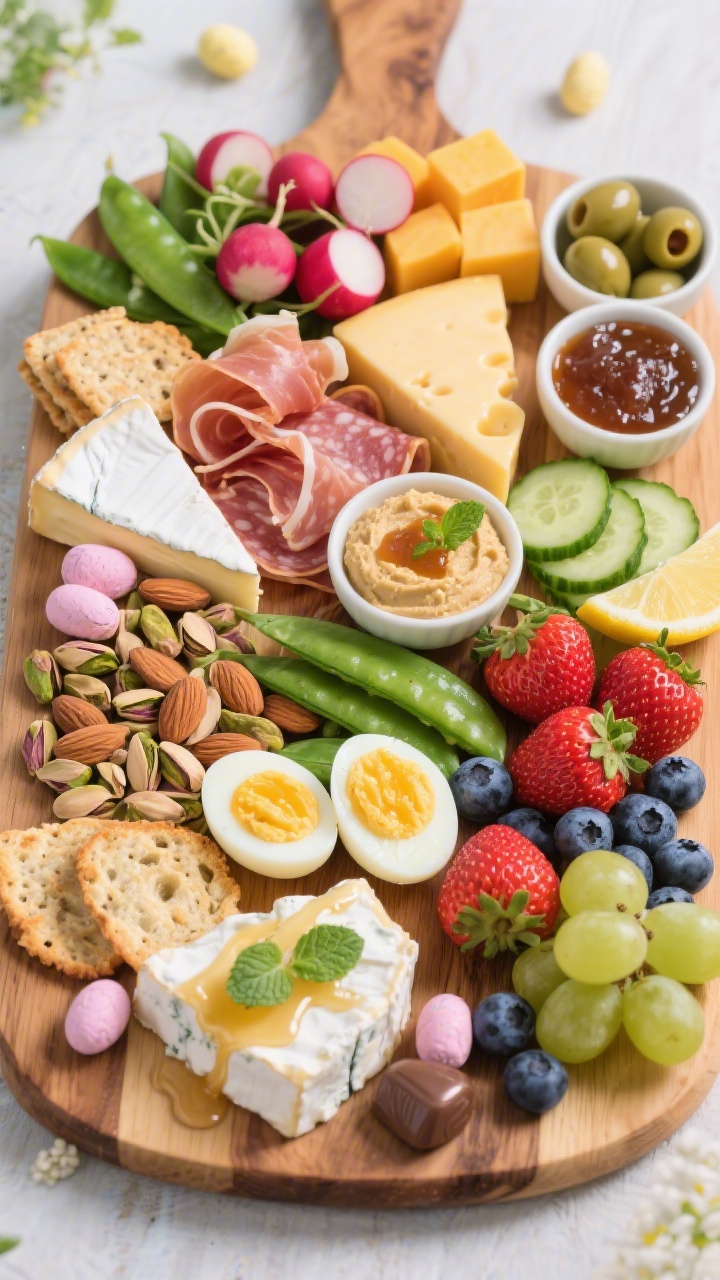
- Choose your board and bowls: Pick a large wooden board, slate, or platter. Grab a few small bowls for olives, spreads, and sticky items like honey or jam.
- Prep cheeses: Set soft cheeses out 30 minutes before serving so they’re creamy and spreadable.
Cut harder cheeses into slices, sticks, or bite-size cubes for easy grabbing.
- Slice and wash produce: Rinse and dry berries and veggies well. Slice cucumbers, halve radishes if large, and keep snap peas whole. Pat everything dry so your board doesn’t get soggy.
- Fold and fan the meats: Roll prosciutto into loose ribbons and fold salami into halves or quarters for texture.
Group meats in a few different spots so guests don’t crowd one area.
- Anchor with bowls: Place small bowls around the board first—fill them with olives, hummus, mustard, and jam. This creates structure and natural “dividers.”
- Add cheeses: Space out the cheeses so each has its own area. Drizzle a little honey over goat cheese and add a sprig of thyme or mint for a spring touch.
- Fill with produce and fruit: Tuck vegetables into neat clusters and fan fruit around the cheeses.
Aim for a balance of color: greens next to reds, pale items alongside darker tones.
- Layer in crunch: Add nuts in small piles and slide crackers and crostini into open spaces. Keep more crackers in a basket on the side if the board gets crowded.
- Add the Easter nods: Place deviled eggs or hard-boiled halves near the veggies. Scatter a few pastel candies or chocolate squares for a gentle holiday note—don’t overdo it.
- Finish with herbs and lemon: Tuck in fresh herb sprigs for fragrance and color.
Add lemon wedges near the goat cheese and veggies for bright, fresh bites.
- Final check: Look for gaps and fill with extra nuts, grapes, or crackers. Wipe the board edges for a clean, intentional look.
How to Store
Before serving: Prep ingredients up to a day ahead. Keep sliced veggies, fruits, and cheeses in separate airtight containers.
Wrap cut cheeses tightly to prevent drying out.
After serving: Refrigerate leftovers within two hours. Store meats and cheeses in separate containers lined with parchment. Keep crackers in a sealed bag or container at room temperature so they stay crisp.
Shelf life: Meats typically last 3–4 days, cheeses 3–5 days (soft cheeses a bit less), and cut produce 2–3 days.
Discard anything that looks slimy, smells off, or has mold not typical for that cheese.
Health Benefits
- Protein variety: Cured meats, cheeses, eggs, and hummus offer satisfying protein that helps keep you full.
- Fiber from plants: Snap peas, radishes, carrots, berries, and dried fruit add fiber for better digestion and steady energy.
- Healthy fats: Nuts and olives provide monounsaturated fats that support heart health when enjoyed in moderation.
- Vitamins and antioxidants: Bright produce and berries pack vitamin C, A, and a range of antioxidants common in spring fruits and vegetables.
- Portion control built in: Bite-size pieces make it easy to choose a balanced plate without overeating.
Pitfalls to Watch Out For
- Overloading the board: Too much variety can look messy and make flavors compete. Curate 3–4 cheeses, 2–3 meats, and a focused set of produce.
- Soggy elements: Wet fruit or juicy tomatoes can leak. Dry everything well and use bowls or leaves of lettuce as a barrier if needed.
- Monotone flavors: Balance creamy, salty, sweet, tart, and crunchy.
Don’t put three mild cheeses together—add one tangy or aged option.
- Allergens and dietary needs: Label or separate nuts and gluten items. Offer a gluten-free cracker and a nut-free zone when needed.
- Temperature trouble: Cheese tastes best at room temp, but meats shouldn’t sit out too long. Set cheese out early, add meats closer to serving time.
Variations You Can Try
- Brunch-forward: Add smoked salmon, capers, dill, mini bagels, whipped cream cheese, and soft-boiled eggs.
- Kid-friendly: Choose mild cheddar, mozzarella pearls, turkey slices, baby cucumbers, apple slices, and a small bowl of yogurt dip.
- Mediterranean: Add feta, tzatziki, roasted red peppers, artichoke hearts, dolmas, and pita chips.
- Vegetarian: Skip meats and add marinated tofu cubes, extra nuts, roasted chickpeas, and more spreads like muhammara or pesto.
- Sweet-leaning dessert board: Brie with jam, dark chocolate, lemon bars cut small, macarons in pastel shades, berries, and candied nuts.
FAQ
How much should I buy per person?
Plan about 2 ounces of cheese and 2 ounces of meat per person if the board is an appetizer.
If it’s the main event, bump each to 3–4 ounces and increase crackers and produce.
Can I make it fully ahead of time?
You can prep everything a day ahead and arrange the board up to 2–3 hours before serving. Keep it wrapped and chilled, then add crackers, herbs, and candies right before guests arrive.
What if I don’t eat pork?
Use turkey or chicken slices, beef bresaola, smoked salmon, or plant-based deli slices. Balance with bold cheeses and flavorful spreads to keep the board interesting.
Which cheeses work best for spring?
Fresh goat cheese, young gouda, creamy brie, and herbed soft cheeses suit the season.
Add one aged option like sharp cheddar or manchego for contrast.
How do I keep apples and pears from browning?
Toss slices with a little lemon juice and water, then pat dry. Arrange near the cheeses so guests can pair them easily.
What size board do I need?
For 6–8 people, a 12×18-inch board works well. For larger groups, use two medium boards so guests can access food from both sides of the table.
Do I need special tools?
A couple of cheese knives, small spoons for spreads, and tongs or cocktail picks make serving easier.
Labels are helpful if you’re offering several cheeses or allergen notes.
Any budget tips?
Choose one premium item (like prosciutto or an artisanal cheese) and mix it with affordable staples. Buy seasonal produce, and use small bowls to stretch pricier items like olives and nuts.
Final Thoughts
An Easter charcuterie board brings people together around fresh flavors and easy, relaxed snacking. With a little planning and a smart mix of textures and colors, you’ll have a centerpiece that feels festive without extra fuss.
Keep it simple, highlight spring produce, and add a few playful touches to nod to the holiday. Most of all, make it your own and enjoy the grazing.

Easter Charcuterie Board – A Bright, Fresh, and Festive Spread
Ingredients
- Cured meats: Prosciutto, sliced salami, capocollo, and/or soppressata
- Cheeses: Soft goat cheese, brie or camembert, aged cheddar, and herbed cheese spread
- Crackers and bread: Assorted crackers, crostini, and thinly sliced baguette
- Fresh produce: Baby carrots, radishes (with tops if possible), cucumber rounds, snap peas, cherry tomatoes
- Fruit: Strawberries, blueberries, grapes, sliced pears or apples, dried apricots
- Dips and spreads: Honey, whole-grain mustard, hummus, and fig or apricot jam
- Pickled items: Cornichons, pickled onions, or pickled asparagus
- Nuts: Marcona almonds, pistachios, or candied pecans
- Olives: Castelvetrano or mixed olives (pitted if possible)
- Garnishes: Fresh herbs like mint, dill, or rosemary
- Festive sweets (optional): Dark chocolate squares, pastel candy-coated chocolates, or mini meringues
- Egg element (optional but fun): Deviled eggs or halved hard-boiled eggs with a sprinkle of paprika
- Lemon wedges: For drizzling over goat cheese or brightening veggies
Instructions
- Choose your board and bowls: Pick a large wooden board, slate, or platter. Grab a few small bowls for olives, spreads, and sticky items like honey or jam.
- Prep cheeses: Set soft cheeses out 30 minutes before serving so they’re creamy and spreadable. Cut harder cheeses into slices, sticks, or bite-size cubes for easy grabbing.
- Slice and wash produce: Rinse and dry berries and veggies well. Slice cucumbers, halve radishes if large, and keep snap peas whole. Pat everything dry so your board doesn’t get soggy.
- Fold and fan the meats: Roll prosciutto into loose ribbons and fold salami into halves or quarters for texture. Group meats in a few different spots so guests don’t crowd one area.
- Anchor with bowls: Place small bowls around the board first—fill them with olives, hummus, mustard, and jam. This creates structure and natural “dividers.”
- Add cheeses: Space out the cheeses so each has its own area. Drizzle a little honey over goat cheese and add a sprig of thyme or mint for a spring touch.
- Fill with produce and fruit: Tuck vegetables into neat clusters and fan fruit around the cheeses. Aim for a balance of color: greens next to reds, pale items alongside darker tones.
- Layer in crunch: Add nuts in small piles and slide crackers and crostini into open spaces. Keep more crackers in a basket on the side if the board gets crowded.
- Add the Easter nods: Place deviled eggs or hard-boiled halves near the veggies. Scatter a few pastel candies or chocolate squares for a gentle holiday note—don’t overdo it.
- Finish with herbs and lemon: Tuck in fresh herb sprigs for fragrance and color. Add lemon wedges near the goat cheese and veggies for bright, fresh bites.
- Final check: Look for gaps and fill with extra nuts, grapes, or crackers. Wipe the board edges for a clean, intentional look.