
Nothing says Easter celebration quite like a glossy, caramelized ham front and center on the table. This version is simple, reliable, and delivers that perfect balance of sweet, savory, and gently spiced. The outside gets sticky and golden, while the inside stays juicy and tender.
It’s the kind of dish that makes the house smell incredible and brings everyone to the kitchen. Whether you’re cooking for a crowd or planning easy leftovers, this classic glazed ham has you covered.
What Makes This Special
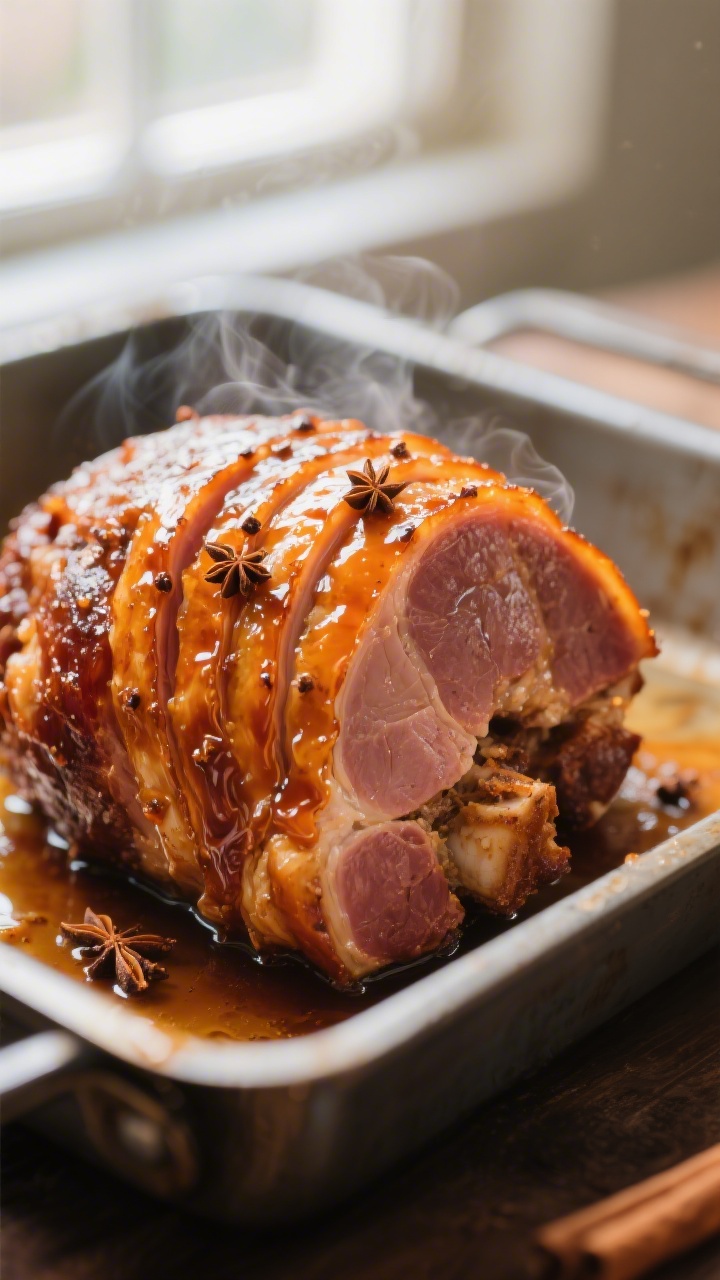
This recipe leans on a tried-and-true glaze that hits all the right notes: sweet from brown sugar, bright from citrus, and warm from spices. The ham is scored and basted as it warms, so the glaze sinks into the edges and caramelizes on the outside.
It’s easy to prep, needs very little hands-on time, and looks impressive without any fuss. You can pair it with simple sides and still feel like you’ve put together a holiday feast.
Shopping List
- Bone-in, fully cooked ham (8–10 pounds), preferably spiral-sliced
- Brown sugar (1 cup, packed)
- Honey (1/3 cup)
- Orange juice (1/2 cup, fresh if possible)
- Dijon mustard (2 tablespoons)
- Apple cider vinegar (1 tablespoon)
- Ground cloves (1/2 teaspoon) or whole cloves for studding
- Ground cinnamon (1/2 teaspoon)
- Garlic powder (1/2 teaspoon)
- Black pepper (1/2 teaspoon)
- Unsalted butter (2 tablespoons)
- Pineapple juice or water (1/2 cup for the roasting pan)
- Optional garnish: orange slices, fresh thyme, or rosemary
Instructions
- Preheat and prep. Heat the oven to 325°F (165°C). Line a roasting pan with foil for easy cleanup and set a rack inside.
Add 1/2 cup pineapple juice or water to the bottom to keep things moist.
- Unwrap the ham. Remove any plastic or netting and discard the plastic cap over the bone if present. Place the ham cut-side down on the rack.
- Score the surface. If your ham isn’t spiral-sliced, use a sharp knife to score the fat in a crisscross pattern about 1/4 inch deep. This helps the glaze cling and caramelize.
- Tent with foil. Cover the ham loosely with foil to prevent drying.
Bake for about 12–15 minutes per pound until it reaches 110–120°F (43–49°C) in the center (since it’s fully cooked, you’re reheating gently).
- Make the glaze. In a small saucepan, combine brown sugar, honey, orange juice, Dijon, cider vinegar, cloves, cinnamon, garlic powder, black pepper, and butter. Simmer 3–5 minutes until glossy and slightly thickened, stirring often.
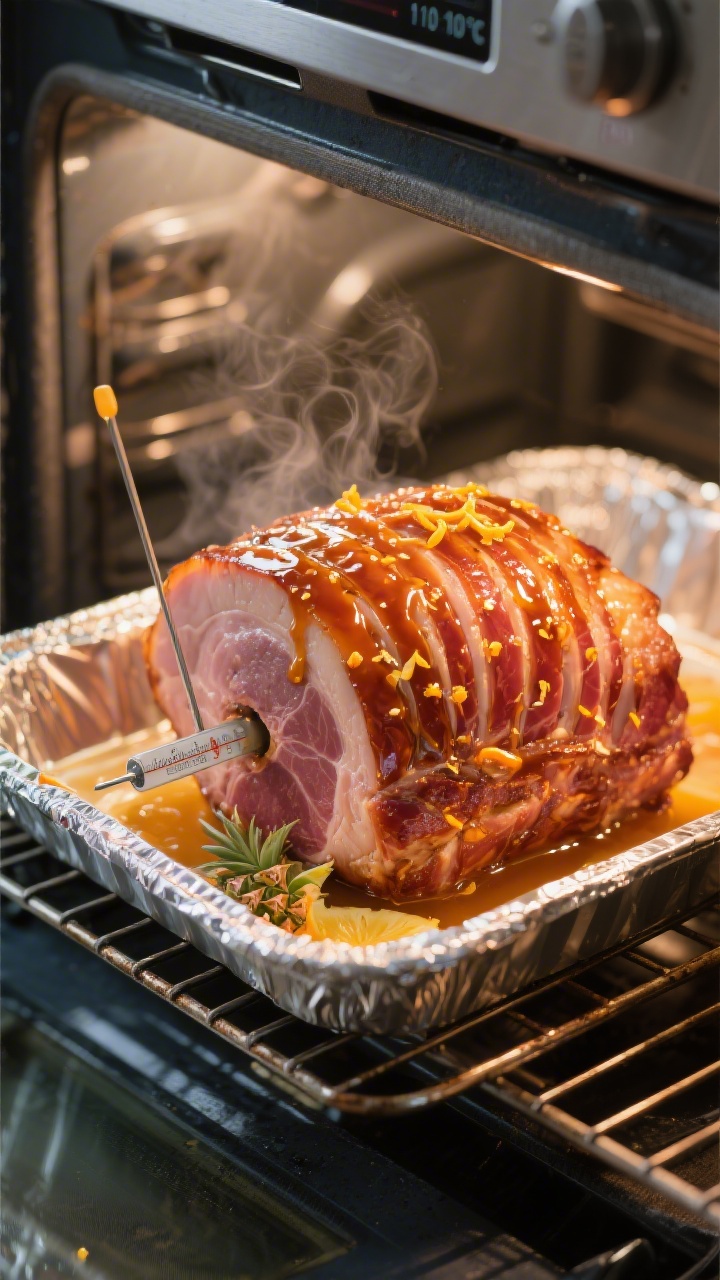
- First glaze. When the ham hits about 110°F, remove the foil. Brush generously with glaze, getting into the slices and scored cuts.
Return to the oven uncovered for 15 minutes.
- Repeat glazing. Brush again every 10–15 minutes for another 30–40 minutes, or until the surface is deeply caramelized, sticky, and the internal temperature reaches 135–140°F (57–60°C).
- Rest. Move the ham to a cutting board and loosely tent with foil. Rest 15–20 minutes to let the juices settle.
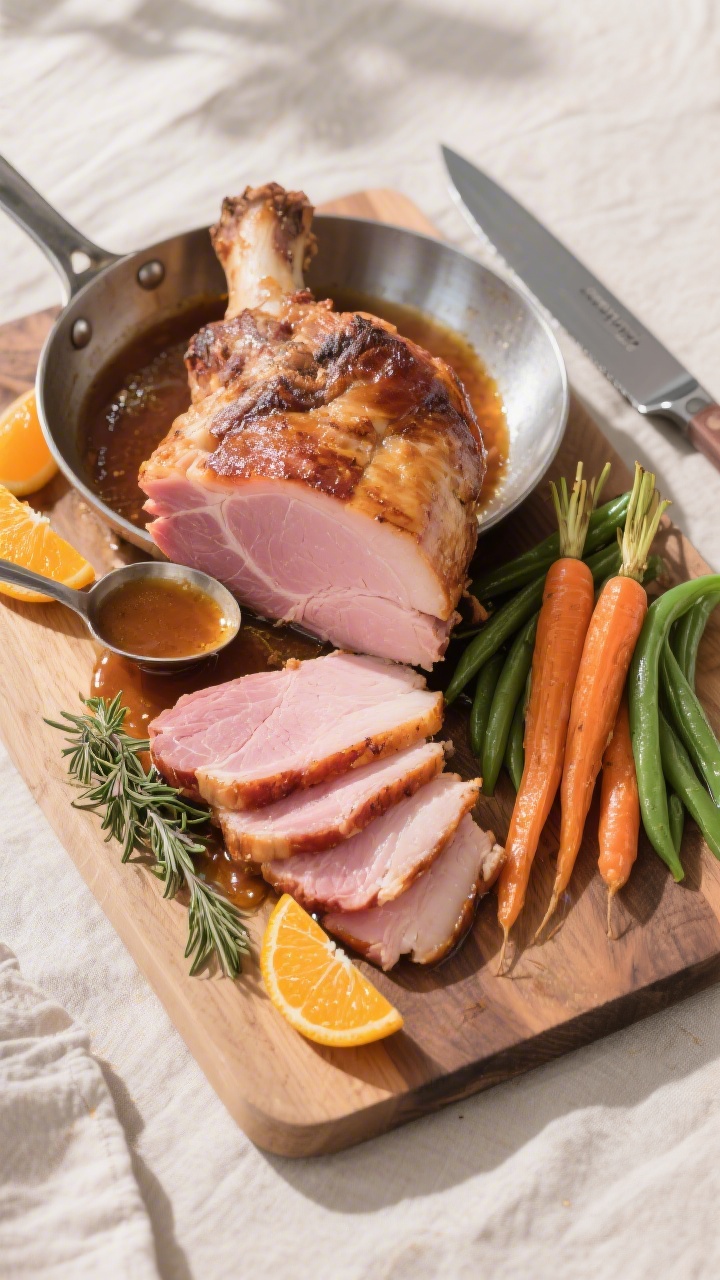
- Slice and serve. Carve along the bone, then into thin slices across the grain. Spoon any pan juices over the top and garnish with orange slices or herbs if you like.
Keeping It Fresh
Leftover ham keeps well and is great for meals all week.
Store slices in an airtight container with a spoonful of pan juices to keep them moist. Refrigerate for up to 4–5 days, or freeze tightly wrapped portions for up to 2 months. Reheat gently, covered, at 300°F (150°C) with a splash of water or broth, or warm in a skillet over low heat to avoid drying out.
Health Benefits
Ham offers solid protein that helps with satiety and muscle maintenance.
It also provides B vitamins like thiamin and niacin, which support energy metabolism. If you’re mindful of sodium and sugar, control portion size and pair ham with fiber-rich sides such as roasted vegetables, green beans, or a fresh salad. Choosing a bone-in cut also lets you simmer the bone later for a flavorful, nutrient-rich soup base.
What Not to Do
- Don’t blast the heat. High temperatures dry out the ham and burn the glaze.
Low and slow is the way.
- Don’t skip the tent. Covering early on prevents the exterior from toughening before the inside warms.
- Don’t glaze too soon. Applying glaze at the start can cause burning. Wait until the last 45–60 minutes.
- Don’t carve right away. Resting helps the juices redistribute and keeps slices tender.
- Don’t forget the bone cap. Remove any plastic bone cover before baking—it can melt.
Recipe Variations
- Maple-Bourbon Glaze: Swap honey for maple syrup, add 2 tablespoons bourbon, and a pinch of cayenne for warmth.
- Pineapple-Ginger Glaze: Replace orange juice with pineapple juice, stir in 1 tablespoon grated fresh ginger and 1 teaspoon soy sauce.
- Spicy Apricot: Use apricot preserves instead of honey and add 1 teaspoon crushed red pepper flakes.
- Mustard-Brown Sugar Crust: Increase Dijon to 1/4 cup and add 1 tablespoon whole-grain mustard for extra tang and texture.
- Clove-Studded Look: For a vintage touch, press whole cloves into the scored intersections before glazing. It’s showy and aromatic.
FAQ
What kind of ham should I buy?
A fully cooked, bone-in ham delivers the best flavor and moisture.
Spiral-sliced is convenient for serving, while an unsliced shank or butt half is great if you prefer thicker, hand-cut slices.
How much ham do I need per person?
Plan on about 3/4 pound per person for bone-in ham. For big eaters or if you want leftovers, bump it to 1 pound per person.
Do I need to soak or rinse the ham first?
No. Most hams are ready to heat and serve.
Just remove the packaging and any plastic bone cap, and pat the surface dry before scoring and glazing.
Can I make the glaze ahead?
Yes. Make it up to 3 days in advance, cool, and refrigerate. Warm gently before brushing it on so it spreads easily.
What if my glaze starts to burn?
If the glaze is darkening too quickly, loosely tent the ham with foil and lower the oven temperature by 15–25°F.
You can also add a splash of liquid to the pan to create steam.
How do I use the leftover ham bone?
Simmer it with onions, carrots, celery, bay leaf, and dried beans or split peas for a rich soup. The bone adds depth and body to the broth.
Can I cook this in a slow cooker?
You can warm a fully cooked ham in a slow cooker on Low for 3–4 hours. Brush on the glaze and finish under the broiler for a few minutes to caramelize the surface.
Is there a way to reduce the sweetness?
Cut the brown sugar by one-third and add a bit more Dijon and vinegar.
You’ll still get a glossy finish with more tang and less sweetness.
How do I avoid dry slices with a spiral ham?
Heat it gently, keep it tented for most of the time, and baste between the slices as you glaze. Resting is also key to keeping it juicy.
What temperature should I serve it at?
Warm ham tastes best when it reaches 135–140°F inside. It should be hot but not steaming, which helps preserve moisture and flavor.
Wrapping Up
A Classic Glazed Easter Ham should be simple, beautiful, and satisfying.
With a balanced glaze, gentle heat, and a few easy techniques, you’ll get a glossy, tender centerpiece that everyone will remember. Slice it thin, pass the sides, and enjoy the leftovers just as much as the main event. Here’s to a relaxed holiday and a ham that tastes as good as it looks.

Classic Glazed Easter Ham – A Festive, Crowd-Pleasing Centerpiece
Ingredients
- Bone-in, fully cooked ham (8–10 pounds), preferably spiral-sliced
- Brown sugar (1 cup, packed)
- Honey (1/3 cup)
- Orange juice (1/2 cup, fresh if possible)
- Dijon mustard (2 tablespoons)
- Apple cider vinegar (1 tablespoon)
- Ground cloves (1/2 teaspoon) or whole cloves for studding
- Ground cinnamon (1/2 teaspoon)
- Garlic powder (1/2 teaspoon)
- Black pepper (1/2 teaspoon)
- Unsalted butter (2 tablespoons)
- Pineapple juice or water (1/2 cup for the roasting pan)
- Optional garnish: orange slices, fresh thyme, or rosemary
Instructions
- Preheat and prep. Heat the oven to 325°F (165°C). Line a roasting pan with foil for easy cleanup and set a rack inside. Add 1/2 cup pineapple juice or water to the bottom to keep things moist.
- Unwrap the ham. Remove any plastic or netting and discard the plastic cap over the bone if present. Place the ham cut-side down on the rack.
- Score the surface. If your ham isn’t spiral-sliced, use a sharp knife to score the fat in a crisscross pattern about 1/4 inch deep. This helps the glaze cling and caramelize.
- Tent with foil. Cover the ham loosely with foil to prevent drying. Bake for about 12–15 minutes per pound until it reaches 110–120°F (43–49°C) in the center (since it’s fully cooked, you’re reheating gently).
- Make the glaze. In a small saucepan, combine brown sugar, honey, orange juice, Dijon, cider vinegar, cloves, cinnamon, garlic powder, black pepper, and butter. Simmer 3–5 minutes until glossy and slightly thickened, stirring often.
- First glaze. When the ham hits about 110°F, remove the foil. Brush generously with glaze, getting into the slices and scored cuts. Return to the oven uncovered for 15 minutes.
- Repeat glazing. Brush again every 10–15 minutes for another 30–40 minutes, or until the surface is deeply caramelized, sticky, and the internal temperature reaches 135–140°F (57–60°C).
- Rest. Move the ham to a cutting board and loosely tent with foil. Rest 15–20 minutes to let the juices settle.
- Slice and serve. Carve along the bone, then into thin slices across the grain. Spoon any pan juices over the top and garnish with orange slices or herbs if you like.