
Easter brunch feels complete when there’s a warm, bubbly potato casserole on the table. This cheesy version is creamy, golden on top, and loaded with cozy flavor in every bite. It’s the kind of dish that makes people go back for seconds without thinking twice.
Best of all, it’s simple to assemble, can be made ahead, and pairs beautifully with ham, roasted veggies, or a fresh salad. Whether you’re hosting a big family gathering or keeping it small, this casserole delivers comfort without the stress.
What Makes This Recipe So Good
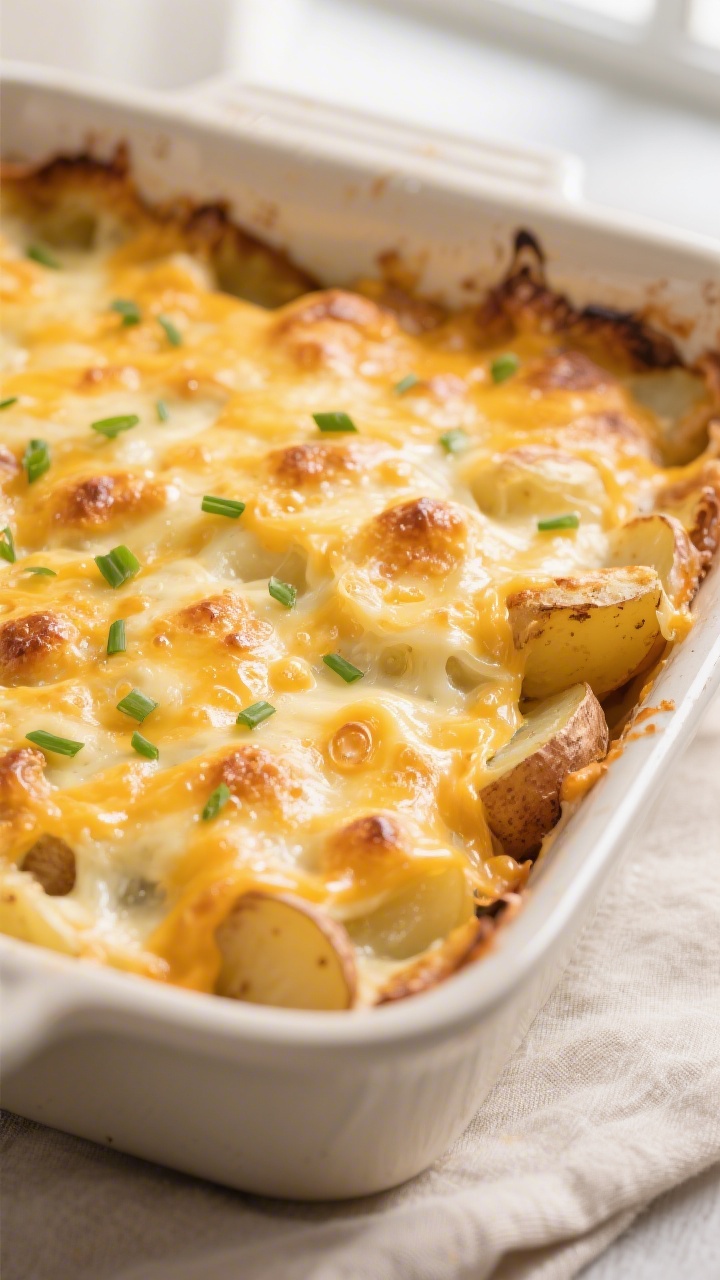
- Ultra creamy and cheesy: A rich sauce hugs tender potatoes, with a melty, golden crust on top.
- No fussy steps: Uses pantry staples and simple techniques. If you can stir and layer, you can make this.
- Perfect for make-ahead: Assemble the day before and bake on Easter morning.
- Feeds a crowd: Easy to double for a larger group, and it reheats well for leftovers.
- Flexible: Add ham, bacon, or herbs to match your family’s tastes without changing the core recipe.
Ingredients
- 3 pounds russet or Yukon Gold potatoes, peeled and thinly sliced (about 1/8 inch)
- 2 cups shredded sharp cheddar cheese, divided
- 1 cup shredded Gruyère or Swiss cheese (optional but recommended)
- 1 small yellow onion, finely chopped
- 3 cloves garlic, minced
- 4 tablespoons unsalted butter
- 1/4 cup all-purpose flour
- 2 1/2 cups whole milk (or 1 1/2 cups milk + 1 cup half-and-half for extra richness)
- 1/2 cup sour cream
- 1 teaspoon Dijon mustard
- 1 teaspoon kosher salt, plus more to taste
- 1/2 teaspoon freshly ground black pepper
- 1/2 teaspoon paprika (smoked or sweet)
- 1/4 teaspoon ground nutmeg (optional, but lovely with dairy)
- 2 tablespoons chopped fresh chives or parsley, plus more for garnish
- Nonstick cooking spray or butter for greasing the dish
Step-by-Step Instructions

- Prep the oven and dish: Heat the oven to 375°F (190°C).
Grease a 9×13-inch baking dish with butter or cooking spray.
- Slice the potatoes: Peel and slice the potatoes thinly. Aim for even slices so they cook at the same rate. Pat them dry with a clean towel to remove excess moisture.
- Sauté aromatics: In a large saucepan, melt the butter over medium heat.
Add the chopped onion and cook 3–4 minutes until soft. Stir in the garlic and cook 30 seconds until fragrant.
- Make the roux: Sprinkle the flour over the onion mixture. Stir constantly for 1 minute to cook off the raw flour taste.
- Whisk in dairy: Slowly pour in the milk (and half-and-half if using), whisking to avoid lumps.
Simmer gently, stirring, until the sauce thickens enough to coat a spoon, about 4–6 minutes.
- Add flavor: Remove from heat. Whisk in sour cream, Dijon, salt, pepper, paprika, and nutmeg. Stir in 1 cup cheddar and all the Gruyère until melted and smooth.
Taste and adjust seasoning.
- Layer the casserole: Spread a thin layer of sauce in the baking dish. Arrange half the potatoes in an even layer. Sprinkle with half the chives.
Pour over half the sauce. Repeat with remaining potatoes, chives, and sauce. Tap the dish gently to settle everything.
- Top with cheese: Sprinkle the remaining 1 cup cheddar evenly over the top.
- Bake covered, then uncovered: Cover the dish tightly with foil and bake 35–40 minutes.
Remove the foil and bake another 20–25 minutes, until the top is golden and the potatoes are tender when pierced.
- Rest and garnish: Let the casserole rest 10–15 minutes to set. Sprinkle with extra chives or parsley before serving.
How to Store
- Refrigerate: Cool completely, then cover and store up to 4 days. Reheat covered at 350°F until warmed through, about 20–25 minutes.
- Freeze: For best texture, freeze before baking.
Assemble, wrap well, and freeze up to 2 months. Thaw in the fridge overnight, then bake as directed, adding 10–15 minutes if needed.
- Leftovers: Reheat individual portions in the microwave or toaster oven. Add a splash of milk if it seems dry.
Benefits of This Recipe
- Budget-friendly: Potatoes and dairy stretch to feed many without breaking the bank.
- Make-ahead friendly: Assemble the night before, which frees you up on a busy holiday morning.
- Comforting and familiar: Classic flavors please picky eaters and food lovers alike.
- Customizable: Works with different cheeses and add-ins, so you can tailor it to what you have.
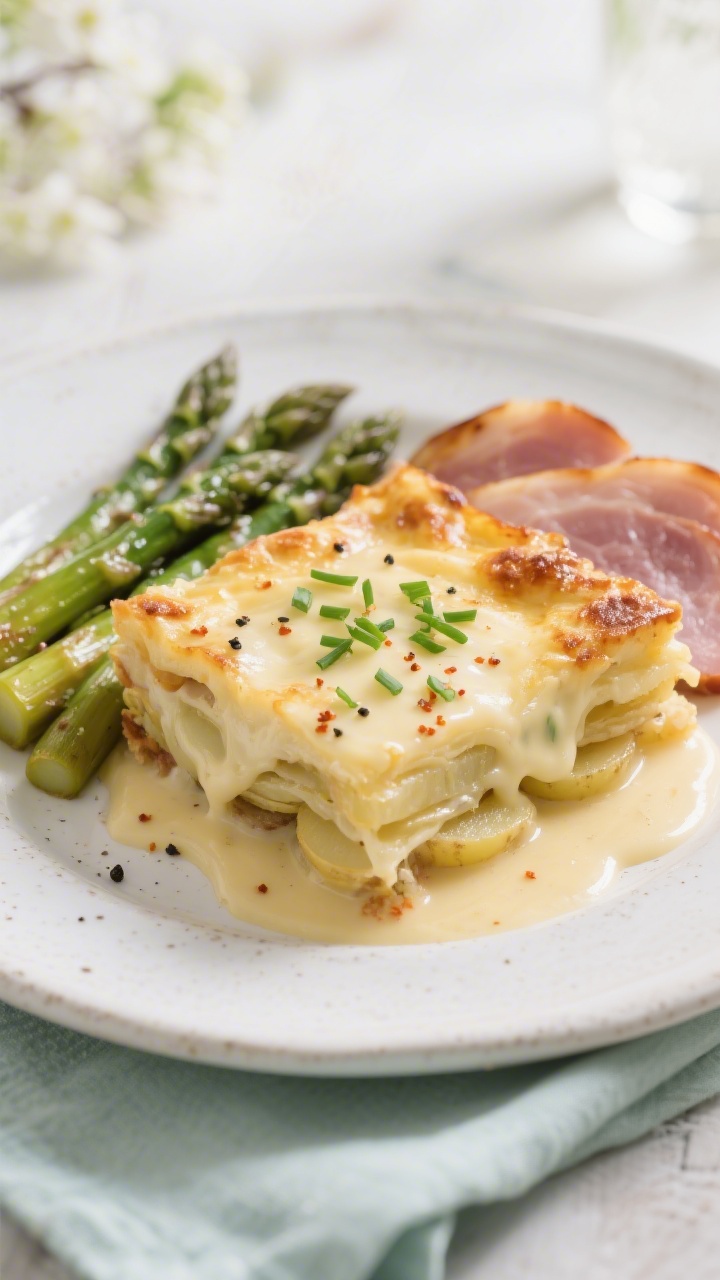
- Reliable centerpiece side: Anchors the meal and pairs well with ham, roasted chicken, or spring vegetables.
Pitfalls to Watch Out For
- Potatoes not sliced evenly: Thick slices may stay firm while thin ones overcook.
Use a mandoline if you have one.
- Runny sauce: If the roux isn’t cooked long enough or the sauce isn’t thickened before layering, the casserole can weep. Simmer until it visibly thickens.
- Curdling risk: Boiling the sauce after adding sour cream can break it. Take the pan off heat before stirring in the sour cream and cheeses.
- Under-seasoning: Potatoes need salt.
Taste the sauce and make sure it’s well seasoned before assembling.
- Dry top: If the top looks dry before the potatoes are tender, tent loosely with foil and continue baking.
Variations You Can Try
- Ham and Cheddar: Stir in 1–2 cups diced cooked ham for a heartier dish.
- Bacon and Chive: Fold in 1 cup crisp crumbled bacon and top with extra chives.
- Spring Veggie: Add 1 cup thawed peas or sautéed asparagus tips for a pop of color and sweetness.
- Herb and Garlic: Increase garlic to 4–5 cloves and add 1 tablespoon fresh thyme or rosemary.
- Smoky Twist: Use smoked paprika and half smoked gouda for deeper flavor.
- Gluten-Free: Swap the flour for a 1:1 gluten-free blend or make a cornstarch slurry (2 tablespoons cornstarch mixed with cold milk) and whisk into hot milk to thicken.
- Lighter Version: Use 2% milk, reduce cheese by 1/2 cup, and skip sour cream. The result is still creamy, just a bit less rich.
FAQ
Can I use pre-shredded cheese?
Pre-shredded cheese works in a pinch, but it often has anti-caking agents that affect melting. For the best creamy texture and smooth top, grate your own cheese.
Do I need to parboil the potatoes first?
No, not for this recipe.
Thin, evenly sliced potatoes bake through in the sauce. If your slices are thicker, you can parboil for 5 minutes to be safe, but it’s not required.
What if I don’t have Gruyère?
Use all cheddar or swap in Swiss, Monterey Jack, or gouda. Choose a cheese that melts well and has good flavor.
A mix keeps things interesting.
How can I tell when it’s done?
The top should be golden and bubbling at the edges. A knife or skewer should slide easily into the center with little resistance. If it’s still firm, bake another 5–10 minutes.
Can I assemble it the night before?
Yes.
Assemble, cover tightly, and refrigerate up to 24 hours. Add 5–10 extra minutes of bake time since it will be cold going into the oven.
How do I prevent the top from over-browning?
If it’s browning too fast, tent the dish with foil during the last part of baking. Remove the foil for the last few minutes if you want more color.
What potatoes work best?
Russets give you a softer, ultra-creamy texture.
Yukon Golds hold their shape a bit better and have a buttery flavor. Both are excellent choices.
Can I make it vegetarian?
It already is, as written. Just be sure your cheeses are made with vegetarian rennet if that’s important to you.
Final Thoughts
Cheesy Easter Potato Casserole is the kind of reliable, feel-good side dish that makes a holiday table feel abundant.
It’s rich without being fussy, easy to prep ahead, and endlessly adaptable to your family’s tastes. With tender layers, a creamy sauce, and a golden, melty top, it hits all the comfort notes. Serve it once, and it’ll become part of your Easter tradition for years to come.

Cheesy Easter Potato Casserole – Comforting, Crowd-Pleasing, and Easy
Ingredients
- 3 pounds russet or Yukon Gold potatoes, peeled and thinly sliced (about 1/8 inch)
- 2 cups shredded sharp cheddar cheese, divided
- 1 cup shredded Gruyère or Swiss cheese (optional but recommended)
- 1 small yellow onion, finely chopped
- 3 cloves garlic, minced
- 4 tablespoons unsalted butter
- 1/4 cup all-purpose flour
- 2 1/2 cups whole milk (or 1 1/2 cups milk + 1 cup half-and-half for extra richness)
- 1/2 cup sour cream
- 1 teaspoon Dijon mustard
- 1 teaspoon kosher salt, plus more to taste
- 1/2 teaspoon freshly ground black pepper
- 1/2 teaspoon paprika (smoked or sweet)
- 1/4 teaspoon ground nutmeg (optional, but lovely with dairy)
- 2 tablespoons chopped fresh chives or parsley, plus more for garnish
- Nonstick cooking spray or butter for greasing the dish
Instructions
- Prep the oven and dish: Heat the oven to 375°F (190°C). Grease a 9×13-inch baking dish with butter or cooking spray.
- Slice the potatoes: Peel and slice the potatoes thinly. Aim for even slices so they cook at the same rate. Pat them dry with a clean towel to remove excess moisture.
- Sauté aromatics: In a large saucepan, melt the butter over medium heat. Add the chopped onion and cook 3–4 minutes until soft. Stir in the garlic and cook 30 seconds until fragrant.
- Make the roux: Sprinkle the flour over the onion mixture. Stir constantly for 1 minute to cook off the raw flour taste.
- Whisk in dairy: Slowly pour in the milk (and half-and-half if using), whisking to avoid lumps. Simmer gently, stirring, until the sauce thickens enough to coat a spoon, about 4–6 minutes.
- Add flavor: Remove from heat. Whisk in sour cream, Dijon, salt, pepper, paprika, and nutmeg. Stir in 1 cup cheddar and all the Gruyère until melted and smooth. Taste and adjust seasoning.
- Layer the casserole: Spread a thin layer of sauce in the baking dish. Arrange half the potatoes in an even layer. Sprinkle with half the chives. Pour over half the sauce. Repeat with remaining potatoes, chives, and sauce. Tap the dish gently to settle everything.
- Top with cheese: Sprinkle the remaining 1 cup cheddar evenly over the top.
- Bake covered, then uncovered: Cover the dish tightly with foil and bake 35–40 minutes. Remove the foil and bake another 20–25 minutes, until the top is golden and the potatoes are tender when pierced.
- Rest and garnish: Let the casserole rest 10–15 minutes to set. Sprinkle with extra chives or parsley before serving.