
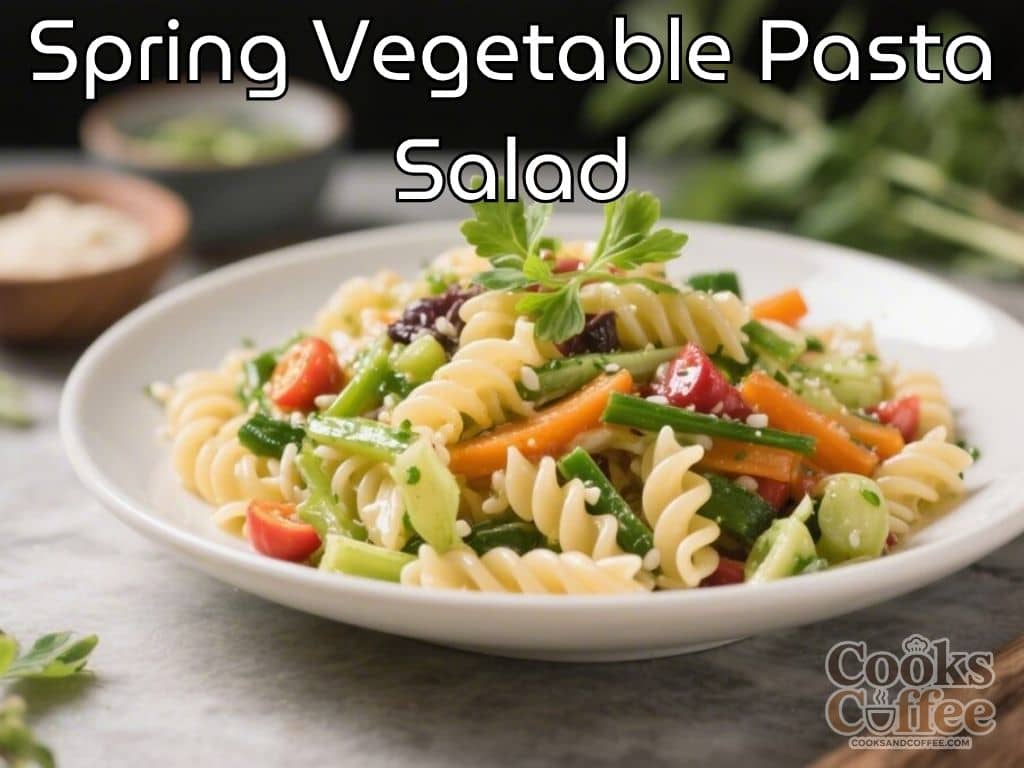
Spring Vegetable Pasta Salad is the dish you make when you want something colorful, crunchy, and satisfying without much fuss. It’s quick to throw together, tastes great warm or chilled, and fits just as well at a picnic as it does at your weeknight dinner table. You get tender pasta tossed with crisp spring vegetables, a zesty dressing, and a sprinkle of herbs that bring everything to life.
It’s light but still filling, fresh but cozy. And the best part? You can easily make it your own with what’s in season or already in your fridge.
What Makes This Special
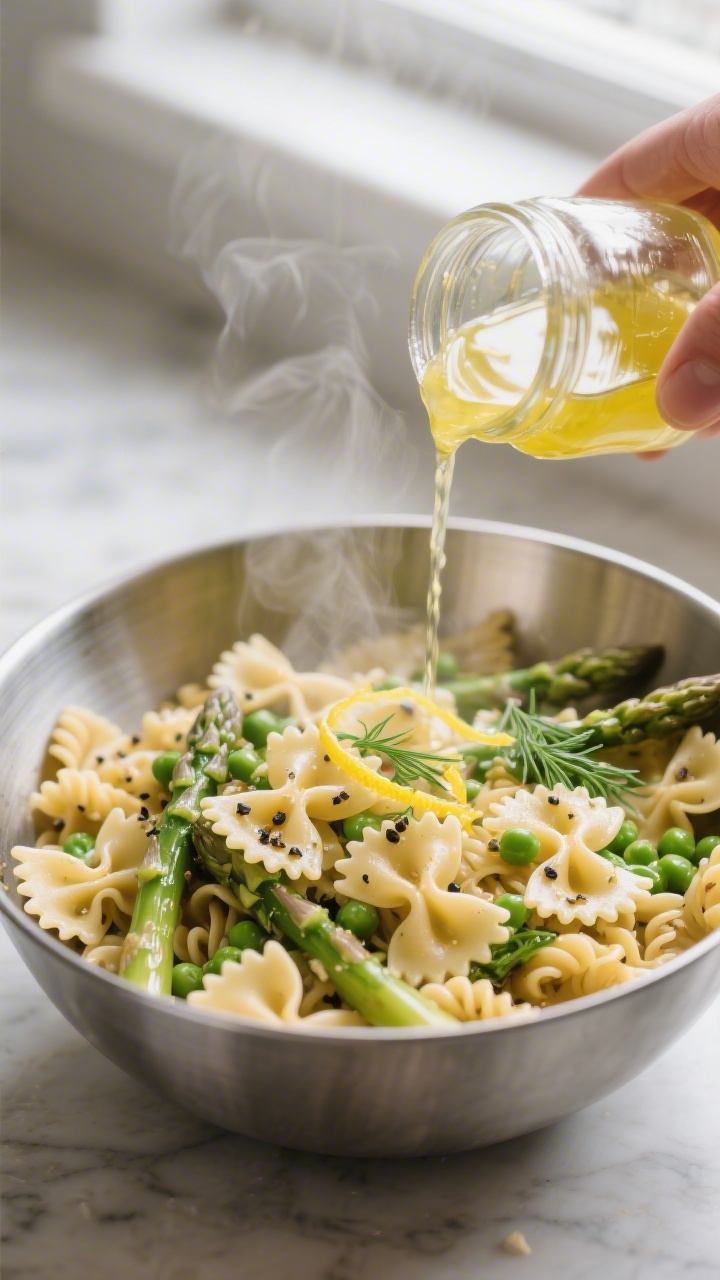
This pasta salad highlights the very best of spring produce—think asparagus, peas, radishes, and baby spinach—so every bite feels bright and fresh.
The dressing is a simple lemon-garlic vinaigrette that coats the noodles without weighing them down. You’ll get plenty of flavor from fresh herbs and a pop of tang from feta or goat cheese. It’s a flexible recipe that welcomes substitutions and works for meal prep.
Whether served as a main or a side, it brings a little sunshine to the table.
What You’ll Need
- Pasta: 12 ounces short pasta (farfalle, fusilli, rotini, or orecchiette)
- Asparagus: 1 bunch, trimmed and cut into 1-inch pieces
- Snap peas or shelled peas: 1 cup
- Radishes: 5–6, thinly sliced
- Baby spinach or arugula: 2 cups, loosely packed
- Cherry tomatoes: 1 cup, halved
- Cucumber: 1 small, diced
- Fresh herbs: 1/2 cup chopped (mix of dill, parsley, chives, or mint)
- Red onion or shallot: 1/4 cup, finely sliced
- Cheese (optional): 1/2 cup crumbled feta or goat cheese
- Toasted nuts or seeds (optional): 1/4 cup slivered almonds, pine nuts, or pumpkin seeds
For the Lemon-Garlic Vinaigrette:
- Extra-virgin olive oil:</strong > 1/3 cup
- Lemon juice: 1 large lemon (about 3 tablespoons)
- Lemon zest: 1 teaspoon
- Dijon mustard: 2 teaspoons
- Honey or maple syrup: 1–2 teaspoons, to taste
- Garlic: 1 clove, finely grated or minced
- Salt and black pepper: to taste
Step-by-Step Instructions
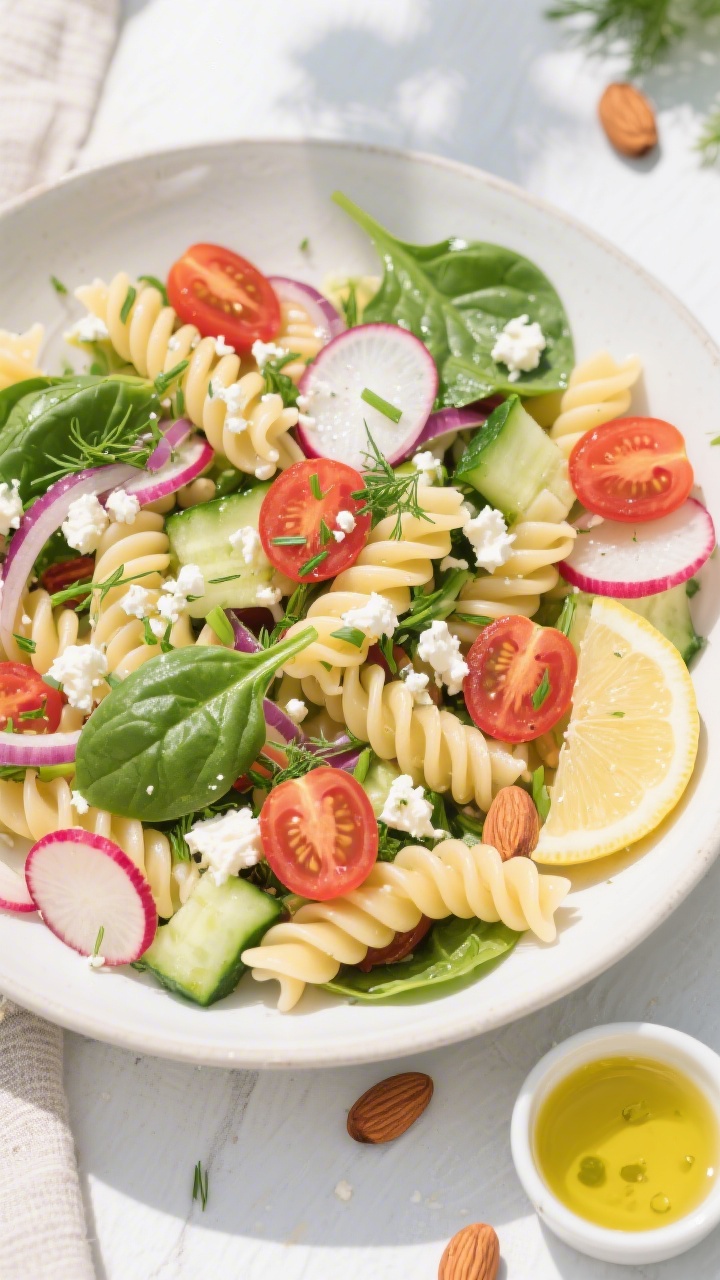
- Cook the pasta. Bring a large pot of salted water to a boil. Add pasta and cook until just al dente according to package directions. Reserve 1/4 cup of the pasta water, then drain.
- Blanch the green veggies. In the last 2 minutes of the pasta’s cooking time, add the asparagus and peas to the same pot.
Drain together and rinse briefly under cool water to stop the cooking. This keeps their color bright and texture crisp-tender.
- Make the dressing. In a small bowl or jar, whisk olive oil, lemon juice, zest, Dijon, honey, and garlic. Season with salt and pepper.
Taste and adjust for acidity or sweetness.
- Toss while warm. Add warm pasta and blanched veggies to a large bowl. Pour over about two-thirds of the dressing and toss. If it looks dry, add a splash of the reserved pasta water to help it cling.
- Add the fresh crunch. Fold in radishes, cherry tomatoes, cucumber, red onion, and half of the herbs.
Gently toss to combine without crushing the tomatoes.
- Finish and season. Add spinach or arugula, then sprinkle in feta or goat cheese if using. Toss with the remaining dressing. Taste and add more salt, pepper, or lemon as needed.
- Top and serve. Finish with remaining herbs and the toasted nuts or seeds.
Serve slightly warm or chill for 30–60 minutes for a more melded flavor.
Storage Instructions
Store the salad in an airtight container in the refrigerator for up to 3 days. If you plan to keep it beyond day one, hold back the spinach and add it just before serving so it doesn’t wilt. The pasta absorbs dressing as it sits, so keep a little extra lemon and olive oil on hand to refresh it before serving.
Avoid freezing; the textures of the vegetables won’t hold up well.
Health Benefits
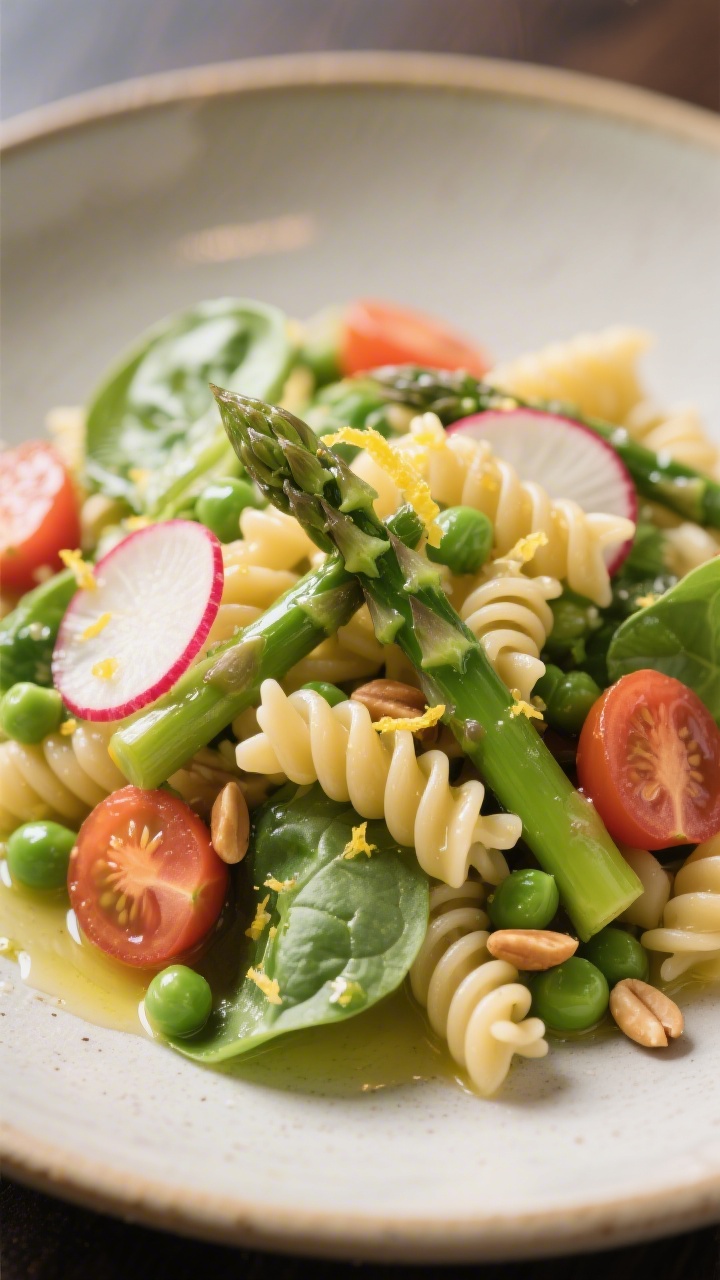
- Vegetable variety: Asparagus, peas, and leafy greens bring fiber, folate, vitamin K, and antioxidants that support heart and bone health.
- Balanced energy: Pasta provides steady carbs for energy, while olive oil and nuts add healthy fats to keep you satisfied.
- Protein options: Cheese, nuts, or add-ins like chickpeas or grilled chicken can boost protein for a complete meal.
- Gut-friendly fiber: Raw and lightly cooked veggies support digestion and help you feel full with fewer calories.
- Lower sodium control: Making your own dressing lets you manage salt and avoid preservatives found in store-bought options.
Common Mistakes to Avoid
- Overcooking the pasta: Soft noodles turn mushy as they absorb dressing. Keep it al dente.
- Skipping the blanch-and-shock: Don’t just toss raw asparagus or peas into the salad; a quick blanch gives the best texture and color.
- Under-seasoning: Pasta needs more salt than you think. Salt the cooking water and taste the final salad.
- Adding all the dressing at once: Start with most of it, then adjust after adding veggies and cheese.
- Making it too far ahead: The salad is best the day it’s made or the next day.
If prepping ahead, store delicate greens and nuts separately.
Variations You Can Try
- Protein boost: Toss in grilled chicken, salmon, shrimp, or a can of chickpeas or white beans.
- Cheese swap: Try shaved Parmesan, fresh mozzarella pearls, or ricotta salata for a different vibe.
- Herb-forward: Go heavy on dill and mint for a garden-fresh twist, or add basil for a more classic Italian note.
- Creamy dressing: Whisk a spoonful of Greek yogurt into the vinaigrette for a lighter creamy version.
- Whole-grain pasta: Use whole-wheat or chickpea pasta for extra fiber and protein.
- Roasted touch: Roast asparagus and tomatoes for deeper flavor instead of blanching.
- Citrus change-up: Swap lemon for Meyer lemon or add a splash of orange juice for a softer citrus profile.
FAQ
Can I make this gluten-free?
Yes. Use your favorite gluten-free short pasta and cook it slightly under al dente to prevent it from breaking as it cools. Rinse briefly after draining to remove excess starch, then toss with a bit of olive oil before adding the other ingredients.
What if I don’t have asparagus?
Use green beans, broccolini, or zucchini.
Just cut them into bite-size pieces and blanch until crisp-tender so they keep some snap.
How can I make it dairy-free?
Skip the cheese and add a handful of toasted nuts or seeds for richness. You can also add a spoonful of capers or olives for a salty, briny note.
Can I serve it warm?
Absolutely. Toss the warm pasta and blanched vegetables with the dressing and serve right away.
Add the greens at the end so they wilt slightly but don’t turn soggy.
What pasta shape works best?
Short, ridged shapes like fusilli or farfalle hold onto dressing and small vegetables well. Avoid long noodles—they’re harder to mix and serve in a salad format.
How do I keep the veggies bright and crisp?
Blanch them briefly in salted water, then rinse under cool water to stop the cooking. Dry them well before tossing so the dressing doesn’t get watered down.
Can I make the dressing ahead?
Yes.
The vinaigrette keeps in a sealed jar in the fridge for up to one week. Shake well before using, and let it come to room temperature for the best flavor.
Wrapping Up
Spring Vegetable Pasta Salad is the kind of recipe that works any time you need something fresh, colorful, and crowd-pleasing. It’s flexible, fast, and full of texture, with a bright dressing that ties everything together.
Use the basics here as your template, then swap in the seasonal produce you love. With a little prep and a handful of pantry staples, you’ll have a bowl that tastes like spring in every bite.
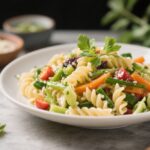
Spring Vegetable Pasta Salad – Fresh, Bright, and Easy
Ingredients
- Pasta: 12 ounces short pasta (farfalle, fusilli, rotini, or orecchiette)
- Asparagus: 1 bunch, trimmed and cut into 1-inch pieces
- Snap peas or shelled peas: 1 cup
- Radishes: 5–6, thinly sliced
- Baby spinach or arugula: 2 cups, loosely packed
- Cherry tomatoes: 1 cup, halved
- Cucumber: 1 small, diced
- Fresh herbs: 1/2 cup chopped (mix of dill, parsley, chives, or mint)
- Red onion or shallot: 1/4 cup, finely sliced
- Cheese (optional): 1/2 cup crumbled feta or goat cheese
- Toasted nuts or seeds (optional): 1/4 cup slivered almonds, pine nuts, or pumpkin seeds
- Extra-virgin olive oil: 1/3 cup
- Lemon juice: 1 large lemon (about 3 tablespoons)
- Lemon zest: 1 teaspoon
- Dijon mustard: 2 teaspoons
- Honey or maple syrup: 1–2 teaspoons, to taste
- Garlic: 1 clove, finely grated or minced
- Salt and black pepper: to taste
Instructions
- Cook the pasta. Bring a large pot of salted water to a boil. Add pasta and cook until just al dente according to package directions. Reserve 1/4 cup of the pasta water, then drain.
- Blanch the green veggies. In the last 2 minutes of the pasta’s cooking time, add the asparagus and peas to the same pot. Drain together and rinse briefly under cool water to stop the cooking. This keeps their color bright and texture crisp-tender.
- Make the dressing. In a small bowl or jar, whisk olive oil, lemon juice, zest, Dijon, honey, and garlic. Season with salt and pepper. Taste and adjust for acidity or sweetness.
- Toss while warm. Add warm pasta and blanched veggies to a large bowl. Pour over about two-thirds of the dressing and toss. If it looks dry, add a splash of the reserved pasta water to help it cling.
- Add the fresh crunch. Fold in radishes, cherry tomatoes, cucumber, red onion, and half of the herbs. Gently toss to combine without crushing the tomatoes.
- Finish and season. Add spinach or arugula, then sprinkle in feta or goat cheese if using. Toss with the remaining dressing. Taste and add more salt, pepper, or lemon as needed.
- Top and serve. Finish with remaining herbs and the toasted nuts or seeds. Serve slightly warm or chill for 30–60 minutes for a more melded flavor.