

Roasting a whole chicken at home feels special without being complicated. It fills your kitchen with the kind of aroma that makes everyone ask what’s for dinner. This version leans on fresh herbs, garlic, lemon, and butter to deliver juicy meat and golden, crackly skin.
It’s the kind of recipe you make once and then keep on repeat. With a handful of pantry staples and a few smart techniques, you’ll get reliable, restaurant-level results.
Why This Recipe Works
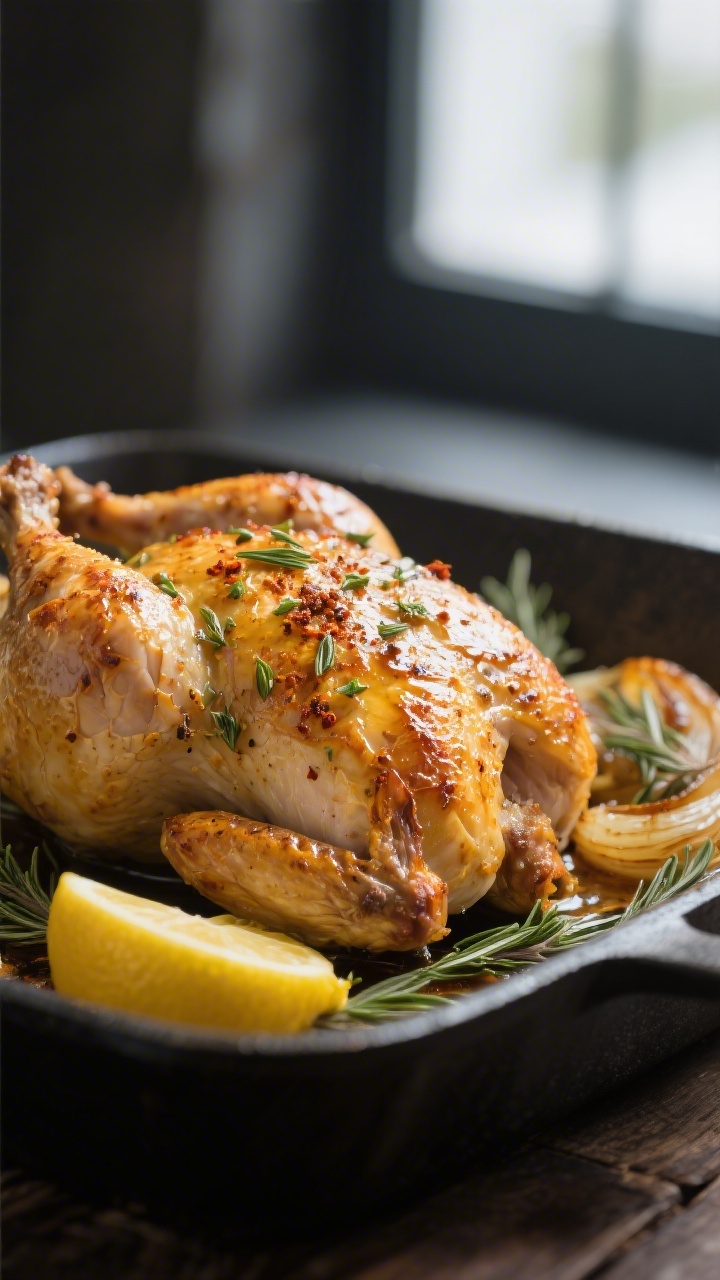
- Simple flavor base: Garlic, lemon, and fresh herbs like thyme and rosemary bring bright, savory notes without much effort.
- Butter under the skin: Rubbing butter under the breast skin bastes the meat as it roasts, keeping it juicy.
- High-heat finish: Starting at moderate heat and finishing hot gives you evenly cooked meat and crisp skin.
- Trussing (or a simple tuck): Keeping the legs close and tucking the wings helps the bird cook evenly and look tidy.
- Resting time: A short rest lets the juices redistribute, so every slice is moist and flavorful.
Ingredients
- 1 whole chicken (4 to 5 pounds), giblets removed
- 2 teaspoons kosher salt, plus more to taste
- 1 teaspoon freshly ground black pepper
- 1 lemon, halved
- 1 head of garlic, halved crosswise
- 4 tablespoons unsalted butter, softened
- 2 tablespoons olive oil
- 2 tablespoons chopped fresh rosemary
- 2 tablespoons chopped fresh thyme
- 1 tablespoon chopped fresh parsley, plus more for garnish
- 1 teaspoon smoked paprika (optional, for color)
- 1 small onion, quartered
- 4 carrots, cut into large chunks (optional, for the pan)
- 3 celery stalks, cut into large chunks (optional, for the pan)
- 1/2 cup low-sodium chicken broth or water (for the pan)
Step-by-Step Instructions
- Prep the chicken: Pat the chicken very dry with paper towels. Dry skin is the key to crisp skin.
Remove any pin feathers and excess moisture.
- Season the cavity: Sprinkle a pinch of salt and pepper inside the cavity. Stuff it with the lemon halves, halved garlic head, and a few sprigs of rosemary and thyme if you have extras.
- Make the herb butter: In a small bowl, mix softened butter, olive oil, chopped rosemary, thyme, parsley, paprika (if using), 2 teaspoons salt, and 1 teaspoon pepper until well combined.
- Butter under the skin: Gently loosen the skin over the breasts with your fingers, being careful not to tear it. Rub about half the herb butter under the skin on both breasts.
Spread the rest over the entire exterior of the chicken.
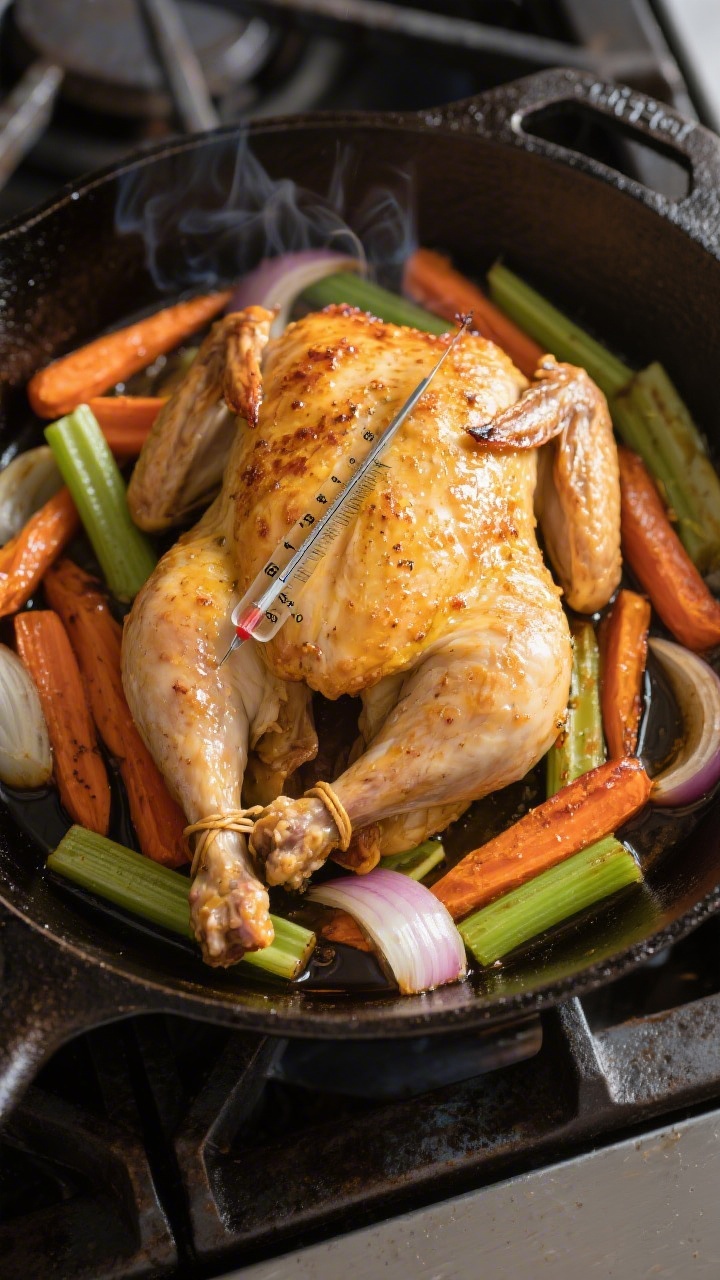
- Arrange the pan: Scatter onion, carrots, and celery in a roasting pan or large oven-safe skillet. Pour the broth or water into the pan. Set the chicken on top, breast-side up.
Tuck the wing tips under the body. Tie the legs together with kitchen twine if you have it; otherwise, cross them and tuck snugly.
- Roast at moderate heat: Place the chicken on the middle rack in a 375°F (190°C) oven. Roast for 45 to 55 minutes, basting once or twice with the pan juices if you’d like.
- Finish at high heat: Increase the heat to 425°F (220°C) and continue roasting for 15 to 25 minutes, until the skin is deep golden and a thermometer inserted into the thickest part of the thigh registers 165°F (74°C).
Total time is usually 1 hour 10 minutes to 1 hour 30 minutes, depending on size.
- Rest the bird: Transfer the chicken to a cutting board and let it rest for 10 to 15 minutes. This keeps the juices in the meat, not on the board.
- Make a quick pan sauce (optional): Skim excess fat from the pan juices. Place the pan over medium heat and stir, scraping up browned bits.
Add a splash of water, broth, or white wine and reduce until slightly syrupy. Taste and season with salt and pepper.
- Carve and serve: Carve the chicken into breasts, thighs, drumsticks, and wings. Spoon any pan juices over the top.
Sprinkle with fresh parsley for a bright finish.
Storage Instructions
- Refrigerate: Cool leftovers, then store in an airtight container for up to 4 days.
- Freeze: Shred or slice meat and freeze for up to 3 months. Wrap tightly to avoid freezer burn.
- Reheat: For best results, warm gently in a covered dish at 300°F (150°C) until heated through, or reheat slices in a skillet with a splash of broth.
- Use the carcass: Save bones for stock. Simmer with onion, celery, carrots, and herbs for 2 to 3 hours, then strain.

Why This is Good for You
- Lean protein: Chicken provides high-quality protein to support muscles and keep you full.
- Herb-forward flavor: Fresh herbs bring antioxidants and lots of taste without extra sodium or sugar.
- Balanced meal base: Pair with roasted vegetables or a simple salad for a satisfying, nutrient-dense dinner.
- Smart fats: A modest amount of butter and olive oil improves texture and flavor without overwhelming the dish.
Pitfalls to Watch Out For
- Skipping the dry-off: Wet skin steams instead of crisps.
Pat the chicken dry thoroughly.
- Underseasoning: A whole bird needs more salt than you think. Season the cavity and the skin well.
- Overcooking or undercooking: Use a thermometer. Aim for 165°F in the thigh and 160°F in the breast (it will rise slightly as it rests).
- No rest time: Cutting too soon releases juices.
Give it at least 10 minutes.
- Oven crowding: Too many veggies can trap steam. Keep a single layer so air circulates and skin crisps.
Alternatives
- Herb swaps: Use sage, marjoram, or tarragon. Dried herbs work too; use about one-third the amount of fresh.
- Citrus twist: Substitute orange for lemon for a sweeter, fragrant finish.
- Dairy-free: Replace butter with all olive oil or dairy-free butter.
The skin will still brown nicely.
- Spice variations: Add cumin and coriander for a warm profile, or smoked paprika and chili flakes for heat.
- Vegetable bed: Try fennel wedges, halved baby potatoes, or thick-cut leeks under the chicken to make it a one-pan meal.
- Weeknight shortcut: Spatchcock (butterfly) the chicken by removing the backbone. It cooks faster and more evenly, often within 45–55 minutes total.
FAQ
Do I need to truss the chicken?
Trussing helps the chicken cook evenly and look neat, but it’s not required. If you skip it, just tuck the wings under and cross the legs so they don’t splay out.
How do I know when it’s done without a thermometer?
A thermometer is the most reliable tool.
If you don’t have one, check that the juices run clear when you pierce the thigh and that the legs move freely in their joints. Still, investing in a digital thermometer is worth it.
Can I use dried herbs instead of fresh?
Yes. Use about one-third the amount, since dried herbs are more concentrated.
Rub them into the butter mixture to wake up their flavor.
Why is my skin not crispy?
Moisture is the main culprit. Make sure the chicken is well dried, don’t overcrowd the pan with vegetables, and finish at high heat. Also, avoid covering the chicken while roasting.
Can I roast from frozen?
It’s best to fully thaw the chicken in the refrigerator for 24 to 48 hours.
Roasting from frozen leads to uneven cooking and food safety risks.
Should I baste the chicken?
Basting adds flavor to the skin, but it’s optional. Opening the oven too often drops the temperature. One or two bastes are enough, or skip it if your skin is already browning well.
What can I do with leftovers?
Shred leftover meat for salads, sandwiches, tacos, or soups.
Use the bones for stock to stretch your effort into another meal.
Can I make this ahead?
You can season the chicken and refrigerate it uncovered for up to 24 hours. This dry brine deepens flavor and helps the skin dry out for extra crispiness.
Is it okay to use only olive oil?
Yes. Olive oil alone works well and gives a slightly lighter finish.
Butter adds richness, but the herbs and lemon will still shine with oil.
Wrapping Up
A good roast chicken is about simple steps done well: dry the bird, season confidently, add herb butter, and finish hot. You’ll get tender meat, crisp skin, and a savory pan sauce with almost no fuss. Keep this recipe in your back pocket for Sunday dinners, company nights, or busy weekdays.
Once you taste how good it is, you’ll wonder why you didn’t start roasting whole chickens sooner.

Herb Roasted Whole Chicken – Simple, Flavorful, and Foolproof
Ingredients
- 1 whole chicken (4 to 5 pounds), giblets removed
- 2 teaspoons kosher salt, plus more to taste
- 1 teaspoon freshly ground black pepper
- 1 lemon, halved
- 1 head of garlic, halved crosswise
- 4 tablespoons unsalted butter, softened
- 2 tablespoons olive oil
- 2 tablespoons chopped fresh rosemary
- 2 tablespoons chopped fresh thyme
- 1 tablespoon chopped fresh parsley, plus more for garnish
- 1 teaspoon smoked paprika (optional, for color)
- 1 small onion, quartered
- 4 carrots, cut into large chunks (optional, for the pan)
- 3 celery stalks, cut into large chunks (optional, for the pan)
- 1/2 cup low-sodium chicken broth or water (for the pan)
Instructions
- Prep the chicken: Pat the chicken very dry with paper towels. Dry skin is the key to crisp skin. Remove any pin feathers and excess moisture.
- Season the cavity: Sprinkle a pinch of salt and pepper inside the cavity. Stuff it with the lemon halves, halved garlic head, and a few sprigs of rosemary and thyme if you have extras.
- Make the herb butter: In a small bowl, mix softened butter, olive oil, chopped rosemary, thyme, parsley, paprika (if using), 2 teaspoons salt, and 1 teaspoon pepper until well combined.
- Butter under the skin: Gently loosen the skin over the breasts with your fingers, being careful not to tear it. Rub about half the herb butter under the skin on both breasts. Spread the rest over the entire exterior of the chicken.
- Arrange the pan: Scatter onion, carrots, and celery in a roasting pan or large oven-safe skillet. Pour the broth or water into the pan. Set the chicken on top, breast-side up. Tuck the wing tips under the body. Tie the legs together with kitchen twine if you have it; otherwise, cross them and tuck snugly.
- Roast at moderate heat: Place the chicken on the middle rack in a 375°F (190°C) oven. Roast for 45 to 55 minutes, basting once or twice with the pan juices if you’d like.
- Finish at high heat: Increase the heat to 425°F (220°C) and continue roasting for 15 to 25 minutes, until the skin is deep golden and a thermometer inserted into the thickest part of the thigh registers 165°F (74°C). Total time is usually 1 hour 10 minutes to 1 hour 30 minutes, depending on size.
- Rest the bird: Transfer the chicken to a cutting board and let it rest for 10 to 15 minutes. This keeps the juices in the meat, not on the board.
- Make a quick pan sauce (optional): Skim excess fat from the pan juices. Place the pan over medium heat and stir, scraping up browned bits. Add a splash of water, broth, or white wine and reduce until slightly syrupy. Taste and season with salt and pepper.
- Carve and serve: Carve the chicken into breasts, thighs, drumsticks, and wings. Spoon any pan juices over the top. Sprinkle with fresh parsley for a bright finish.