
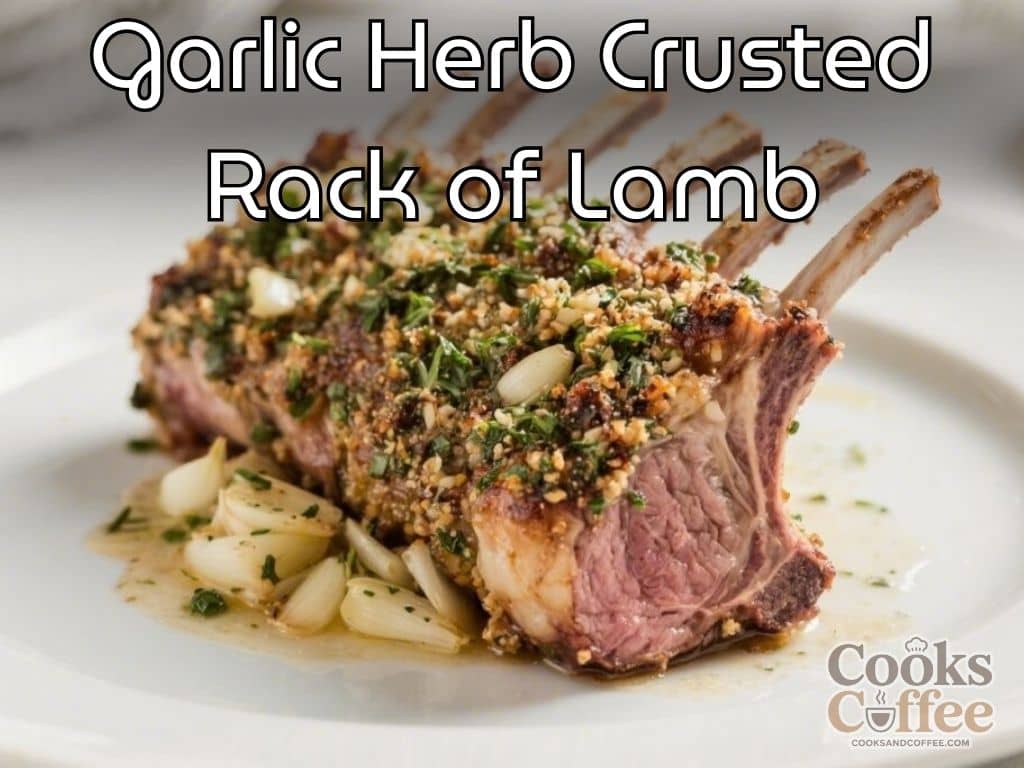
This Garlic Herb Crusted Rack of Lamb looks fancy, tastes incredible, and is a lot easier to make than it seems. The crust is fragrant and crisp, the meat is juicy and rosy inside, and the whole thing comes together in under an hour. Serve it for a small gathering or a quiet dinner at home—you’ll feel like you cooked something restaurant-worthy without the stress.
With the right timing and a handful of fresh herbs, you’ll get big flavor from simple ingredients. This is the kind of main course that makes people go quiet for a second bite.
Why This Recipe Works
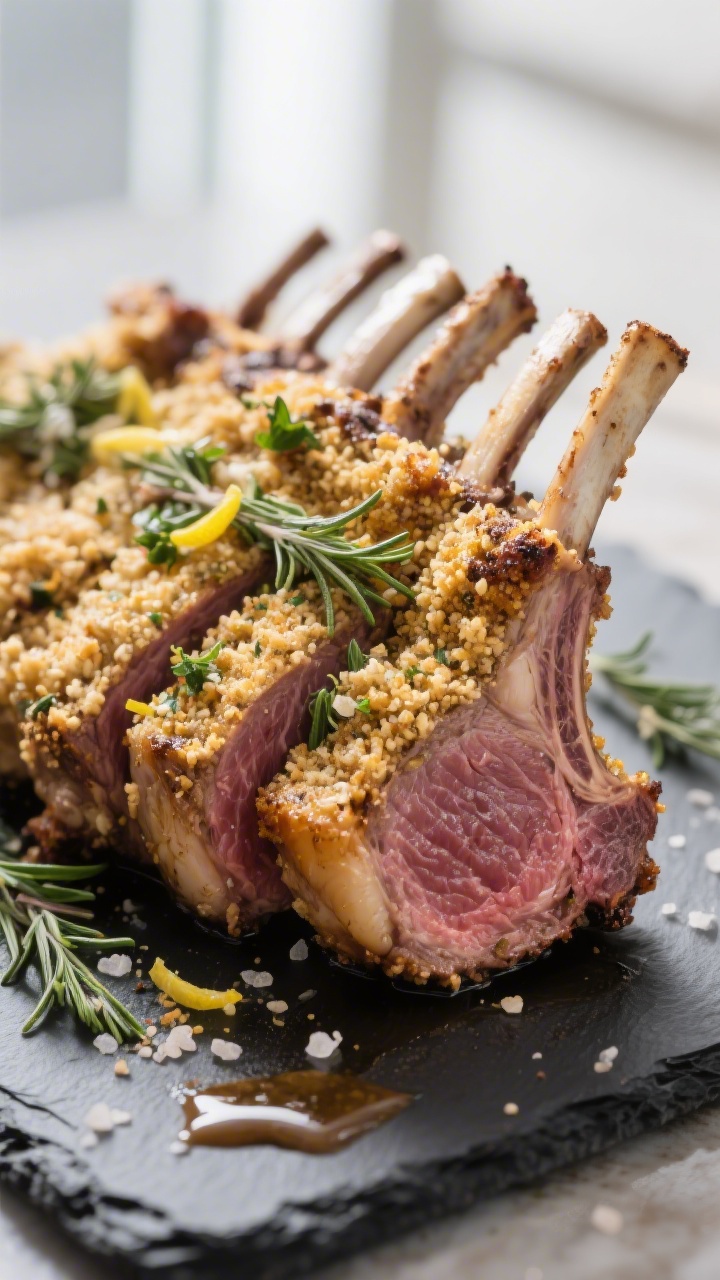
- High-heat roast for a perfect crust: A quick blast in a hot oven crisps the breadcrumb-herb mixture without overcooking the lamb.
- Mustard as a flavor glue: A thin layer of Dijon helps the crust stick and adds tang that balances the richness of the lamb.
- Fresh herbs do the heavy lifting: Rosemary, thyme, and parsley bring brightness and aroma so you don’t need a long marinade.
- Resting makes it juicy: A short rest after roasting lets the juices settle, so every slice is tender and moist.
- Smart seasoning: Salting before searing builds a savory backbone and enhances the natural flavor of the meat.
Ingredients
- 2 racks of lamb (about 1.5–2 lbs each), frenched
- 2 teaspoons kosher salt, plus more to taste
- 1 teaspoon freshly ground black pepper
- 2 tablespoons olive oil, divided
- 3–4 garlic cloves, finely minced
- 2 tablespoons Dijon mustard
- 1 cup fresh breadcrumbs (panko or finely processed day-old bread)
- 2 tablespoons fresh rosemary, finely chopped
- 1 tablespoon fresh thyme leaves, chopped
- 2 tablespoons fresh parsley, finely chopped
- 1 tablespoon lemon zest
- 2 tablespoons unsalted butter, melted
- Optional: 1 teaspoon grainy mustard for extra texture, flaky salt for finishing
Step-by-Step Instructions
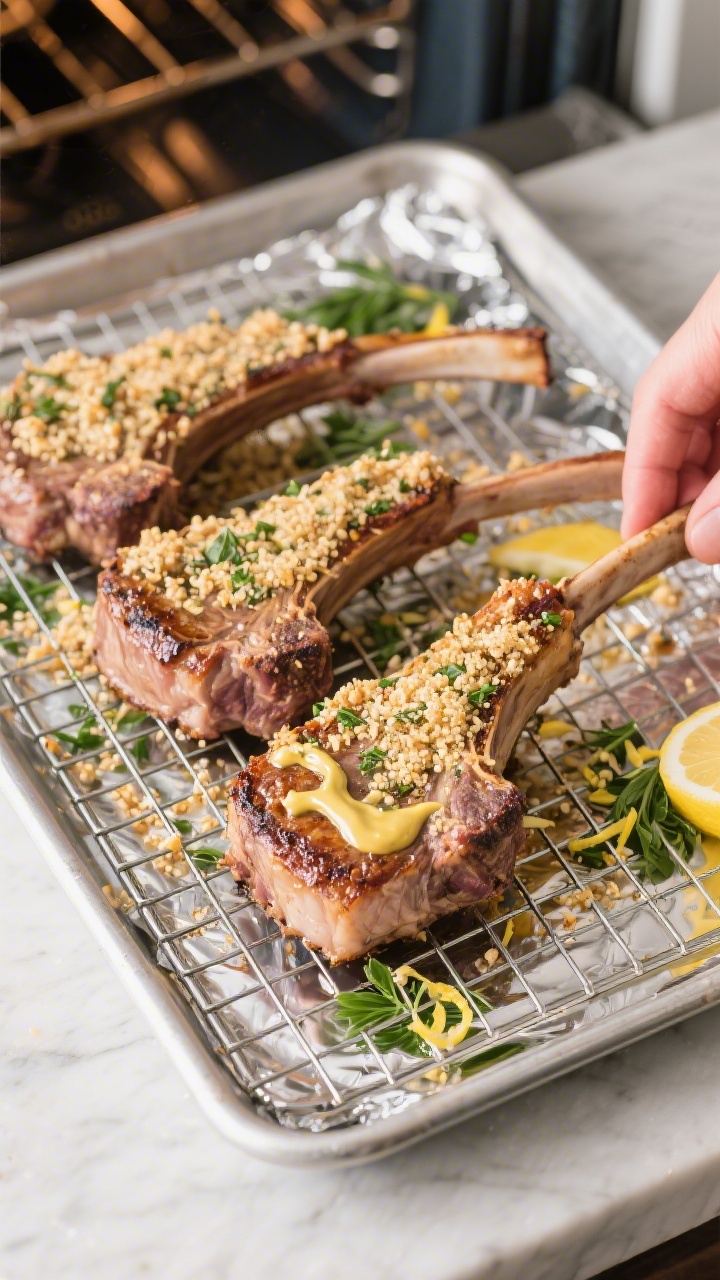
- Prep the oven and pan: Heat the oven to 450°F (230°C). Line a sheet pan with foil and set a wire rack on top for airflow.
Pat the lamb dry with paper towels.
- Season the lamb: Sprinkle the racks all over with salt and pepper. Let sit at room temperature for 20–30 minutes. This helps even cooking.
- Make the herb crust: In a bowl, combine breadcrumbs, garlic, rosemary, thyme, parsley, lemon zest, melted butter, and 1 tablespoon olive oil.
Season with a pinch of salt and pepper. The mixture should be damp, not soggy.
- Sear the racks: Heat a large skillet over medium-high. Add 1 tablespoon olive oil.
Sear the lamb, fat side down first, until nicely browned, about 2–3 minutes per side. Transfer to the prepared rack, fat side up. Let cool 2–3 minutes so the mustard doesn’t slide off.
- Mustard coat: Brush the top and sides with Dijon (mix in grainy mustard if using).
Apply a thin, even layer—this is the glue for the crust.
- Crust it: Press the breadcrumb-herb mixture onto the mustard-coated surfaces, packing gently so it adheres. Some crumbs may fall; that’s fine.
- Roast: Place the racks in the oven and roast for 15–18 minutes for medium-rare (about 125–130°F/52–54°C at the center when pulled). For medium, roast 18–22 minutes (130–135°F/54–57°C).
Use an instant-read thermometer for accuracy.
- Rest: Transfer the racks to a cutting board and rest for 10 minutes. The temperature will rise 5°F as it rests, and the juices will redistribute.
- Slice and finish: Cut between the bones into individual chops or double chops. Sprinkle with a little flaky salt and a squeeze of lemon if you like.
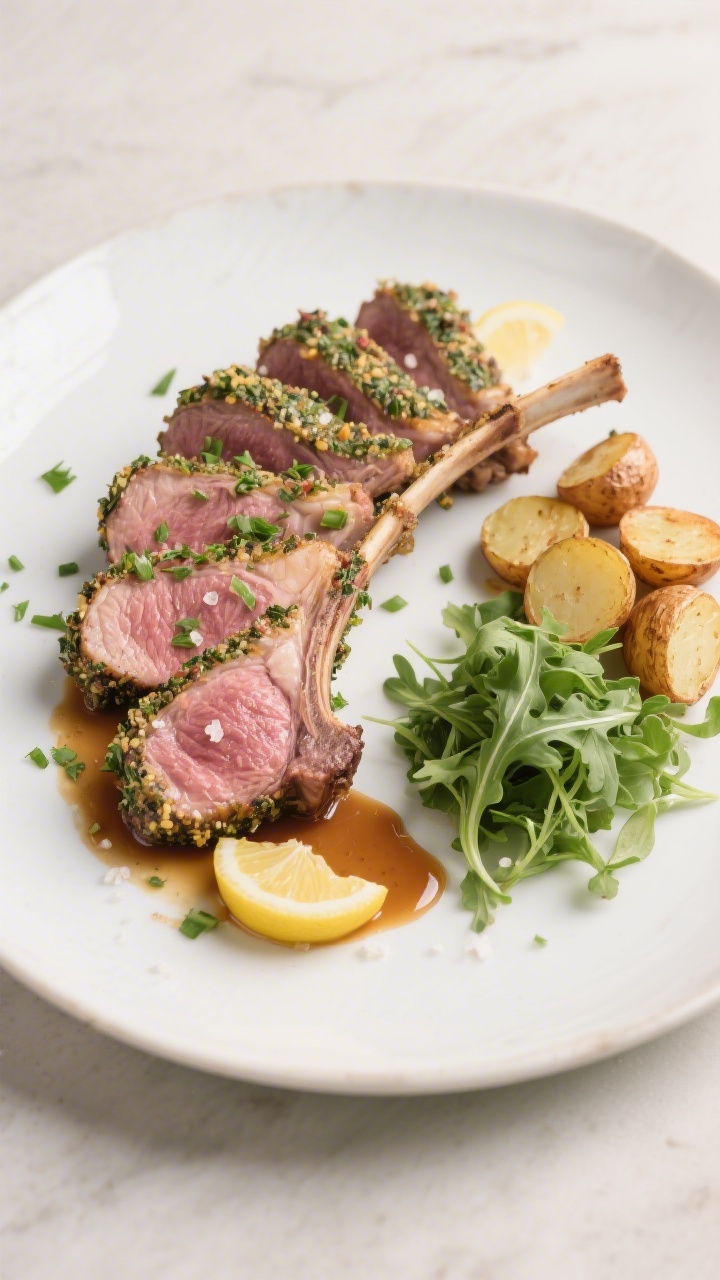
- Serve: Pair with roasted potatoes, sautéed green beans, or a simple arugula salad.
A spoonful of pan juices or a quick pan sauce is a nice touch.
Storage Instructions
- Refrigerate: Store cooled leftovers in an airtight container for up to 3 days.
- Reheat gently: Warm slices in a 300°F (150°C) oven for 10–12 minutes, covered loosely with foil, to avoid drying out the lamb and scorching the crust.
- Freeze: Not ideal for a crusted rack, as the crumbs can get soggy. If you must freeze, wrap tightly and freeze up to 2 months; re-crisp under a broiler, watching closely.
- Use leftovers: Slice cold and serve over salad with a lemony vinaigrette, or tuck into warm flatbreads with yogurt and herbs.
Why This is Good for You
- High-quality protein: Lamb provides complete protein to support muscle health and satiety.
- Iron and B vitamins: It’s rich in iron, zinc, and vitamin B12, which help energy levels and immune function.
- Herb-forward flavor: Fresh herbs add antioxidants and big flavor, so you need less salt and heavy sauces.
- Healthy fats in balance: Using olive oil and a modest amount of butter makes the dish satisfying without being greasy.
What Not to Do
- Don’t skip the rest: Cutting too soon releases juices and dries out the meat.
- Don’t overcook: Rack of lamb is best medium-rare to medium. Overcooking toughens the texture and dulls the flavor.
- Don’t apply a soggy crust: If the breadcrumb mixture is too wet, it will steam instead of crisp.
Aim for lightly moistened.
- Don’t forget to sear: Searing builds flavor and helps the crust hold. Going straight to the oven can leave the meat bland.
- Don’t use old dried herbs: Stale herbs taste dusty. Fresh herbs make a big difference here.
Recipe Variations
- Pistachio-Parmesan Crust: Swap half the breadcrumbs for finely chopped pistachios and add 2 tablespoons grated Parmesan.
This gives a nutty, cheesy finish.
- Mint-Gremolata Twist: Add 2 tablespoons chopped fresh mint and an extra teaspoon lemon zest to the crust for a brighter, spring-like flavor.
- Gluten-Free: Use gluten-free panko or crushed gluten-free crackers. Check the mustard label to be sure.
- Herbes de Provence: Replace rosemary and thyme with 2 teaspoons herbes de Provence for a floral, French-inspired profile.
- Spice-Lovers’ Version: Add 1 teaspoon Aleppo pepper or a pinch of red pepper flakes to the breadcrumb mix for gentle heat.
- Pan Sauce Add-On: After searing, deglaze the skillet with 1/2 cup dry white wine, reduce, then whisk in a knob of butter. Spoon around the sliced chops.
FAQ
How do I know when the lamb is done without overcooking it?
Use an instant-read thermometer inserted into the thickest part, not touching bone.
Pull at 125–130°F for medium-rare or 130–135°F for medium, then rest 10 minutes.
Can I prepare the crust in advance?
Yes. Mix the crust ingredients up to one day ahead and refrigerate. Bring to room temperature before pressing onto the mustard-coated lamb so it adheres well.
Do I need to French the bones?
No, it’s optional.
Frenched bones make a prettier presentation and cleaner slicing, but the flavor is the same. Ask your butcher to do it if you prefer the look.
What if I don’t have fresh herbs?
Fresh is best for this recipe. If you must use dried, use one-third the amount and add a little extra lemon zest and parsley at the end for freshness.
Can I make this with a single rack?
Absolutely.
Halve the crust ingredients and monitor the roast time closely—smaller racks can cook a bit faster.
How do I keep the crust from falling off when slicing?
Let the lamb rest fully, then use a sharp chef’s knife. Slice in confident, single strokes between the bones rather than sawing back and forth.
What wines pair well with this dish?
Try a medium-bodied red with good acidity, like Pinot Noir, Chianti Classico, or a restrained Cabernet Sauvignon. These balance the richness without overpowering the herbs.
Can I grill the rack instead of roasting?
Yes.
Sear over high heat on the grill, then move to indirect heat to finish. Keep the lid closed and monitor the internal temperature. Add the crust after searing and finish over indirect heat to set it.
Wrapping Up
This Garlic Herb Crusted Rack of Lamb is elegant, fast, and full of bright, savory flavor.
With a crisp, aromatic crust and tender pink center, it feels special without being fussy. Keep an eye on temperature, let it rest, and you’ll nail it every time. Serve with simple sides, pour a good glass of wine, and enjoy a restaurant-quality dinner at home.
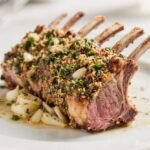
Garlic Herb Crusted Rack of Lamb – Tender, Flavor-Packed, and Elegant
Ingredients
- 2 racks of lamb (about 1.5–2 lbs each), frenched
- 2 teaspoons kosher salt, plus more to taste
- 1 teaspoon freshly ground black pepper
- 2 tablespoons olive oil, divided
- 3–4 garlic cloves, finely minced
- 2 tablespoons Dijon mustard
- 1 cup fresh breadcrumbs (panko or finely processed day-old bread)
- 2 tablespoons fresh rosemary, finely chopped
- 1 tablespoon fresh thyme leaves, chopped
- 2 tablespoons fresh parsley, finely chopped
- 1 tablespoon lemon zest
- 2 tablespoons unsalted butter, melted
- Optional: 1 teaspoon grainy mustard for extra texture, flaky salt for finishing
Instructions
- Prep the oven and pan: Heat the oven to 450°F (230°C). Line a sheet pan with foil and set a wire rack on top for airflow. Pat the lamb dry with paper towels.
- Season the lamb: Sprinkle the racks all over with salt and pepper. Let sit at room temperature for 20–30 minutes. This helps even cooking.
- Make the herb crust: In a bowl, combine breadcrumbs, garlic, rosemary, thyme, parsley, lemon zest, melted butter, and 1 tablespoon olive oil. Season with a pinch of salt and pepper. The mixture should be damp, not soggy.
- Sear the racks: Heat a large skillet over medium-high. Add 1 tablespoon olive oil. Sear the lamb, fat side down first, until nicely browned, about 2–3 minutes per side. Transfer to the prepared rack, fat side up. Let cool 2–3 minutes so the mustard doesn’t slide off.
- Mustard coat: Brush the top and sides with Dijon (mix in grainy mustard if using). Apply a thin, even layer—this is the glue for the crust.
- Crust it: Press the breadcrumb-herb mixture onto the mustard-coated surfaces, packing gently so it adheres. Some crumbs may fall; that’s fine.
- Roast: Place the racks in the oven and roast for 15–18 minutes for medium-rare (about 125–130°F/52–54°C at the center when pulled). For medium, roast 18–22 minutes (130–135°F/54–57°C). Use an instant-read thermometer for accuracy.
- Rest: Transfer the racks to a cutting board and rest for 10 minutes. The temperature will rise 5°F as it rests, and the juices will redistribute.
- Slice and finish: Cut between the bones into individual chops or double chops. Sprinkle with a little flaky salt and a squeeze of lemon if you like.
- Serve: Pair with roasted potatoes, sautéed green beans, or a simple arugula salad. A spoonful of pan juices or a quick pan sauce is a nice touch.