
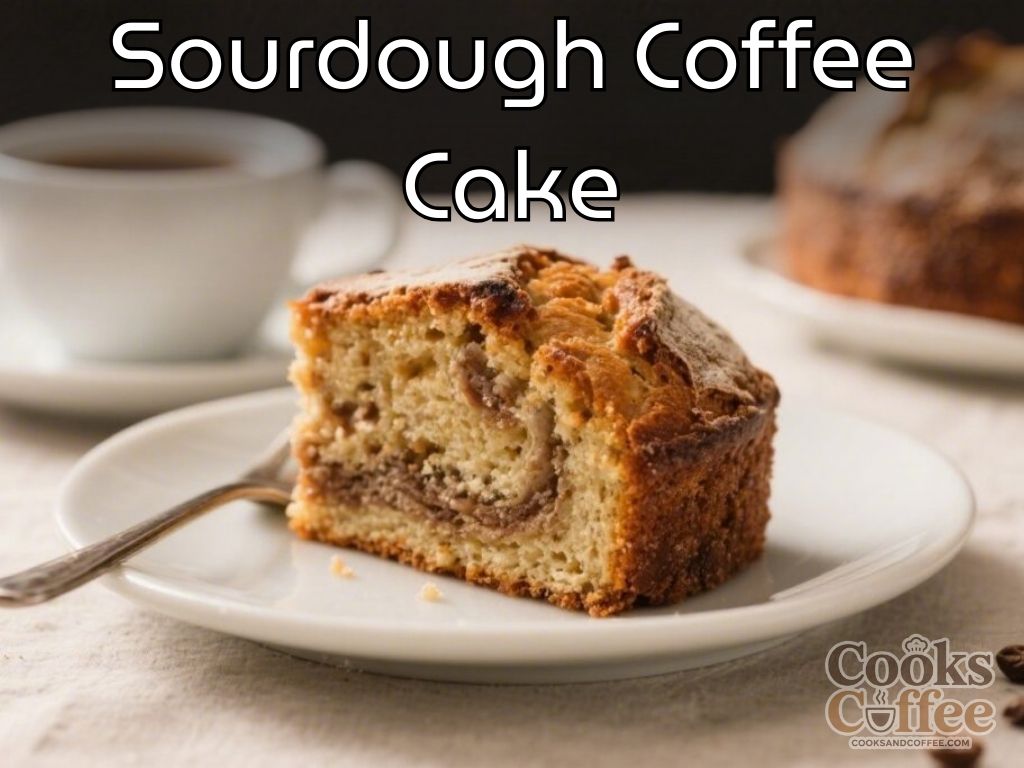
Sourdough coffee cake is the cozy bake you want when you’re craving something soft, sweet, and a little tangy. It uses your sourdough starter in a clever way, adding flavor and tenderness without tasting overtly “sour.” The cinnamon-pecan crumb topping brings the crunch, while the cake stays moist for days. It’s easy enough for a weekend treat, but special enough for guests.
If you have a jar of starter on the counter, this is a smart way to put it to work.
Why This Recipe Works

- Starter adds tenderness: Sourdough starter (active or discard) brings gentle acidity that helps the cake turn out ultra-soft.
- Two textures in one: A thick crumb topping contrasts with a plush, buttery cake, so every bite feels complete.
- Flexible timing: You can bake right away or rest the batter briefly to develop flavor—both options work.
- Panty-friendly: Uses simple ingredients you likely already have: flour, sugar, butter, eggs, and cinnamon.
Shopping List
- For the cake:
- 1 cup sourdough starter (100% hydration; active or discard)
- 1/2 cup unsalted butter, softened
- 3/4 cup granulated sugar
- 2 large eggs, room temperature
- 1 teaspoon vanilla extract
- 1 1/2 cups all-purpose flour
- 1 teaspoon baking powder
- 1/2 teaspoon baking soda
- 1/2 teaspoon fine salt
- 1/2 cup sour cream or plain yogurt
- For the crumb topping:
- 1/2 cup all-purpose flour
- 1/2 cup light brown sugar, packed
- 1 teaspoon ground cinnamon
- 1/4 teaspoon salt
- 1/4 cup cold unsalted butter, cubed
- 1/2 cup chopped pecans or walnuts (optional)
- For the glaze (optional):
- 1/2 cup powdered sugar
- 1–2 tablespoons milk or cream
- 1/4 teaspoon vanilla extract
Step-by-Step Instructions

- Prep your pan and oven. Heat the oven to 350°F (175°C). Grease and line an 8-inch square pan or a 9-inch round pan with parchment for easy lifting.
- Make the crumb topping. In a bowl, combine flour, brown sugar, cinnamon, and salt. Cut in the cold butter with a fork or your fingers until crumbles form.
Stir in nuts, if using. Chill while you make the batter.
- Cream the butter and sugar. In a large bowl, beat softened butter with granulated sugar until light and fluffy, about 2–3 minutes. This traps air and helps the cake rise.
- Add eggs and vanilla. Beat in the eggs one at a time, then add vanilla.
Scrape the bowl so everything is well combined.
- Whisk dry ingredients. In a separate bowl, whisk flour, baking powder, baking soda, and salt.
- Combine wet ingredients. Stir the sourdough starter and sour cream into the butter mixture until smooth. It may look slightly curdled—this is normal.
- Fold in dry ingredients. Add the dry mix to the wet and gently fold just until no dry spots remain. Do not overmix or the cake can turn dense.
- Assemble the cake. Spread the batter evenly in the prepared pan.
Sprinkle the chilled crumb topping over the surface in an even layer.
- Bake. Bake for 32–40 minutes, until a toothpick in the center comes out clean or with a few moist crumbs. The top should be golden and set.
- Cool and glaze (optional). Let the cake cool at least 20 minutes. Whisk powdered sugar, milk, and vanilla, then drizzle over the warm cake.
- Slice and serve. Enjoy warm or at room temperature.
The flavor deepens slightly by the next day.
Storage Instructions
- Room temperature: Store covered for up to 2 days. The crumb stays crisp the first day, then softens slightly.
- Refrigerator: Keeps 4–5 days in an airtight container. Warm slices in the microwave for 10–15 seconds to refresh.
- Freezer: Wrap individual slices tightly and freeze up to 2 months.
Thaw at room temperature or warm gently in a low oven.

Why This is Good for You
- Better digestion: The natural acidity in sourdough starter can make baked goods easier on your stomach compared to some standard cakes.
- Lower waste: Using discard means less food waste and more value from your starter routine.
- Satisfying, not heavy: This cake is rich but not cloying. The tang balances the sweetness, so a small slice truly satisfies.
- Simple, real ingredients: Flour, butter, eggs, and yogurt or sour cream—no complex additives or mixes.
Pitfalls to Watch Out For
- Overmixing the batter: This develops too much gluten and leads to a tough cake. Fold gently until just combined.
- Skipping the room-temp step: Cold eggs or butter can cause a broken batter and uneven texture.
Let ingredients warm slightly.
- Too-wet or too-stiff starter: A very thick or very runny starter changes batter consistency. Aim for a 100% hydration starter (equal parts flour and water by weight).
- Overbaking: A dry coffee cake loses its charm. Start checking at 32 minutes and pull it when the center is just set.
- Uneven crumb topping: Piling crumbs in the center can cause sinking.
Scatter in an even layer to ensure uniform baking.
Alternatives
- No nuts: Skip the nuts and add 1/4 cup rolled oats to the crumb for texture.
- Lighter sweetness: Reduce granulated sugar in the cake to 2/3 cup and keep the crumb as written.
- Flavor twists: Swap cinnamon for cardamom, or add 1 teaspoon orange zest to the batter for a bright note.
- Dairy-free: Use plant-based butter and dairy-free yogurt. The cake will still be soft and flavorful.
- Gluten-free attempt: Use a 1:1 gluten-free baking flour and ensure your starter is built with gluten-free flour. Texture will be slightly more tender.
- Pan options: Bake in a 9×5-inch loaf pan (extend bake time to 45–55 minutes) or double the recipe for a 9×13-inch pan.
FAQ
Can I use sourdough discard instead of active starter?
Yes.
Discard works great here. It adds tang and moisture without needing yeast-like lift, since the recipe uses baking powder and baking soda.
Do I need to let the batter rest?
Not required, but a 20–30 minute rest can slightly deepen flavor and improve tenderness. If you rest, add the crumb right before baking.
What if I don’t have sour cream?
Use plain Greek yogurt or regular yogurt.
If using regular yogurt, choose whole milk for the best texture.
How do I know it’s done?
The edges will be golden, the center will spring back lightly, and a toothpick will come out mostly clean with a few moist crumbs.
Can I make this the night before?
You can mix the crumb and measure dry ingredients ahead. For the batter, it’s best made fresh, but you can assemble and refrigerate it for up to 8 hours. Bake straight from the fridge and add a few extra minutes.
Why did my crumb sink?
Usually it’s from underbaking, too-wet batter, or piling crumbs in the middle.
Weigh ingredients if possible and spread crumbs evenly.
How do I keep the topping crunchy?
Chill the crumb before baking and avoid covering the warm cake tightly. Let it cool before sealing to prevent steam from softening the topping.
Can I reduce the butter?
You can cut the butter in the cake to 6 tablespoons and add 2 tablespoons neutral oil. The texture stays moist, though flavor is slightly less rich.
What spices pair well besides cinnamon?
Cardamom, nutmeg, and a pinch of clove pair beautifully.
Start small—1/2 teaspoon cardamom goes a long way.
Is this actually coffee-flavored?
No. “Coffee cake” refers to a cake meant to be served with coffee. If you want coffee flavor, add 1 tablespoon instant espresso powder to the batter.
In Conclusion
Sourdough coffee cake is a simple, reliable bake that turns your starter into something comfortingly special. The tender crumb, warm spice, and buttery topping check every brunch box.
It’s unfussy, flexible, and keeps well, making it a strong go-to for weekends or gatherings. Keep this recipe in your back pocket—you’ll use it often.

Sourdough Coffee Cake – Tender, Tangy, and Perfect for Brunch
Ingredients
- For the cake:
- 1 cup sourdough starter (100% hydration; active or discard)
- 1/2 cup unsalted butter, softened
- 3/4 cup granulated sugar
- 2 large eggs, room temperature
- 1 teaspoon vanilla extract
- 1 1/2 cups all-purpose flour
- 1 teaspoon baking powder
- 1/2 teaspoon baking soda
- 1/2 teaspoon fine salt
- 1/2 cup sour cream or plain yogurt
- For the crumb topping:
- 1/2 cup all-purpose flour
- 1/2 cup light brown sugar, packed
- 1 teaspoon ground cinnamon
- 1/4 teaspoon salt
- 1/4 cup cold unsalted butter, cubed
- 1/2 cup chopped pecans or walnuts (optional)
- For the glaze (optional):
- 1/2 cup powdered sugar
- 1–2 tablespoons milk or cream
- 1/4 teaspoon vanilla extract
Instructions
- Prep your pan and oven. Heat the oven to 350°F (175°C). Grease and line an 8-inch square pan or a 9-inch round pan with parchment for easy lifting.
- Make the crumb topping. In a bowl, combine flour, brown sugar, cinnamon, and salt. Cut in the cold butter with a fork or your fingers until crumbles form. Stir in nuts, if using. Chill while you make the batter.
- Cream the butter and sugar. In a large bowl, beat softened butter with granulated sugar until light and fluffy, about 2–3 minutes. This traps air and helps the cake rise.
- Add eggs and vanilla. Beat in the eggs one at a time, then add vanilla. Scrape the bowl so everything is well combined.
- Whisk dry ingredients. In a separate bowl, whisk flour, baking powder, baking soda, and salt.
- Combine wet ingredients. Stir the sourdough starter and sour cream into the butter mixture until smooth. It may look slightly curdled—this is normal.
- Fold in dry ingredients. Add the dry mix to the wet and gently fold just until no dry spots remain. Do not overmix or the cake can turn dense.
- Assemble the cake. Spread the batter evenly in the prepared pan. Sprinkle the chilled crumb topping over the surface in an even layer.
- Bake. Bake for 32–40 minutes, until a toothpick in the center comes out clean or with a few moist crumbs. The top should be golden and set.
- Cool and glaze (optional). Let the cake cool at least 20 minutes. Whisk powdered sugar, milk, and vanilla, then drizzle over the warm cake.
- Slice and serve. Enjoy warm or at room temperature. The flavor deepens slightly by the next day.