

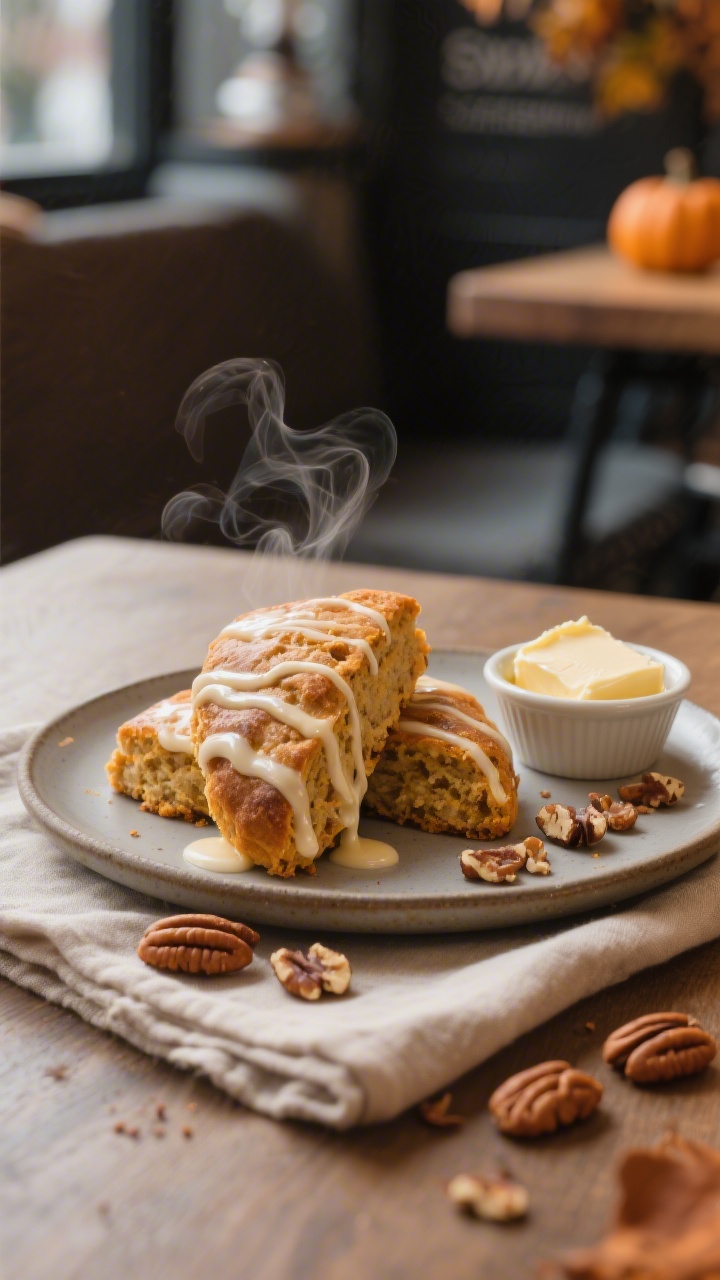
These scones bring together two favorites: the warm spice of pumpkin and the tangy depth of sourdough. They bake up tender inside with crisp, golden edges, and they make your kitchen smell like a coffee shop in October. If you’ve got sourdough discard hanging out in the fridge, this is a great way to use it.
The dough mixes up quickly, freezes well, and tastes incredible with a simple vanilla glaze or a pat of butter. Make a batch for brunch, a holiday breakfast, or just a slow Sunday morning.
What Makes This Special

- Uses Sourdough Discard: Adds light tang and reduces waste without a long ferment.
- Moist and Tender: Pumpkin puree keeps the crumb soft, while cold butter adds flakiness.
- Balanced Spice: Warm cinnamon and nutmeg complement pumpkin without overpowering it.
- Not Too Sweet: Just sweet enough for breakfast, and perfect with coffee or tea.
- Freezer-Friendly: Bake from frozen for fresh scones any day.
Ingredients
- 2 cups (250 g) all-purpose flour
- 1/4 cup (50 g) granulated sugar
- 1 tablespoon baking powder
- 1/2 teaspoon baking soda
- 1/2 teaspoon fine sea salt
- 2 teaspoons ground cinnamon
- 1/2 teaspoon ground nutmeg
- 1/4 teaspoon ground ginger
- 1/2 cup (113 g) cold unsalted butter, cut into small cubes
- 1/2 cup (120 g) pumpkin puree (not pumpkin pie filling)
- 1/2 cup (120 g) sourdough starter discard (unfed)
- 1 large egg
- 1 teaspoon vanilla extract
- 2–3 tablespoons heavy cream or milk, plus more for brushing
- Optional add-ins: 1/2 cup chopped pecans or walnuts, or 1/2 cup dark chocolate chips
- For topping (optional): Coarse sugar for sprinkling
- For glaze (optional): 1 cup powdered sugar, 1–2 tablespoons milk, 1/2 teaspoon vanilla
Step-by-Step Instructions

- Chill your tools. Place a mixing bowl and your cubed butter in the freezer for 10 minutes. Cold ingredients keep the scones flaky.
- Preheat and prep. Preheat oven to 400°F (200°C).
Line a baking sheet with parchment paper.
- Mix dry ingredients. In the chilled bowl, whisk flour, sugar, baking powder, baking soda, salt, cinnamon, nutmeg, and ginger.
- Cut in butter. Add the cold butter cubes. Use a pastry cutter or your fingertips to cut the butter into the flour until pea-sized bits remain. You should still see some visible pieces of butter.
- Combine wet ingredients. In a separate bowl, whisk pumpkin puree, sourdough discard, egg, vanilla, and 2 tablespoons cream or milk until smooth.
- Bring the dough together. Pour the wet mixture into the dry ingredients.
Stir with a spatula until shaggy. If the mixture looks dry or floury, add the remaining 1 tablespoon cream, a little at a time. The dough should be slightly sticky but workable.
- Add optional mix-ins. Fold in nuts or chocolate chips if using.
Don’t overmix.
- Shape. Turn the dough out onto a lightly floured surface. Gently pat it into a 7–8 inch round, about 1 inch thick. Use a bench scraper or knife to cut into 8 wedges.
- Chill the wedges. Transfer to the prepared baking sheet.
Brush tops lightly with milk or cream and sprinkle with coarse sugar if you like. Place the sheet in the fridge for 15 minutes (or freezer for 10) to firm up. Cold dough rises better and spreads less.
- Bake. Bake 16–20 minutes, until the edges are golden and the centers feel set. A toothpick should come out mostly clean.
- Cool and glaze. Let scones cool on the sheet for 5 minutes, then move to a rack.
If glazing, whisk powdered sugar, milk, and vanilla to a drizzle-able consistency and spoon over warm scones.
Storage Instructions
- Room temperature: Store cooled scones in an airtight container for up to 2 days.
- Refrigerator: Keeps well for 4–5 days; reheat in a 300°F (150°C) oven for 8–10 minutes.
- Freezer (unbaked): Freeze cut wedges on a tray until solid, then bag for up to 2 months. Bake from frozen at 400°F (200°C) for 20–24 minutes.
- Freezer (baked): Wrap individually and freeze up to 2 months. Rewarm at 325°F (165°C) for 12–15 minutes.
- Glaze scones after reheating for the best texture.
Why This is Good for You
- Pumpkin power: Pumpkin adds fiber, vitamin A, and moisture, so you can use a little less fat without drying things out.
- Sourdough benefits: The acidity of sourdough can make grains easier to digest for some people and adds flavor without extra sugar.
- Balanced treat: These are gently sweet and satisfying, especially with nuts for a bit of protein and healthy fats.
Common Mistakes to Avoid
- Using warm butter: Soft butter blends too much and prevents flaky layers.
Keep everything cold.
- Overmixing the dough: This makes tough scones. Stop once the mixture just comes together.
- Skipping the chill step: Cold dough is key for height and a nice crumb. A quick chill makes a big difference.
- Too much flour on the counter: Excess flour dries out the dough.
Lightly dust only as needed.
- Overbaking: Pumpkin scones can look done before they are. Check at 16 minutes and pull when set and lightly golden.
Alternatives
- Gluten-free: Use a 1:1 gluten-free flour blend with xanthan gum. Add 1 extra tablespoon milk if the dough seems dry.
- Dairy-free: Swap butter for cold coconut oil or a firm dairy-free butter, and use almond or oat milk.
- Maple-glazed: Replace milk in the glaze with maple syrup.
Add a pinch of cinnamon for warmth.
- No eggs: Use 3 tablespoons milk or a flax egg (1 tablespoon ground flax + 3 tablespoons water, rested 5 minutes).
- Extra spice: Add 1/4 teaspoon cloves or allspice for a bolder profile.
- Savory twist: Reduce sugar to 2 tablespoons, skip glaze, and add 1/2 cup sharp cheddar and a pinch of black pepper.
FAQ
Can I use active sourdough starter instead of discard?
Yes. Active starter works fine in the same amount. It won’t make the scones rise like bread, but it adds the same tang and moisture.
My dough is sticky.
Did I do something wrong?
A slightly sticky dough is normal with pumpkin. Lightly flour your hands and the surface, and avoid adding too much flour to the dough itself. The quick chill also helps firm it up.
Can I make the dough ahead?
Absolutely.
Shape the wedges and refrigerate, covered, for up to 24 hours or freeze them. Bake straight from the fridge or freezer, adding a few minutes if frozen.
What pumpkin should I use?
Use plain canned pumpkin puree. If your puree is very wet, blot it with paper towels to remove excess moisture.
Avoid pumpkin pie filling, which has sugar and spices added.
How do I get taller scones?
Keep ingredients cold, avoid overworking the dough, and use fresh baking powder. Pat the dough thicker (about 1 inch) and chill before baking.
Can I reduce the sugar?
Yes. You can drop the sugar to 3 tablespoons for a less sweet scone.
The spices and pumpkin will still shine, especially with a glaze or butter.
What’s the best way to reheat leftovers?
Warm scones in a 300–325°F (150–165°C) oven for 8–12 minutes. This brings back the crisp edges and soft center without drying them out.
Final Thoughts
Sourdough pumpkin scones are cozy, simple, and a smart way to use discard. With a short ingredient list and a few technique tips—keep it cold, don’t overmix—you’ll get bakery-style results at home.
Enjoy them warm with butter, a drizzle of maple glaze, or a cup of coffee. Bake once, freeze the rest, and you’ve got a little taste of fall ready whenever you want it.

Sourdough Pumpkin Scones – Cozy, Tender, and Perfect for Fall
Ingredients
- 2 cups (250 g) all-purpose flour
- 1/4 cup (50 g) granulated sugar
- 1 tablespoon baking powder
- 1/2 teaspoon baking soda
- 1/2 teaspoon fine sea salt
- 2 teaspoons ground cinnamon
- 1/2 teaspoon ground nutmeg
- 1/4 teaspoon ground ginger
- 1/2 cup (113 g) cold unsalted butter, cut into small cubes
- 1/2 cup (120 g) pumpkin puree (not pumpkin pie filling)
- 1/2 cup (120 g) sourdough starter discard (unfed)
- 1 large egg
- 1 teaspoon vanilla extract
- 2–3 tablespoons heavy cream or milk, plus more for brushing
- Optional add-ins: 1/2 cup chopped pecans or walnuts, or 1/2 cup dark chocolate chips
- For topping (optional): Coarse sugar for sprinkling
- For glaze (optional): 1 cup powdered sugar, 1–2 tablespoons milk, 1/2 teaspoon vanilla
Instructions
- Chill your tools. Place a mixing bowl and your cubed butter in the freezer for 10 minutes. Cold ingredients keep the scones flaky.
- Preheat and prep. Preheat oven to 400°F (200°C). Line a baking sheet with parchment paper.
- Mix dry ingredients. In the chilled bowl, whisk flour, sugar, baking powder, baking soda, salt, cinnamon, nutmeg, and ginger.
- Cut in butter. Add the cold butter cubes. Use a pastry cutter or your fingertips to cut the butter into the flour until pea-sized bits remain. You should still see some visible pieces of butter.
- Combine wet ingredients. In a separate bowl, whisk pumpkin puree, sourdough discard, egg, vanilla, and 2 tablespoons cream or milk until smooth.
- Bring the dough together. Pour the wet mixture into the dry ingredients. Stir with a spatula until shaggy. If the mixture looks dry or floury, add the remaining 1 tablespoon cream, a little at a time. The dough should be slightly sticky but workable.
- Add optional mix-ins. Fold in nuts or chocolate chips if using. Don’t overmix.
- Shape. Turn the dough out onto a lightly floured surface. Gently pat it into a 7–8 inch round, about 1 inch thick. Use a bench scraper or knife to cut into 8 wedges.
- Chill the wedges. Transfer to the prepared baking sheet. Brush tops lightly with milk or cream and sprinkle with coarse sugar if you like. Place the sheet in the fridge for 15 minutes (or freezer for 10) to firm up. Cold dough rises better and spreads less.
- Bake. Bake 16–20 minutes, until the edges are golden and the centers feel set. A toothpick should come out mostly clean.
- Cool and glaze. Let scones cool on the sheet for 5 minutes, then move to a rack. If glazing, whisk powdered sugar, milk, and vanilla to a drizzle-able consistency and spoon over warm scones.