

This loaf is everything you want in a homemade bread: crisp crust, chewy center, and bright pops of sweet-tart cranberries with buttery pecans. It’s simple enough for a weekday project and special enough for a holiday table. If you’ve got an active sourdough starter, you’re most of the way there.
The steps are straightforward, the rise is forgiving, and the flavor payoff is huge. Toast a slice with butter and honey, or serve it with cheese for a beautiful snack.
What Makes This Recipe So Good
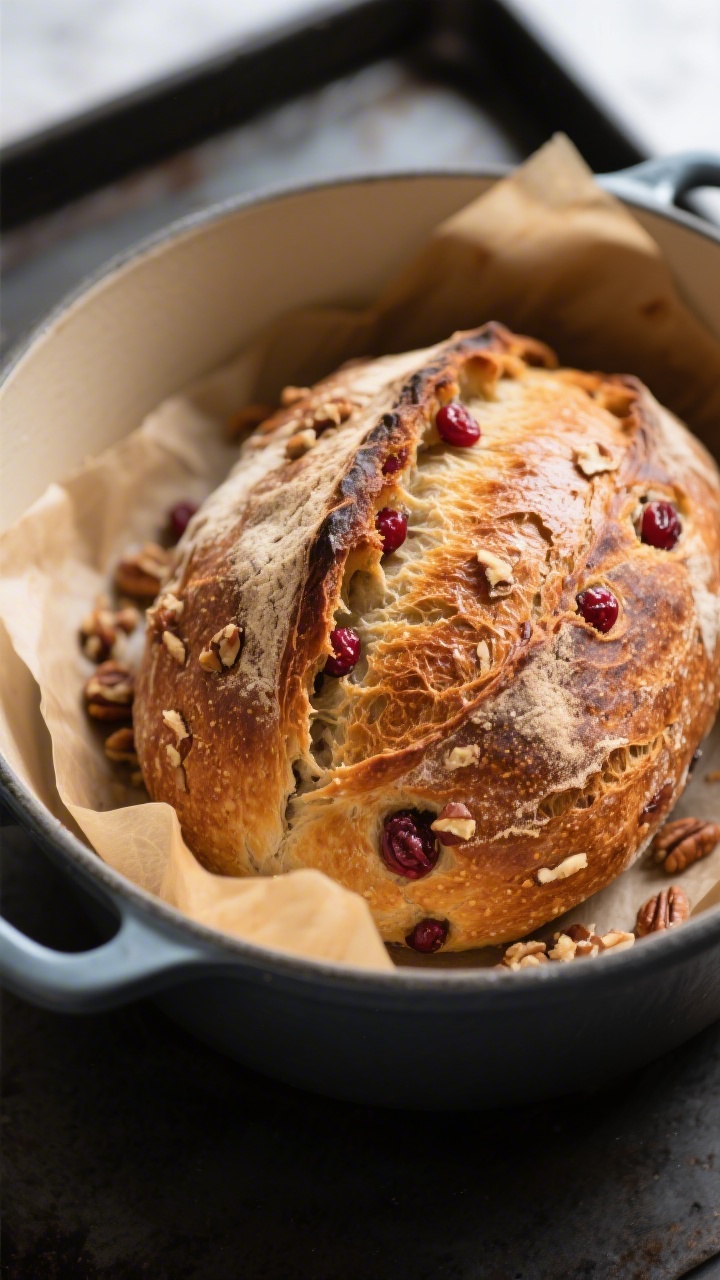
- Balanced flavor: Tart cranberries and toasty pecans add sweetness, acidity, and crunch that play perfectly with tangy sourdough.
- Beginner-friendly method: Gentle stretch-and-folds replace heavy kneading, so you don’t need special equipment.
- Flexible timing: The bulk ferment can be adjusted to your schedule with room-temperature or refrigerated proofs.
- Reliable structure: Bread flour and proper hydration give you an open, tender crumb that still holds mix-ins well.
- Beautiful presentation: A simple score and glossy crust make this loaf look bakery-made with minimal effort.
Ingredients
- 450 g bread flour (about 3 2/3 cups, spooned and leveled)
- 50 g whole wheat flour (about 1/3 cup)
- 100 g active sourdough starter (100% hydration) (about 1/2 cup)
- 325–340 g warm water (about 1 1/3–1 1/2 cups), aim for a soft, slightly sticky dough
- 9 g fine sea salt (about 1 1/2 teaspoons)
- 120 g dried cranberries (about 3/4 cup), unsweetened if possible
- 120 g pecans (about 1 cup), roughly chopped and lightly toasted
- Optional: zest of 1 orange for a citrus note
- Dusting flour: rice flour or all-purpose, for the banneton or towel
Step-by-Step Instructions

- Toast the pecans. Heat the oven to 325°F (165°C). Spread pecans on a tray and toast 6–8 minutes until fragrant.
Cool completely to prevent warming the dough.
- Autolyse the dough. In a large bowl, mix bread flour, whole wheat flour, and 300 g of the water until no dry spots remain. The dough will be shaggy. Cover and rest 30–45 minutes.
This hydrates the flour for better gluten and flavor.
- Mix in starter and salt. Add the sourdough starter and squish it into the dough with your hand. Sprinkle in the salt and the remaining water as needed, a little at a time, until the dough is soft and slightly tacky but not soupy. Mix 2–3 minutes to combine.
- Bulk ferment with folds. Cover and let rest at warm room temperature (75–78°F / 24–26°C is ideal) for 2.5–4 hours.
Perform 3–4 sets of stretch-and-folds during the first 90 minutes, every 30 minutes: wet your hand, grab an edge of dough, stretch up, and fold over. Rotate the bowl and repeat 3–4 times per set.
- Add cranberries and pecans. After the second set of folds, gently spread the dough into a rough rectangle in the bowl. Sprinkle on cranberries, pecans, and orange zest if using.
Roll up and fold the dough to trap the mix-ins. Finish remaining sets of folds to distribute evenly.
- Check for readiness. By the end of bulk, the dough should feel lighter, smoother, and show some bubbles along the edges. It should have risen about 50–75%, not doubled.
If sluggish, give it another 30–45 minutes.
- Pre-shape. Lightly flour the surface. Turn out the dough and use a bench scraper to tuck and round it into a loose ball. Rest uncovered 15–20 minutes to relax the gluten.
- Final shape. For a round loaf, lightly flour the top, flip it over, and fold the bottom third up, sides in, and top down.
Roll into a tight ball, creating surface tension. For an oval, shape into a batard with a gentle but firm roll. Avoid tearing the dough.
- Proof. Place seam-side up in a well-floured banneton or a bowl lined with a heavily floured towel.
Cover. Proof at room temp 45–90 minutes until slightly puffy, then chill 8–16 hours in the fridge. The cold proof boosts flavor and makes scoring easier.
- Preheat your oven. Place a Dutch oven with lid inside and preheat to 475°F (245°C) for at least 30 minutes.
If baking on a stone, preheat that with a steam tray.
- Score the loaf. Turn the dough onto parchment, seam-side down. Brush off excess flour. Using a sharp lame or knife, make a confident 1/4-inch deep slash across the top.
This guides the oven spring.
- Bake with steam. Carefully lower dough into the hot Dutch oven. Cover and bake 20 minutes. Reduce heat to 450°F (232°C), remove lid, and bake 18–25 more minutes until deep golden-brown with a blistered crust.
Internal temp should be around 208–210°F (97–99°C).
- Cool completely. Transfer to a rack and wait at least 1 hour before slicing. This sets the crumb and keeps it from becoming gummy.
Keeping It Fresh
- Short term: Store the whole loaf, cut side down, on a cutting board and cover with a clean towel for up to 24 hours.
- 2–3 days: Keep in a paper bag or bread box. Avoid plastic bags; they soften the crust.
- Freezing: Slice, wrap tightly, and freeze up to 2 months.
Toast straight from frozen for best texture.
- Revive the crust: If the crust softens, warm the loaf at 350°F (175°C) for 8–10 minutes to re-crisp.

Why This is Good for You
- Sourdough digestion: Natural fermentation can make gluten-containing bread easier to digest for some people, and it may lower the bread’s glycemic impact.
- Whole grains: A touch of whole wheat adds minerals, fiber, and a nutty depth.
- Antioxidants: Cranberries bring polyphenols and vitamin C, adding more than just flavor.
- Healthy fats: Pecans offer monounsaturated fats, plus magnesium and vitamin E.
Common Mistakes to Avoid
- Using an inactive starter: If your starter doesn’t rise and fall reliably after a feeding, your loaf won’t either. Aim to use it at peak or just after.
- Overloading mix-ins: Too many cranberries or pecans can weigh down the dough and create gaps. Stick to the amounts listed.
- Skipping the rest after pre-shape: This short bench rest makes final shaping cleaner and helps you build tension.
- Under-proofing or over-proofing: Under-proofed dough bursts unpredictably; over-proofed dough spreads.
Look for gentle puffiness and a dough that slowly springs back when poked.
- Slicing too soon: Cutting hot bread compresses the crumb. Let it cool so the interior sets properly.
Alternatives
- Fruit swaps: Try dried cherries, golden raisins, or chopped dried apricots. Keep total mix-ins around 200–250 g to protect structure.
- Nut variations: Walnuts, almonds, or hazelnuts work well.
Toast first for flavor. For nut-free, use roasted pumpkin seeds or sunflower seeds.
- Citrus twist: Orange zest is classic, but lemon zest adds a brighter edge. A pinch of cinnamon is cozy, especially in winter.
- Flour mix: Replace up to 20% of the bread flour with spelt or rye for earthiness.
You may need 10–20 g less water due to different absorption.
- No Dutch oven: Bake on a preheated stone or steel at 475°F (245°C) with a tray of boiling water on a lower rack for steam during the first 15 minutes.
FAQ
How Do I Know My Starter Is Ready?
It should at least double after feeding, smell pleasantly tangy, and pass the float test when a small dollop is dropped into water. Use it within a few hours of peaking for the best rise.
Can I Use Fresh or Frozen Cranberries?
Yes, but chop them and pat them dry. Toss with a teaspoon of flour before folding in to help absorb juices.
Expect a slightly wetter dough and brighter cranberry pockets.
What If My Dough Feels Too Wet?
Give it time and folds before adding more flour. Hydration levels even out during bulk. If it’s still soupy after two folds, dust lightly with flour during shaping rather than overloading early.
Can I Make This Loaf in One Day?
Yes.
Skip the cold proof and let the shaped dough rise at room temperature 1–2 hours until puffy, then bake. The flavor will be milder and the scoring a bit trickier but still delicious.
How Do I Prevent Burned Cranberries on the Crust?
Keep most mix-ins inside the dough during shaping and brush off any exposed bits on the surface. If needed, tent loosely with foil for the last 10 minutes of baking.
What Size Dutch Oven Works Best?
A 4.5–5.5 quart round Dutch oven fits most 750–900 g total dough weights comfortably, giving good height and oven spring.
Can I Add Sweetener Like Honey?
You can add up to 1 tablespoon honey or maple syrup with the water for a hint of sweetness.
Keep it modest to avoid speeding fermentation too much.
Why Is My Crust Too Pale?
Bake a little longer uncovered and make sure your oven is fully preheated. A few extra minutes can make a big difference in caramelization.
Wrapping Up
This Easy Cranberry Pecan Sourdough Bread brings bakery flavor with a home-kitchen process. The method is simple, the timing is flexible, and the results are consistently impressive.
Once you make it, you’ll want to keep a loaf on hand for breakfast toast, cheese boards, and cozy afternoon snacks. Enjoy the crackle of that crust and the bright, nutty crumb in every slice.

Easy Cranberry Pecan Sourdough Bread – A Cozy, Festive Loaf You’ll Love
Ingredients
- 450 g bread flour (about 3 2/3 cups, spooned and leveled)
- 50 g whole wheat flour (about 1/3 cup)
- 100 g active sourdough starter (100% hydration) (about 1/2 cup)
- 325–340 g warm water (about 1 1/3–1 1/2 cups), aim for a soft, slightly sticky dough
- 9 g fine sea salt (about 1 1/2 teaspoons)
- 120 g dried cranberries (about 3/4 cup), unsweetened if possible
- 120 g pecans (about 1 cup), roughly chopped and lightly toasted
- Optional: zest of 1 orange for a citrus note
- Dusting flour: rice flour or all-purpose, for the banneton or towel
Instructions
- Toast the pecans. Heat the oven to 325°F (165°C). Spread pecans on a tray and toast 6–8 minutes until fragrant. Cool completely to prevent warming the dough.
- Autolyse the dough. In a large bowl, mix bread flour, whole wheat flour, and 300 g of the water until no dry spots remain. The dough will be shaggy. Cover and rest 30–45 minutes. This hydrates the flour for better gluten and flavor.
- Mix in starter and salt. Add the sourdough starter and squish it into the dough with your hand. Sprinkle in the salt and the remaining water as needed, a little at a time, until the dough is soft and slightly tacky but not soupy. Mix 2–3 minutes to combine.
- Bulk ferment with folds. Cover and let rest at warm room temperature (75–78°F / 24–26°C is ideal) for 2.5–4 hours. Perform 3–4 sets of stretch-and-folds during the first 90 minutes, every 30 minutes: wet your hand, grab an edge of dough, stretch up, and fold over. Rotate the bowl and repeat 3–4 times per set.
- Add cranberries and pecans. After the second set of folds, gently spread the dough into a rough rectangle in the bowl. Sprinkle on cranberries, pecans, and orange zest if using. Roll up and fold the dough to trap the mix-ins. Finish remaining sets of folds to distribute evenly.
- Check for readiness. By the end of bulk, the dough should feel lighter, smoother, and show some bubbles along the edges. It should have risen about 50–75%, not doubled. If sluggish, give it another 30–45 minutes.
- Pre-shape. Lightly flour the surface. Turn out the dough and use a bench scraper to tuck and round it into a loose ball. Rest uncovered 15–20 minutes to relax the gluten.
- Final shape. For a round loaf, lightly flour the top, flip it over, and fold the bottom third up, sides in, and top down. Roll into a tight ball, creating surface tension. For an oval, shape into a batard with a gentle but firm roll. Avoid tearing the dough.
- Proof. Place seam-side up in a well-floured banneton or a bowl lined with a heavily floured towel. Cover. Proof at room temp 45–90 minutes until slightly puffy, then chill 8–16 hours in the fridge. The cold proof boosts flavor and makes scoring easier.
- Preheat your oven. Place a Dutch oven with lid inside and preheat to 475°F (245°C) for at least 30 minutes. If baking on a stone, preheat that with a steam tray.
- Score the loaf. Turn the dough onto parchment, seam-side down. Brush off excess flour. Using a sharp lame or knife, make a confident 1/4-inch deep slash across the top. This guides the oven spring.
- Bake with steam. Carefully lower dough into the hot Dutch oven. Cover and bake 20 minutes. Reduce heat to 450°F (232°C), remove lid, and bake 18–25 more minutes until deep golden-brown with a blistered crust. Internal temp should be around 208–210°F (97–99°C).
- Cool completely. Transfer to a rack and wait at least 1 hour before slicing. This sets the crumb and keeps it from becoming gummy.


